Editorial gatekeeping mechanics reveal 4 powerful filters that dictate public awareness
Every single day, thousands of stories compete for editorial attention while only a fraction make the front page. Uncover the hidden newsroom dynamics and operational filters that quietly determine our shared reality.
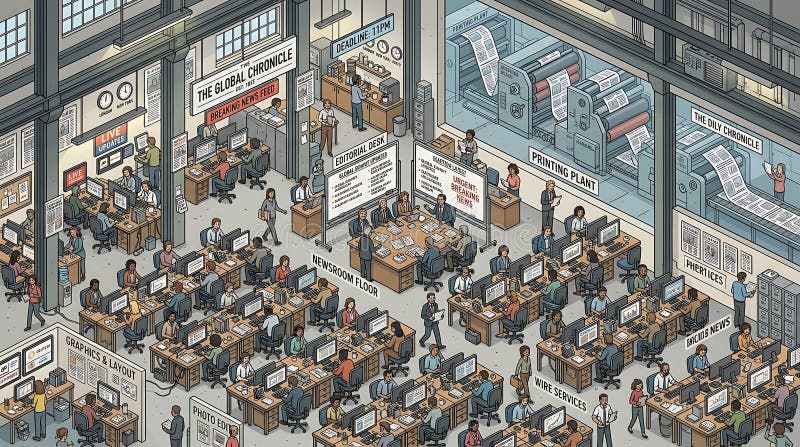
Deciphering modern editorial gatekeeping mechanics is the single most effective way to understand why certain global events dominate front pages while other vital realities quietly vanish. Every single second, the world produces an unimaginable deluge of raw phenomena. Fires break out, scientific breakthroughs unfold in fluorescent laboratories, municipal boards approve multi-million-dollar zoning adjustments, and diplomatic cables crisscross oceans. Yet when you open a paper or glance at a news feed, you encounter an exquisitely curated, tiny fraction of that reality. This presentation does not emerge by chance, nor is it the result of a single omnipotent authority dictating terms from the shadows.
Instead, the news landscape reflects an intricate series of structural valves. Long before a sentence appears on your screen, it passes through an obstacle course of institutional habits, operational hurdles, cognitive biases, and time pressures. What consumers see is never reality in its unfiltered state. What reaches the public eye is reality after it has survived a gauntlet of institutional selection criteria. Understanding that pipeline alters how you interpret every headline you will ever read.
The Hidden Architecture of the Pitch Pile
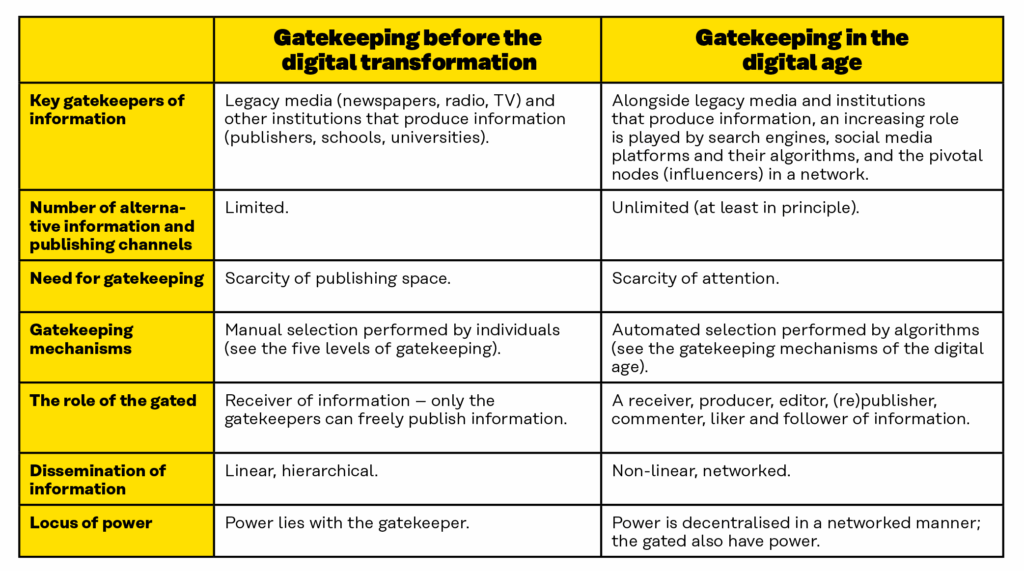
The earliest formal examinations of editorial gatekeeping mechanics emerged when researchers began tracking how wire service editors selected copy. In the middle of the twentieth century, communication scholar David Manning White observed an editor famously nicknamed Mr. Gates. Sitting at a modest desk with incoming wire copy from multiple services, this individual discarded the vast majority of incoming dispatches while selecting a chosen few for print. His choices were not guided by a grand philosophical manifesto. They were driven by his personal preferences, his mood, the literal physical space remaining on a broadsheet page, and his instinctive assumptions about what his community cared to know.
Archival studies curated by Nieman Reports at Harvard University document how individual wire copy editors historically discarded upwards of eighty percent of incoming dispatches purely due to personal instincts and space constraints. Over time, media researchers realized that the individual gatekeeper was merely one gear inside an institutional machine. The individual choices of one editor sit within a larger ecosystem of institutional memory, professional ethics, corporate liability, and commercial incentives. The pitch pile is where ideas go to battle against limited resources.
Every morning across global newsrooms, editorial desks hold story conferences. Reporters pitch developments they believe warrant public scrutiny, while section heads counter with competing priorities. In these brief, high-stakes exchanges, raw occurrences are converted into narrative commodities. If a story lacks narrative momentum, if the sourcing is too murky, or if sending a crew costs more than the anticipated reader interest justifies, the pitch quietly dies. The public never sees what was discarded, leaving readers to assume that the printed items represent the objective totality of the day’s importance.
The Core Framework That Decides What Survives
At its core, investigating editorial gatekeeping mechanics means dismantling the naive belief that news is an objective mirror held up to reality. A mirror reflects whatever stands before it without prejudice or calculation. A newsroom, by sheer necessity, acts as a prism. It refracts, concentrates, filters, and alters the angle of the incoming light.
Information does not possess an inherent, self-evident property called newsworthiness. Rather, newsworthiness is an assigned value. It is a status conferred upon raw data by editors and journalists who measure incoming tips against an established matrix of operational values. Does this development carry direct consequences for the readership? Does it break a long-standing pattern? Does it involve recognizable figures? Can it be verified before the evening deadline?
When an occurrence fails to check these institutional boxes, it slips through the floorboards. An environmental development that unfolds over three decades struggles to find space precisely because it lacks the sharp, sudden jolt required by daily news cycles. Conversely, a sudden industrial accident captures immediate placement because its drama fits the established parameters of reporting. The systemic rules of the institution determine the visibility of the event.
Four Decisive Pressure Points in the Information Funnel
To grasp how newsrooms winnow hundreds of daily pitches down to a curated package, one must dissect the primary filters that govern newsroom choices. These four operational gates function as an active filtration system, determining what reaches public consciousness.
Newsworthiness Thresholds and Event Proximity
An event must cross an amplitude threshold before it registers on the editorial radar. Minor fluctuations in local economic data rarely command coverage, but a sudden collapse of a major regional employer triggers an immediate deployment of staff. Journalists look for deviance from the norm, conflict, and distinct human stakes. Proximity plays a profound role in this calculation. Geographical proximity is the most obvious manifestation, but cultural and psychological proximity matter just as much. A transportation accident in an editor’s home region frequently receives vastly more attention than a disaster of far greater magnitude occurring on another continent. If an audience cannot easily identify with the participants or feel the immediate consequence of the outcome, gatekeepers routinely lower its priority.
Resource Constraints and Operational Viability
Idealistic notions of journalism regularly collide with the brutal realities of logistics. News production requires capital, field crews, legal scrutiny, travel logistics, and technical gear. When an investigative desk considers committing six months of salary and substantial travel expenditures to an ambiguous lead, the calculation is practical. Just as studying how tennis topspin mechanics reveal 4 proven forces behind devastating baseline power uncovers the physics behind court control, analyzing editorial production budgets exposes the unvarnished kinetic friction of the newsroom floor. Understanding these resource-driven editorial gatekeeping mechanics clarifies why entire geographical regions remain underreported. Newsrooms gravitate toward locations where they already maintain bureaus, trusted stringers, and secure infrastructure. If covering an injustice requires prohibitive insurance policies, hazardous transit, and translators that strain the monthly budget, that story faces a massive disadvantage compared to a domestic development that can be confirmed over the phone.
Institutional Alignment and Audience Expectation
Every news organization possesses an editorial identity that dictates its coverage appetite. A financial broadsheet approaches an international trade summit with intense focus on market deregulation and supply chain friction, whereas a human-rights-focused outlet covers the identical summit through the lens of labor conditions and migrant welfare. Neither angle is inherently dishonest, yet each represents a selective framing shaped by the expectations of the subscriber base. Gatekeepers understand who pays the bills. They select and prioritize pieces that reinforce their publication’s authority and relevance to their core audience. Editorial meetings constantly evaluate whether a piece fits the voice of the publication, weeding out pitches that clash with institutional brand identity.
Verification Friction and Sourcing Fragility
A story may boast massive public interest, dramatic tension, and logistical ease, but if the underlying evidence cannot survive rigorous verification, it fails at the gate. Libel laws, journalistic ethics codes, and institutional reputations demand verifiable proof. If a whistleblower provides extraordinary claims but refuses to share corroborating documentation, editorial leadership must weigh the potential scoop against the existential danger of a costly retraction or defamation lawsuit. Gatekeepers routinely kill exclusive leads because the second source refused to go on background, or because technical data could not be independently duplicated before printing. The friction of the verification process ensures that stories with ambiguous, hard-to-prove evidence frequently lose ground to simpler, highly documented accounts provided by official sources.
The Algorithmic Shift and Distributed Gatekeeping
The traditional gatekeeper once functioned as an exclusive sentinel standing before a narrow bridge. Today, the gate has multiplied into thousands of interconnected valves governed by both human judgment and computational logic. When social feeds and machine learning loops entered newsrooms, algorithmic code began simulating legacy editorial gatekeeping mechanics at unprecedented speed.
In the contemporary digital ecosystem, human editors still select initial placements, assign beats, and approve drafts. However, secondary gatekeeping takes place the instant a piece is published online. Recommendation engines analyze click-through rates, scroll velocity, and comment density within seconds of distribution. If early readers react vigorously, the algorithm elevates the story to prominent positions on homepages, aggregates it into trending lists, and pushes notifications to mobile screens. If a complex, deeply reported piece fails to provoke rapid interaction, it is quietly pushed down the page by automated systems engineered to optimize dwell time. The modern gatekeeper is no longer solely an editor with a blue pencil. It is a symbiotic partnership between human institutional judgment and automated audience-retention algorithms.
Practical Media Literacy for the Modern Information Consumer
Developing a functional defense against informational blind spots requires mapping these editorial gatekeeping mechanics in real time. Passive media consumers accept the front page as an accurate reflection of what mattered most on any given Tuesday. Active consumers examine the selection process itself, asking critical questions about what is missing from the presentation.
When reviewing any major news report, take note of whose voices provide the foundational assertions. Are the primary sources government officials and corporate spokespersons who enjoy frictionless access to reporters, or did the journalists reach out to independent, grassroots witnesses? Consider the timing and formatting of the release. Notice which topics consistently struggle for oxygen, particularly slow-moving infrastructural deterioration or positive institutional reforms that lack sensational hooks. By identifying the operational filters that shaped the reporting, readers can consciously seek out specialized publications, academic archives, and regional independent presses to fill the informational voids left by mainstream editorial triage.
The Enduring Necessity of Intentional Curation
Gatekeeping is not inherently malicious. Without some form of curation, the public would be paralyzed by an incomprehensible wall of noise. Editors perform an indispensable civil service by evaluating evidence, discarding hoaxes, standardizing clarity, and allocating finite attention toward matters of public consequence. The danger lies not in the existence of the gate, but in public ignorance regarding how the gate opens and closes.
A conscious appreciation of editorial gatekeeping mechanics transforms passive news consumption into an active, discerning appraisal of institutional intent. When you recognize that every headline represents a choice made against competing alternatives, you stop asking what happened in the world today. Instead, you begin asking why this specific slice of reality was deemed worthy of your time, who benefited from its presentation, and what profound truths were left behind on the newsroom floor.