Tennis topspin mechanics reveal 4 proven forces that forge unstoppable court control
Unravel the aerodynamic and biomechanical marvel behind heavy baseline groundstrokes. Discover how angular racquet acceleration, string snapback, and fluid dynamics converge to create dip, bite, and relentless court control.
Mastering tennis topspin mechanics transforms a fragile, defensive stroke into a penetrating weapon that clears the net by feet while diving violently inside the baseline. At elite levels of competition, the difference between an attackable floating ball and an unplayable heavy groundstroke is not sheer muscular brute force. Instead, it is an exacting manipulation of fluid dynamics, racquet head trajectory, and angular momentum that allows players to swing at maximum velocity without sacrificing margin for error.
For decades, traditional coaching emphasized flat strokes, pushing the ball forward on a horizontal plane like a battering ram. That mindset collapsed under the weight of empirical performance data. The modern game is defined by high RPMs, exaggerated trajectories, and vicious post-bounce kick. Understanding the mechanical architecture behind this rotational mastery demystifies why the heaviest hitters can hit upward with violent commitment yet consistently watch the ball plunge safely onto the court surface.
The deceptive physics of the modern baseline rally
Watch any competitive exchange from court level and the sheer paradox becomes obvious. A world-class forehand or single-handed backhand launches at terrifying speeds, climbing toward the sky on an angle that looks destined to sail far beyond the fences. Then, mid-flight, an invisible force grabs the felt sphere, hauling it downward as if tethered to the clay or hard court below. The ball bites the ground, springs upward past the defender’s comfort zone, and pins them against the back tarp.
This is not luck or mystical touch. It is the manifestation of predictable Newtonian physics paired with atmospheric resistance. When a player strikes flat, the ball’s flight depends almost entirely on gravity and air drag. The margin for clearance over a three-foot net on a fast drive is razor thin, measured in fractions of an inch. A fraction of a degree in launch angle difference spells the line between an ace and a ball lodged deep in the netting mesh.
By contrast, heavy rotation provides an artificial downward ceiling. By manufacturing significant rotational speed along the horizontal axis, the player creates an entirely different aerodynamic envelope. This enables radical tactical aggression. Hitters can clear the net with immense clearance, neutralizing the net obstacle entirely, confident that the ball’s natural aerodynamic behavior will pull it back down before it crosses the baseline perimeter.
How the Magnus effect bends ball trajectories in midair
To grasp why tennis topspin mechanics dictate modern baseline dominance, one must look at how air behaves across a fuzzy sphere. As a tennis ball spins forward through space, its fuzzy surface drags a thin layer of surrounding air along with it, creating a rotational boundary layer. On the top of the spinning ball, this boundary air travels in the opposite direction to the oncoming airflow, creating high atmospheric resistance and elevated pressure. On the bottom surface, the spinning boundary air travels in the exact same direction as the oncoming air stream, allowing it to accelerate smoothly and form an area of low pressure.
This pressure differential creates a downward aerodynamic force known as the Magnus effect. Following the classic aerodynamic fluid dynamic principles documented by NASA, fluids naturally travel from high-pressure zones toward low-pressure zones. The high pressure pressing on top of the ball forces it downward at a rate significantly faster than natural gravitational pull alone. The faster the ball spins, the more violent this downward deflection becomes.
Without this downward aerodynamic force, hitting a 75-mile-per-hour forehand with a ten-degree upward launch angle would guarantee an unforced error several yards past the baseline. With heavy forward rotation, the ball arches high over the net before dipping dramatically into the deep corners of the court. Elite players exploit these exact rotation principles during clutch baseline exchanges, much like how the tactical breakdown in Katerina Siniakova Delivers 3 Major Shocks in Dominant Japan Open Final Surge illustrates elite ball control under immense tournament pressure.
Four proven biomechanical forces driving modern topspin mastery
A rigorous examination of tennis topspin mechanics reveals that this high-arcing yet safe ball trajectory is governed by four foundational technical principles. These elements work in concert, operating on precise time scales measured in milliseconds to transfer energy from the ground up through the kinetic chain and into the ball felt.
Angular racquet velocity and the steep upward pathway
Rotational spin is not created by rolling the forearm over the ball at contact. That common misconception is responsible for countless netted balls and strained forearm tendons. Real forward rotation is generated by linear and angular racquet speed moving on an upward, low-to-high swing plane. The racquet face drops below the ball during the preparation phase and accelerates upward toward contact, brushing the back surface of the sphere while moving through a slightly closed vertical face orientation.
The angle of approach determines the ratio of forward propulsion to rotational spin. A swing path that travels thirty degrees upward relative to horizontal produces a balance of penetration and rotation, while an extremely steep sixty-degree upward path trades forward speed for pure spin generation. The defining attribute of great hitters is their ability to generate massive upward acceleration without sacrificing forward momentum through the hitting zone.
Kinetic chain sequencing from ground drive to wrist release
Racquet speed does not originate in the arm. The human arm simply lacks the muscular mass necessary to produce three thousand rotations per minute repeatedly over a three-hour match. True power originates against the playing surface. The mechanical chain begins with deep knee flexion and a calculated load into the dominant hip and leg.
As the stroke initiates, the legs push aggressively off the ground, causing the pelvis to rotate inward. This rotational torque flows upward into the torso and shoulders, creating a powerful stretch reflex across the pectoral muscles and anterior core. By the time the shoulder pulls the upper arm forward, the racquet head is lagging behind, gathering kinetic potential. The elbow relaxes, and the forearm naturally pronates and unleashes through the hitting zone like the tip of a whip, multiplying the angular velocity created by the core and lower body.
Dynamic string bed snapback and friction coefficients
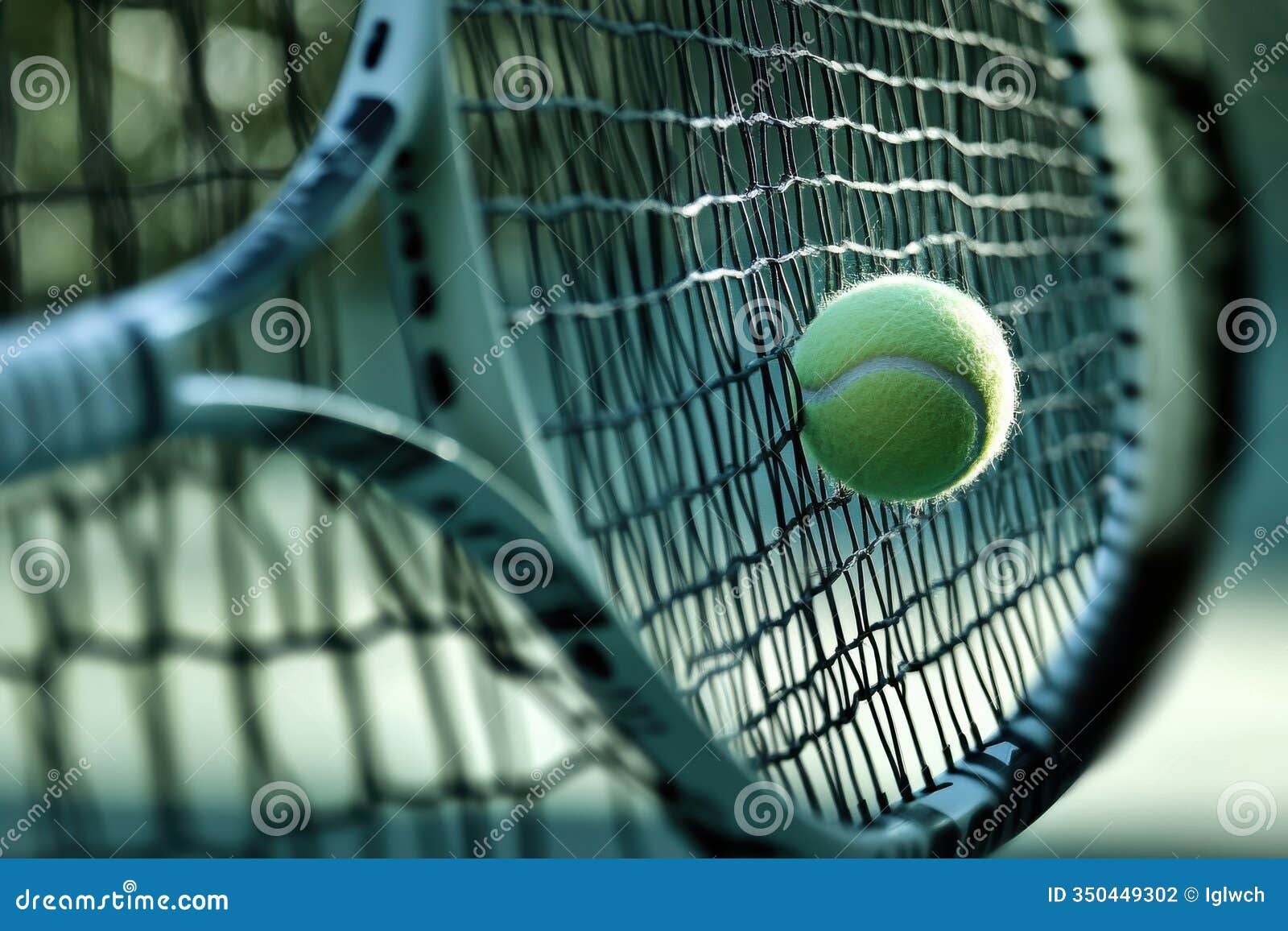
For decades, tennis lore credited natural gut and rough string surfaces with gripping the ball like sandpaper. High-speed camera analysis dismantled this theory completely. Modern spin is dictated by string bed snapback, an elastic phenomenon governed by low-friction co-polyester strings. When the upward-moving racquet meets the ball, the cross strings bite the main vertical strings, pushing them laterally out of their resting alignment.
As the ball begins its rebound off the string bed, the displaced main strings snap back violently into their original position. This microsecond snapback imparts massive tangential torque onto the ball, spinning it forward at incredible velocity. This rapid string movement and subsequent snapback is central to why contemporary tennis topspin mechanics achieve rotational rates exceeding three thousand revolutions per minute, turning modest racquet swings into blistering baseline drives.
Forward roll transfer and aggressive post bounce acceleration
The true consequence of high-rotation strokes reveals itself upon court impact. When a flat or backspin shot strikes the ground, it tends to skid and lose horizontal velocity due to friction against the court surface. A heavy topspin ball does the exact opposite. Because the bottom of the ball is spinning backwards relative to the air but pushing forward against the court upon contact, friction acts as a pivot point that translates rotational energy directly into forward and vertical momentum.
Instead of slowing down, the ball grabs the court and kicks upward with venom. A defender accustomed to striking balls between waist and chest height suddenly finds themselves addressing shots shoulder-high or higher. This shifts the opponent’s strike zone entirely, forcing them into defensive slice replies or lunging adjustments that surrender control of the baseline.
Common misconceptions that sabotage heavy topspin generation
When developing athletes misunderstand real tennis topspin mechanics, they routinely fall victim to counterproductive mechanical habits. The most destructive mistake is attempting to artificially snap the wrist over the top of the ball during the impact window. The impact duration between ball and string bed lasts between four and five milliseconds. Human neurological reaction time is far too slow to intentionally manipulate the wrist during that minuscule fraction of a second. Active wrist flicking prior to impact merely destabilizes the face angle, leading to catastrophic mis-hits.
Another common breakdown is hitting exclusively upward with negligible forward body weight transfer. Known pejoratively as windshield wiping in place, this flaw generates high rotation on a ball that carries no forward weight. The result is a shallow, looping feed that lands near the service line, giving aggressive opponents an open invitation to step inside the baseline and crush an easy winner. Topspin requires forward drive; the upward acceleration must occur on top of decisive forward kinetic momentum.
Lastly, many players strangle the racquet handle with white-knuckle tension. Excessive grip tension locks the wrist joint and forearm muscles, preventing the natural stretch-shortening cycle and killing racquet head speed. The whip requires a flexible handle. Maintaining a relaxed grip pressure enables the wrist to drop effortlessly into lag and whip freely through contact.
Systematic drills to lock down your baseline depth
Calibrating authentic tennis topspin mechanics into autonomic muscle memory demands deliberate, variable practice rather than mindless ball-machine repetitions. Begin by isolating the upward swing trajectory from a stationary baseline position. Place an obstacle or visual marker approximately three feet above the net band. Your objective is not to hit low lasers, but to clear that heightened target cleanly while keeping your shots inside the opponent’s baseline.
Progress to deep-knee drive drills. Stand on the baseline and have a training partner feed short, dying balls. Force yourself to sit into the rear hip, pausing momentarily to ensure the racquet head drops several inches below the contact zone before unleashing your forward and upward kinetic sequence. Focus entirely on feeling the ground resistance driving upward through your core, finishing with your hitting elbow pointing forward toward the opposing court.
Finally, incorporate dynamic depth challenges. Set target cones two feet inside the baseline. Attempt to strike heavy, rolling balls that clear the net by substantial margins yet dive violently within those boundary zones. Pay close attention to the sound and flight of the ball. When your kinetic chain, face angle, and string bed snapback harmonize, the stroke sounds like an explosive pop rather than a flat slap, and the ball displays a characteristic humpback trajectory that nosedives sharply before kicking up high.