Tennis topspin mechanics reveal 4 essential secrets to overpower every baseline duel
Discover the hidden aerodynamic forces and kinetic chain principles that transform floaty baseline groundstrokes into explosive, heavy topspin rockets. Learn how modern racket physics and string snapback make aggressive court positioning second nature.
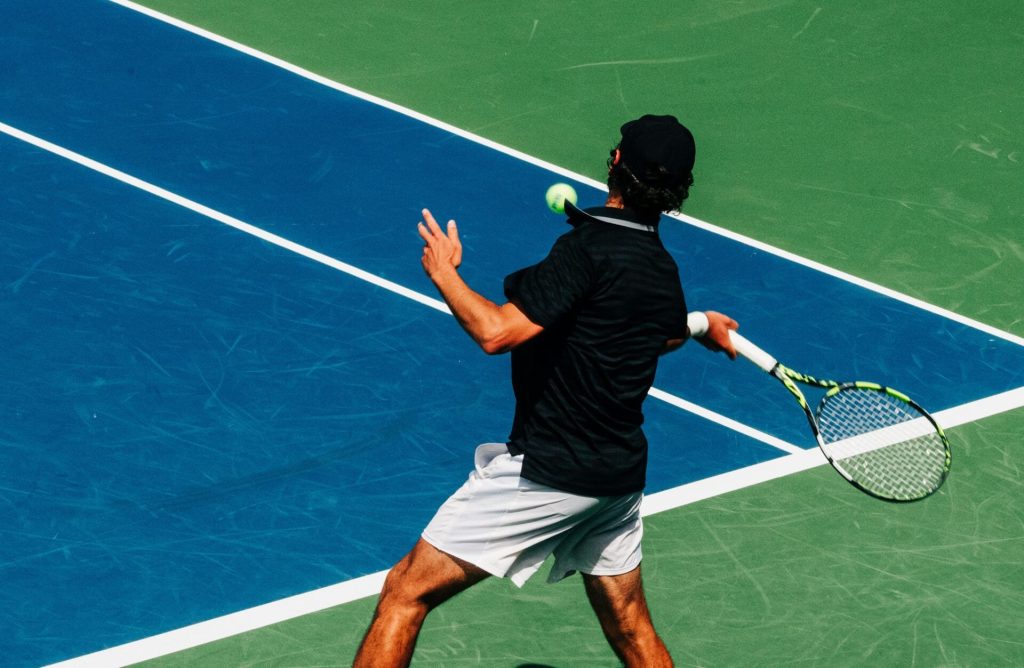
Mastering tennis topspin mechanics is the definitive dividing line between fragile defensive baseline scrambling and aggressive, suffocating court dominance. When an incoming ball explodes off the court surface, kicking violently toward your shoulder rather than settling waist-high, you are not merely witnessing exceptional athletic talent. You are confronting the uncompromising application of rotational physics. Elite baseliners hit the ball with astonishing velocity, yet their shots dive steeply downward as if dragged toward the baseline by an invisible magnet. To the untrained eye, this sudden dip looks like an optical illusion, but it is actually the direct consequence of friction, kinetic alignment, and boundary layer fluid dynamics operating in fractions of a second.
For decades, club players and aspiring competitors have chased this elusive heavy ball by simply swinging harder or flicking their wrists with desperate urgency. The results are painfully familiar: bruised rotator cuffs, sore tendons, and floaty balls that sit up helplessly for opponents to smash away. Unlocking true penetration demands moving beyond superficial tips and dissecting the kinetic chain that creates heavy rotation without sacrificing raw forward speed. Once you understand the physical architecture that produces high-repetition spin, the entire court opens up, allowing you to attack targets that previously felt suicidal.
The Aerodynamic Wizardry That Rewrote Modern Racket Sports
Every tennis groundstroke is a negotiation between propulsion and air resistance. Under classical aerodynamics, a ball struck horizontally with pure flat pace travels along a relatively flat parabolic trajectory dictated entirely by launch angle, initial velocity, and gravity. Because standard gravitational acceleration pulls an object toward earth at a fixed rate of roughly 9.8 meters per second squared, any ball hit above a certain speed ceiling will inevitably carry beyond the baseline unless struck from an extraordinarily elevated height. This mathematical boundary historically forced players to throttle their power to ensure consistency.
Modern tennis topspin mechanics exploit pressure differentials across a spinning fuzzy sphere to completely bypass this classical speed limit. When a tennis ball rotates forward along its horizontal axis as it cuts through the atmosphere, the felt-covered surface drags a thin film of air along with it. At the top apex of the ball, this surface moves directly counter to the oncoming airstream, creating friction, turbulence, and an area of high atmospheric pressure. Simultaneously, the bottom of the ball rotates in the exact same direction as the oncoming air, accelerating airflow beneath the sphere and triggering a substantial drop in localized air pressure.
This pressure imbalance generates an aerodynamic downward vector known as the Magnus force. Far from being a subtle nuance, the Magnus force on a ball spinning at 3,000 revolutions per minute can exceed the downward pull of gravity itself. The ball does not merely drop; it is actively pulled out of the sky into the court. This aggressive downward arc allows elite competitors to blast groundstrokes several feet higher over the net than flat hitters while watching their shots dive safely inside the baseline with surgical repeatability.
Why Classical Wrist Roll Advice Destroys Groundstroke Consistency
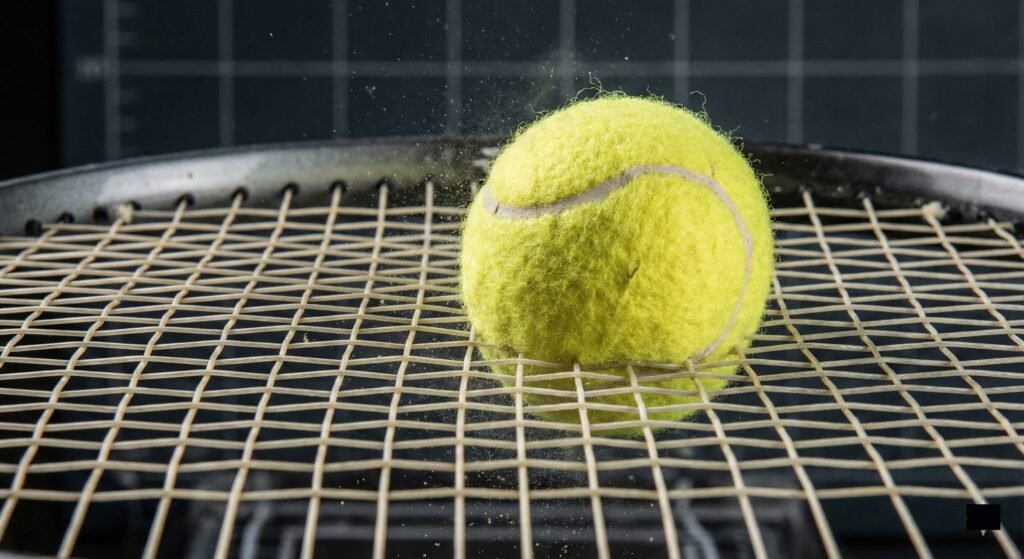
Generations of players were taught a fundamental myth: to generate topspin, one must consciously roll the wrist over the top of the ball during the moment of impact. This pervasive instruction has ruined countless forehands and fed a continuous stream of recreational players into physical therapy clinics. High-speed camera footage captured at thousands of frames per second reveals that the contact window between a tennis ball and the string bed lasts merely three to five milliseconds. The human nervous system cannot process sensory feedback, transmit an electrical impulse, and execute an active wrist roll within that microscopic fraction of time.
When a competitor attempts to actively manipulate the racket face over the ball at contact, they introduce chaotic micro-adjustments into their stroke timing. A deviation of just two degrees in racket face angle at contact is the difference between an unreturnable winner and a disastrous shank into the bottom of the net. Furthermore, a deep breakdown of tennis topspin mechanics proves that high-level racket deceleration through impact is an aerodynamic consequence rather than a conscious muscular roll. The visible windshield-wiper follow-through seen in high-velocity groundstrokes is the natural deceleration signature of shoulder internal rotation and forearm pronation, not an isolated, flicking wrist.
The Four Core Pillars Powering Modern Heavy Topspin
True topspin is manufactured long before the ball touches the strings and completes its journey through clean, uninhibited biomechanical flow. Instead of treating rotation as an isolated trick of the hands, mastering these refined tennis topspin mechanics transforms wild, erratic swings into venomous arching trajectories that pin opponents behind their own baselines.
Violent Angular Acceleration and Poly String Snapback
The modern revolution in heavy spin stems directly from the interaction between smooth polyester strings and racket head speed. In traditional natural gut or nylon setups, cross strings locked together under tension, resisting lateral displacement. Smooth co-polyester monofilaments behave entirely differently. When a player strikes the ball with an ascending trajectory, the main vertical strings bite into the felt, slide sideways along the smooth cross strings, and store potent elastic potential energy. Within milliseconds, before the ball has completely departed the string bed, those displaced strings snap back violently into their resting orientation.
This microscopic snapback acts like a secondary rotational slingshot. Rigorous aerodynamic and material analyses, including peer-reviewed University of Sydney tennis physics research papers, have demonstrated that string snapback can increase the ball’s final rotation rate by hundreds of revolutions per minute without requiring an ounce of additional human muscular effort. If you grip the handle with choking rigidity, however, you dampen the racket’s natural harmonics and stifle this elastic release. Tension in the hand kills string bed snapback before it can even begin.
Steep Low to High Trajectory With Open Racket Face Geometry
Rotational velocity is created by shearing the ball rather than slapping through its exact structural center. To achieve heavy rotation, the racket head must drop anywhere from twelve to eighteen inches below the intended contact point during the forward swing initiation. This critical depth allows the racket to accelerate upward on a steep vertical vector, often approaching a thirty-to-forty-degree angle of ascent relative to the court surface.
Crucially, as the racket climbs violently toward the ball, the hitting face must remain remarkably stable, perpendicular to the court or closed by only a slight forward tilt of four to eight degrees. Striking the ball with an excessively closed racket face produces weak, topped balls that clip the net tape. True topspin demands driving the mass of the racket upward through the ball, allowing the steep approach angle to convert kinetic energy into pure forward rotation while maintaining sufficient forward trajectory to penetrate deep into the opposite court.
Uncoiling Elastic Energy Through the Kinetic Chain
Arming the ball is the fastest route to chronic fatigue and shallow, predictable groundstrokes. The human arm is simply the end whip of a complex, synchronized kinetic sequence that originates in the court surface itself. True rotational velocity begins when the player loads their weight dynamically into the back leg and flexes the knees, establishing an unshakeable ground reaction platform. As the forward stroke begins, the player pushes forcefully off the court, sending ground reaction forces traveling up through the kinetic chain.
The hips uncoil first, clearing space and pulling the torso into rapid rotational acceleration. The chest turns next, creating a profound stretch through the dominant shoulder and pectoral muscles while the racket lags passively behind. As the shoulders square up to the target, the stored elastic energy fires down the humerus, through the elbow, and into the forearm. This uncoiling rotational energy is the kinetic engine powering true tennis topspin mechanics, multiplying racket head speed exponentially through the principle of distal acceleration. The wrist remains completely relaxed, acting merely as a frictionless hinge that whips through the ball at the absolute apex of the kinetic sequence.
Magnus Aerodynamics and Boundary Layer Pressure Drops
The true genius of topspin reveals itself in the second half of the ball’s flight path. As the ball clears the net with ample margin, often three to five feet higher than a standard flat drive, its rapid forward rotation actively sculpts the air currents traveling across its perimeter. The rough fibrous felt of the ball drags air molecules along with its spin, delaying aerodynamic boundary layer separation underneath the ball while promoting early separation above it.
This fluid disruption creates a stark vertical pressure drop that pulls the ball violently back toward the clay or hardcourt surface. The moment the ball strikes the court, the stored rotational momentum grips the grit of the surface. Instead of skidding low and losing energy like a slice or dead ball, the spinning sphere bites into the ground, converting its rotational kinetic energy into an explosive forward-and-upward kick. Opponents are abruptly forced out of their strike zones, lunging backward or attempting precarious half-volleys off their back feet.
Costly Misconceptions That Sabotage Recreational Groundstrokes
The most pervasive error among intermediate players is the tendency to prioritize vertical brush over forward mass transfer. When an athlete tries to generate spin by swiping almost purely upward, the contact becomes paper-thin. The ball makes a hollow, brushing noise against the strings rather than a resonant thud, floating harmlessly through the air and landing short near the service line. Topspin is never a substitute for depth; it is the aerodynamic safety net that allows you to drive the ball forward with terrifying aggression.
Much like how discovering meat brining mechanics and 4 proven secrets to lock in incredible juiciness reveals that soaking protein requires exact osmotic equilibrium rather than reckless heaps of salt, striking with heavy spin requires balanced physical leverage rather than frantic muscular exertion. When recreational athletes misunderstand tennis topspin mechanics, they frequently substitute vertical swiping for forward penetration, stripping their shots of all genuine offensive weight.
Another ruinous technical trap is failing to maintain spatial spacing from the ball. Heavy topspin requires dynamic clearance to allow the racket head to drop beneath the ball and swing freely out away from the body. Crowding the incoming shot jams the elbow against the rib cage, destroying the kinetic lever arm and forcing the player to recruit small, weak forearm muscles to flick at the ball. Giving yourself generous lateral distance unlocks the full radius of the kinetic whip, turning your torso and arm into an unstoppable rotational centrifuge.
Translating Biomechanical Science Into Pure Instinctive Power
Transforming mechanical understanding into instinctive execution requires restructuring your sensory feedback during practice. Instead of fixating on where the ball lands, tune your attention to the acoustic signature of your racket string bed. A heavy topspin strike does not produce a high-pitched ping or a glancing rustle; it generates a heavy, compressed thud followed instantly by a sharp, humming whoosh as the ball cuts violently through the air.
Begin by exaggerating your racket drop during the preparation phase, allowing the racket head to point directly down toward the court before initiating the forward drive. Focus on loose fingers on the grip; on a scale of one to ten, your grip pressure at the start of the forward swing should linger around a three, tightening naturally only at the split-second of collision. Allow the kinetic chain to unfold organically from your legs through your torso, trusting the aerodynamic Magnus force to pull your most ambitious strikes inside the lines. Repetition alone never solves biomechanical breakdowns until tennis topspin mechanics become ingrained as muscle memory, enabling you to dictate every baseline exchange with ferocious pace, relentless depth, and complete physical command.