Foley sound effects mechanics and 4 proven secrets to craft incredible cinematic realism
Cinema is fundamentally an optical illusion supported by an acoustic fabrication. Unpack the tactile art of Foley sound design and discover how everyday physical objects produce unforgettable cinematic moments.

Mastering foley sound effects mechanics reveals how cinematic reality is actually constructed from scratch inside quiet, darkened recording studios. When an actor strides across a snowy field in a prestige drama, your brain registers the crisp, icy crunch beneath their boots as undeniable physical truth. In reality, the actor on set wore silent rubber soles across a soundstage blanketed in paper shavings, while a specialized performer weeks later stepped methodically into a leather pouch filled with cornstarch inside an isolated acoustic room.
Cinema has always operated on a deliberate separation between the visual capture of an event and its auditory soul. While cameras capture light with clinical precision, production microphones struggle to capture the tactile physical intimacy that storytelling requires. Without the tactile thump of a heavy wool overcoat, the scrape of a rusted revolver sliding across a tabletop, or the delicate clinking of china during an awkward dinner scene, visual performances feel floaty, detached, and synthetic.
Why Direct Production Audio Fails to Deliver Physical Immersion
Audiences often assume that sound recorded on set carries through to the finished film. On a professional set, production sound mixers work under a singular mandate: capture clean, isolated human dialogue while aggressively rejecting every other environmental noise. Boom microphones hover inches above an actor’s head, configured with sharp directional polar patterns that deliberately suppress the rustle of clothes, the clatter of dropped keys, and the impact of shoes on flooring.
Sets are built for cameras rather than acoustics. Hollow plywood walls, foam core columns, and elevated walkways sound like resonant drums when struck. If production microphones captured every real footstep, the resulting dialogue tracks would be muddy, reverberant, and impossible to cut cleanly in the editing suite. Furthermore, background actors in crowded party scenes silently pantomime conversations and drink from soft silicone glasses to avoid competing with principal speech.
When you dissect foley sound effects mechanics, you realize that real life actually sounds hollow and thin when recorded straight through a microphone. Everyday objects do not convey the emotional heft demanded by cinematic narrative. Real punches sound like dull slaps rather than bone-shattering impacts, and actual gun holsters produce almost no sound at all. To make an audience feel the emotional weight of a scene, sound designers must replace literal reality with acoustic hyper-reality.
Four Fundamental Disciplines Behind the Magic of the Foley Stage
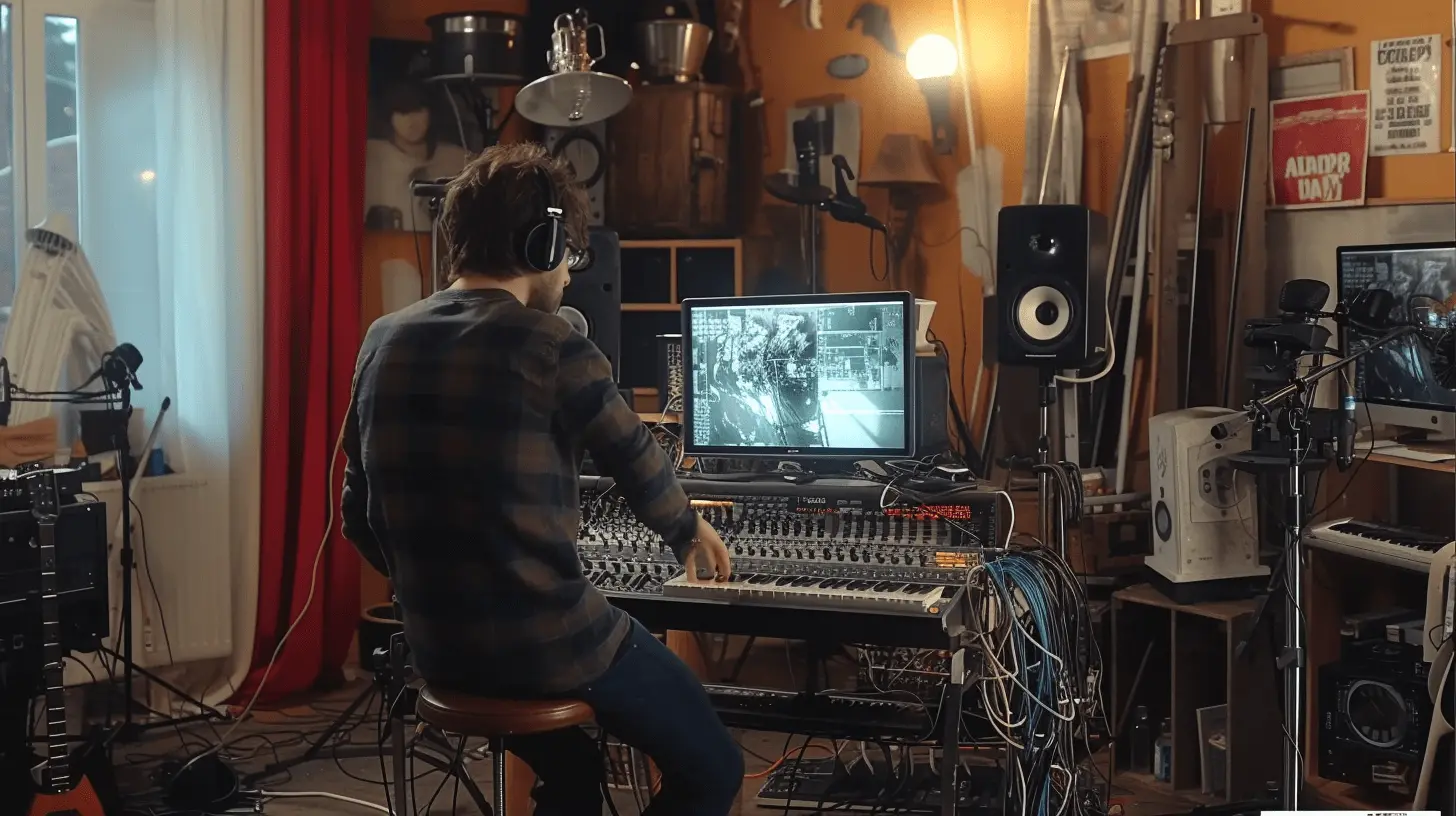
Mastering foley sound effects mechanics requires four distinct technical disciplines that turn physical movement into pure narrative drama. A proper Foley stage resembles an eccentric junkyard crossed with a world-class recording laboratory, housing specialized pits filled with gravel, asphalt, splintered timber, and polished slate alongside floor-to-ceiling shelves of odd curiosities.
1. Footstep Cadence and Weight Transfer Dynamics
Footsteps are the spine of physical performance, conveying an actor’s physical weight, psychological state, and environmental context. A skilled Foley performer, traditionally called a walker, does not simply stamp on cue. They mirror the screen actor’s posture, shifting their center of gravity from heel to toe to emulate fatigue, aggression, stealth, or arrogance.
Footwear choice is an exact science. Walkers curate vast collections of broken-in shoes, each chosen for the density of its sole, the hardness of its heel stack, and its flexibility under compression. Stepping onto a gravel pit requires calculated pressure: landing flat-footed sounds artificial, whereas rolling gently from the outer ball of the foot reproduces the casual cadence of an unsuspecting character walking down an unpaved lane.
2. Cloth Rustle and Fabric Friction Articulation
The cloth track provides the continuous acoustic glue that keeps characters anchored in physical space. When someone turns their head, shifts in a chair, or reaches into their pocket, their clothing produces distinct micro-frictional transients. If these subtle textures are absent, the human ear instinctively perceives the character as a disembodied digital cutout.
Artists operate with specialized textile bundles, rubbing heavy raw denim, distressed leather, and coarse burlap in tight synchrony with on-screen gestures. The volume envelope of cloth movement must sit just beneath conscious detection, reinforcing the visual motion without cluttering dialogue frequencies. When executed properly, cloth Foley injects subtle warmth into sterile studio dialogue, giving every garment tangible weight and texture.
3. Organic Material Metaphors for Visceral Impact
Direct representation rarely produces the most convincing auditory illusion. Instead, the craft relies on acoustic metaphors where unexpected household items deliver visceral physical sensations. Snapping stalks of celery and breaking head cabbages produce bone fractures and cartilage ruptures that sound far more gruesome than actual anatomical trauma.
This tactile sleight of hand sits at the core of foley sound effects mechanics, where authentic physical materials yield predictable acoustic profiles under controlled studio microphones. Twisting wet chamois leather generates convincing flesh tearing, while running pinecones down piano strings can create the unnerving creak of a deep-sea submarine hull under pressure. The Foley artist ignores what an object looks like, evaluating it solely on its transient impact, harmonic resonance, and acoustic decay.
4. Spatial Acoustic Matching and Microphone Geometry
Producing the correct sound is only half the battle; the sound must sit convincingly inside the camera frame. A footstep occurring thirty feet away down an arched cathedral corridor requires entirely different acoustic staging than a close-up of fingers undoing a necklace in an intimate bedroom.
Mixers achieve depth by manipulating microphone geometry and room acoustics. Rather than relying entirely on digital artificial reverb in post-production, Foley mixers position dynamic, condenser, and ribbon microphones at variable distances and off-axis angles across the live room. Matching the physical acoustic space of the production footage ensures that Foley layers blend invisibly with production dialogue rather than sounding pasted on top of the mix.
The Psychoacoustics of Synchresis and Visual Weight
The human brain is remarkably susceptible to cross-modal sensory capture. In film sound theory, the spontaneous fusion of an auditory phenomenon with a simultaneous visual event is known as synchresis. When an image and a sound strike the sensory cortex simultaneously, our cognitive processing immediately assumes a shared physical cause, even if the sound has no rational connection to the object on screen.
The deeper study of foley sound effects mechanics exposes how human sensory architecture processes physical force. The visual cortex alone struggles to gauge mass, density, and tactile texture. A prop broadsword cast from lightweight foam rubber looks visually identical to forged carbon steel on modern high-resolution cameras. However, the moment that weapon strikes an iron shield, the acoustic transient dictates its perceived physical properties.
If the sound mixer cuts in a dull, plastic thud, the weapon instantly loses its lethal presence. If the Foley artist layers a sharp metallic transient, followed by a resonant copper bell decay and a deep low-frequency punch, the audience instinctively feels that the blade weighs twelve pounds of solid metal. Sound dictates visual weight, transforming flimsy stage props into artifacts of substantial physical consequence.
How Layered Verification Transforms Pure Fiction into Truth
Crafting believable audio relies on meticulous cross-referencing between visual cues and sonic dynamics. Just as sound supervisors analyze foley sound effects mechanics to weed out unnatural transients that break audience immersion, professional fact-checkers rely on rigorous investigative systems to separate authentic evidence from fabricated narratives.
This discipline mirrors the principles outlined in our breakdown of Newsroom source verification mechanics and 4 proven rules to expose hidden deception, where primary evidence must be systematically verified against external realities to ensure that synthetic elements never compromise genuine truth. In both disciplines, the creator must understand how small inconsistencies ruin the integrity of the overall structure, whether that structure is a two-hour cinema epic or an investigative news dispatch.
The Irreplaceable Value of Human Performance in Modern Sound
In an era increasingly dominated by algorithmic audio synthesis and massive digital sound libraries, one might wonder why film studios continue to pay artists to step in gravel boxes and wave damp leather jackets. The answer lies in the subtle micro-variations of human motor control.
Digital sample libraries contain static recordings. Even when pitch-shifted or modulated by software, triggered audio samples quickly sound mechanical and repetitive, triggering the auditory equivalent of the uncanny valley. A computer triggering a footstep sound cannot anticipate the hesitation in an actor’s stride as they deliver an emotional line, nor can it adjust the drag of a heel to mirror an actor’s sudden grief.
According to Audio Engineering Society research on psychoacoustics, human listeners possess an extraordinary sensitivity to the natural timing jitter, frequency variations, and dynamic nuances produced by organic physical movement. Foley artists are not technicians pressing buttons; they are physical actors performing parallel dramatic interpretations through tactile objects. Their physical empathy travels through the microphone diaphragm, infusing inanimate celluloid with genuine human presence.
Ultimately, the enduring power of foley sound effects mechanics endures because human listeners are remarkably gifted at detecting artificiality. As visual effects grow increasingly abstract and virtual, the visceral scrape of a wooden chair or the wet splash of mud grounds cinema in the tangible physical universe, ensuring that movies remain an authentic emotional experience rather than an empty digital exercise.