BE Stock Plunges as 4 Critical Forces Reshape the AI Power Trade
A fierce pre-earnings rally in Bloom Energy unwound rapidly this week, dragging down clean tech peers across Wall Street. Here is what is driving the volatility behind the premier AI power hardware provider ahead of its pivotal quarterly report.
Investors tracking BE stock experienced sharp whiplash this week as an ambitious pre-earnings rally suddenly reversed course, pulling the alternative energy darling into a steep market retreat. The abrupt tumble caught retail and institutional traders off guard following weeks of mounting enthusiasm over behind-the-meter generation for artificial intelligence infrastructure. As data centers consume unprecedented volumes of baseload electricity, clean tech equipment makers have found themselves reclassified as foundational AI utility plays. Yet the rapid shift in momentum demonstrates that high expectations often carry painful short-term consequences when traders rush to de-risk portfolios before major financial disclosures.
Market participants who accumulated shares in anticipation of blowout quarterly earnings witnessed a swift rotation out of speculative clean tech holdings. The sell-off was not confined to a single corner of the market, though Bloom Energy bore the brunt of the downturn due to its outsized gains in preceding sessions. Understanding this dynamic requires examining the collision between long-term grid decarbonization promises and the immediate mechanical realities of high-beta trading desks positioning ahead of company filings.
The Sudden Pre-Earnings Reversal That Shook Clean Tech
The sudden downward trajectory developed rapidly during early morning trading. As detailed by Investing.com, shares of Bloom Energy Corp pulled back nearly 5.0% in early action, immediately interrupting the prior session’s recovery and signaling that buyers were losing control of the order book. Selling pressure quickly cascaded into the afternoon. According to reporting from 24/7 Wall St., the downturn accelerated into a punishing 9% drop as the pre-earnings rally fully unwound, underscoring how vulnerable momentum trades become when speculative volume dries up right before binary corporate events.
This severe drop in BE stock did not unfold in a corporate vacuum. Instead, it sent noticeable shockwaves throughout the alternative power ecosystem. Peer fuel cell manufacturers experienced substantial collateral damage as automated momentum algorithms and institutional traders reduced risk across the entire sector. During the same trading window, FuelCell Energy dropped roughly 6%, while Plug Power declined by 3%, revealing a coordinated exit from high-valuation hydrogen and fuel cell equities. The steepness of each individual drawdown illustrated precisely how much speculative leverage had accumulated across clean energy hardware providers during recent weeks.

The 4 Critical Drivers Behind Bloom Energy Wild Market Volatility
To grasp why Bloom Energy experienced such a dramatic whipsaw, investors must look beyond simple technical chart breakdowns. A confluence of macro energy demands, aggressive corporate earnings benchmarks, broader industrial sentiment, and high-profile portfolio interest converged to trigger this sharp repricing.
Aggressive AI Hyperscaler Power Demand and the Race Against the Grid
The foundational narrative driving Bloom Energy over recent quarters has been the desperate scramble among technology hyperscalers to secure reliable, uninterrupted electrical capacity. As highlighted by Yahoo Finance, Bloom Energy and Constellation Energy have emerged as two premier power providers enjoying unprecedented commercial tailwinds as data center operators race to satisfy the immense energy appetites of modern compute clusters. Traditional regional utility grids often require three to seven years to approve and construct high-voltage interconnects, creating a massive bottleneck for new data center construction.
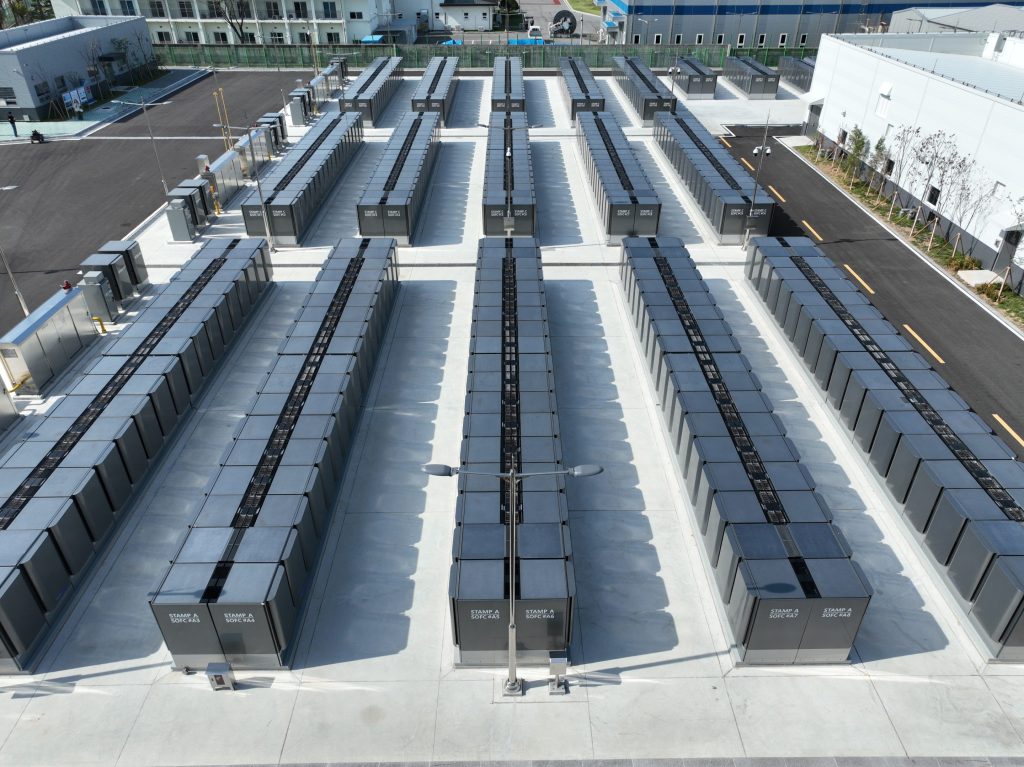
Bloom Energy addresses this bottleneck directly through its modular solid oxide fuel cell servers, which produce on-site power independent of local transmission constraints. This unique deployment advantage convinced growth investors that the speculative momentum powering BE stock reflects an insatiable corporate appetite for dedicated on-site power. However, when stock prices run far ahead of signed deployment timelines, even minor macro hesitations can trigger violent valuation compressions across hardware suppliers.
Extraordinary Expectations for Triple-Digit Q3 Revenue Growth
Valuation gravity inevitably reasserts itself when quarterly reporting dates draw near. According to an earnings preview published by Benzinga, Wall Street analysts set a remarkably high bar for the company’s Q3 performance, modeling revenue growth of approximately 102% year-over-year. Heading into the Thursday earnings release, market consensus demanded not merely solid operational progress, but flawless execution and verified triple-digit top-line acceleration.
When equity pricing reflects triple-digit revenue projections, the margin for error shrinks to near zero. Institutional desks frequently prefer to lock in accumulated profits rather than hold high-beta equities through high-stakes earnings calls. The resulting liquidity drain created a vacuum in bid support, ensuring that even moderate pre-earnings profit-taking snowballed into an aggressive single-day drawdown.
Fragile Sentiment Across the Clean Hydrogen and Fuel Cell Sector
The clean power sector remains exceptionally sensitive to interest rate expectations, capital expenditure cycles, and policy crosscurrents. As highlighted by 24/7 Wall St. in their comparative analysis, the sell-off in BE stock quickly rippled across the broader alternative fuel universe, demonstrating that investors continue to view the group through a single thematic basket despite distinct differences in underlying business models.
While Bloom Energy focuses on commercial on-site power generation with proven industrial installations, peers like Plug Power and FuelCell Energy have grappled with cash burn and prolonged deployment timelines. When systemic risk flares, asset managers often dump thematic exchange-traded funds and clean tech baskets indiscriminately. This correlated selling drags down market leaders alongside more speculative, cash-burning peers regardless of operational differentiation.
High-Profile Political Visibility and Concentrated Capital Flows
Another layer of volatility stems from the intense public scrutiny directed at major corporate and political stakeholders invested in the company. Benzinga reported that Bloom Energy stands out as a prominent high-profile holding associated with influential figures, including former House Speaker Nancy Pelosi. Public disclosures regarding high-level political stock holdings frequently attract waves of retail copycat traders looking to front-run policy developments or trade along institutional pathways.
While this heightened visibility brings significant retail liquidity during bullish momentum surges, it also amplifies downside volatility. Retail-heavy momentum positions are notoriously prone to rapid panic selling when institutional algorithms trigger stop-loss cascades. When short-term sentiment flips, the sudden withdrawal of speculative retail buying allows normal institutional profit-taking to mutate into severe intraday corrections.
Evaluating Bloom Energy Core Fundamentals and Margin Realities
Despite sharp day-to-day share price fluctuations, the fundamental financial profile of Bloom Energy exhibits notable underlying strengths. An equity analysis from ChartMill indicates that Bloom Energy has demonstrated strong growth characteristics, expanding operating margins, and resilient earnings momentum. The analysis notes that the company aligns with several foundational growth rules popularized in Louis Navellier’s *The Little Book That Makes You Rich*, particularly regarding positive upward earnings revisions and operational leverage.
Building sustainable industrial equipment businesses requires long-term capital discipline and operational endurance. Just as mastering foundational physical processes requires patience—much like understanding the Cast Iron Seasoning Mechanics and 4 Proven Rules to Build an Indestructible Nonstick Skillet, where repeated thin layers of polymer must cure before withstanding high temperatures—industrial energy transitions require methodical operational execution rather than sudden speculative heat.
Successfully evaluating BE stock requires distinguishing between raw headline momentum and durable balance sheet resilience. The company’s solid oxide platforms generate electricity through electrochemical reactions rather than direct combustion, delivering higher electrical efficiency than conventional distributed generation. If Bloom Energy can consistently demonstrate that gross margins are expanding alongside its 100%-plus revenue trajectory, the long-term institutional thesis remains fundamentally distinct from the temporary pain of weekly trading swings.
What Investors Must Watch as Thursday Earnings Arrive
With Bloom Energy scheduled to report its third-quarter financial figures on Thursday, market attention shifts from speculative technical chart patterns to hard operational metrics. Traders and analysts will scrutinize three primary components during the upcoming earnings webcast:
- Backlog Conversion and Hyperscaler Deals: Clarification on whether data center pipeline discussions are translating into binding, multi-year purchase orders with recognized hyperscale cloud providers.
- Gross Margin Expansion: Concrete verification that manufacturing efficiencies are offsetting supply chain costs, confirming the margin trajectory highlighted by ChartMill’s fundamental screening models.
- Cash Flow Sustainability: Clear visibility into capital expenditures and operating cash flow, demonstrating that triple-digit revenue growth does not come at the expense of excessive balance sheet dilution.
The ultimate trajectory of BE stock hinges on whether management can prove that its technology is indispensable to the ongoing artificial intelligence infrastructure boom. If Thursday’s actual metrics validate the aggressive 102% top-line projections reported by Benzinga, this week’s sharp 9% pullback may be remembered as an aggressive pre-earnings shakeout. Conversely, any ambiguity surrounding product delivery or margin guidance could signal that the clean tech AI power trade ran too far ahead of reality.