Tennis topspin mechanics and 4 proven rules to master devastating baseline control
Unpack the aerodynamic physics and string bed dynamics that turn flat strokes into heavy, diving baseline weapons. Discover the exact biomechanical principles behind elite topspin generation.
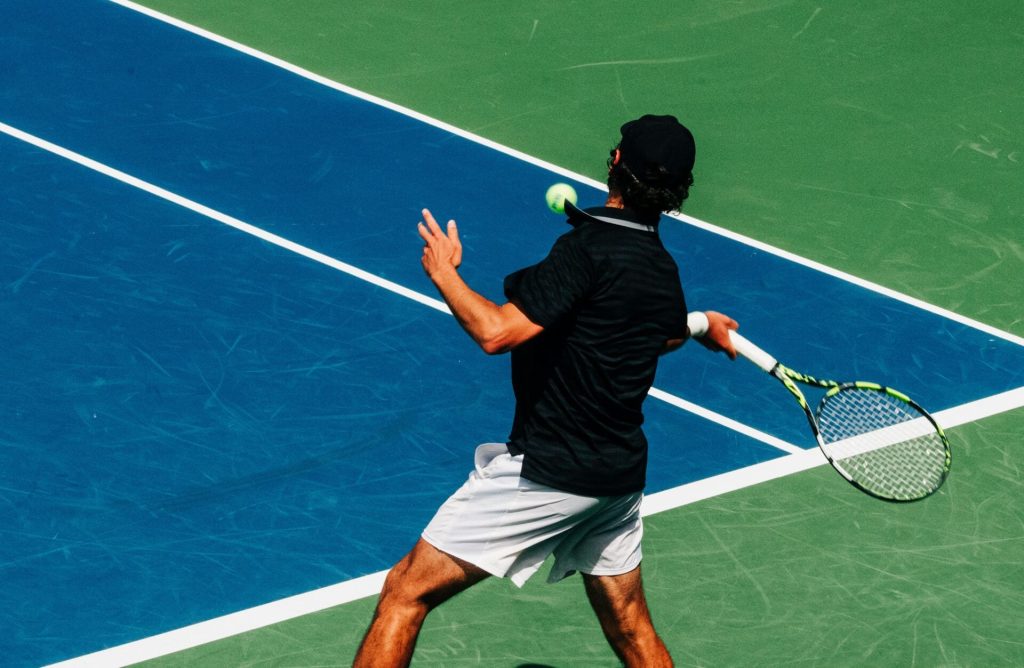
Mastering tennis topspin mechanics is the single greatest evolutionary leap a competitive player can make, turning wild baseline strikes into explosive, diving projectiles. Watch elite players from court level and the ball sounds different. It does not produce the flat, hollow crack of a recreational drive. Instead, it unleashes a violent, tearing hiss as thousands of revolutions per minute claw into the air. Topspin is not merely a stylistic option in modern tennis. It is the fundamental physical currency that allows athletes to swing with full kinetic velocity while ensuring the ball lands inside the baseline with relentless margin.
For decades, conventional coaching instructed players to roll the wrist or simply brush up the back of the ball. These dated cues produce weak, floating shots that sit up invitingly in the strike zone. Genuine power combined with heavy rotation requires an intricate union of fluid mechanics, structural racket engineering, and multi-segment kinetic chain alignment. Once you understand the physical laws governing forward rotation, the court expands, the net seems to lower, and high-velocity offense becomes your safest tactical choice.
The invisible physics that transform raw swing speed into violent dip
To grasp why a heavily spun tennis ball defies basic geometric sightlines, you must examine fluid dynamics. When a tennis ball travels through air without spin, air molecules separate around its fuzzy felt boundary layer and rejoin behind it in a relatively symmetrical wake. Delving into tennis topspin mechanics reveals that rotation is not merely an aesthetic flourish; it is an aerodynamic governor that weaponizes the Magnus effect.
As the ball spins forward in flight, its upper hemisphere moves against the incoming airflow, creating a zone of high relative velocity and friction. Simultaneously, the lower hemisphere moves in the same direction as the oncoming air stream, allowing air to slip past with minimal resistance. According to the Bernoulli principle, faster-moving air produces lower pressure, while slower-moving air generates higher pressure. The resulting pressure differential creates an invisible downward force perpendicular to the ball’s flight path. The faster the ball rotates, the stronger this aerodynamic downward vector becomes.
This aerodynamic force explains why world-class players can launch a groundstroke several feet above the net with ferocious forward momentum. Gravity alone lacks the power to pull an eighty-mile-per-hour projectile down inside seventy-eight feet of court. The Magnus effect actively pulls the ball downward once its initial forward momentum begins to decay. The ball dips violently into the court and then kicks forward and upward off the bounce, driving opponents back behind the baseline and outside their comfort zone.
How modern poly strings changed the aerodynamic equation forever
The revolution in contemporary baseline play owes its existence to material science as much as athletic conditioning. In past generations, natural gut and nylon multifilament strings ruled the game. These materials offered supreme touch and tension maintenance, but their high inter-string friction caused them to stick together during off-center contact. To understand contemporary tennis topspin mechanics, one must examine the micro-world of lubricated poly strings and their unique behavior at impact.
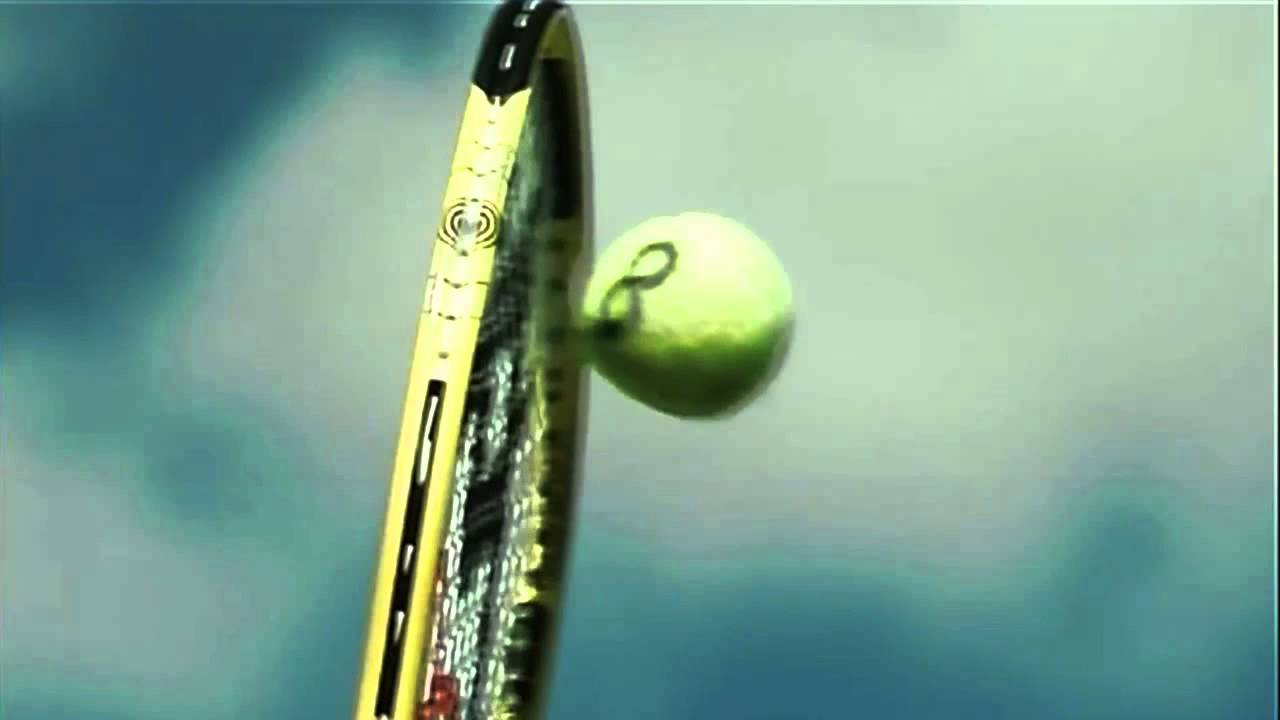
When co-polyester monofilaments entered competitive tennis, they altered the collision dynamics between ball and racket face. Polyesters possess a slick surface with remarkably low string-on-string coefficient of friction. Groundbreaking International Tennis Federation technical research on racket-string interactions demonstrates that upon impact, the main vertical strings laterally displace along the slick cross strings. For approximately four milliseconds, the felt of the ball is compressed against the racket face.
As the ball begins to leave the string bed, the displaced main strings violently snap back into their original parallel alignment. This microsecond snapback imparts immense tangential torque directly onto the core of the tennis ball. Rather than relying solely on the player’s upward brushing motion, the racket bed functions like a mechanical slingshot that multiplies angular rotation. Players who swing with high racket head speed through an open string pattern can routinely generate rotational speeds exceeding three thousand revolutions per minute.
The 4 proven technical rules that generate unstoppable topspin
Translating theoretical aerodynamics into repeatable baseline execution requires synchronizing four distinct biomechanical and physical phases. Executing modern tennis topspin mechanics requires synchronizing four distinct biomechanical and physical phases rather than relying on disconnected arm movements.
Create vertical racket head separation before forward impact
Rotational velocity depends directly on the steepness of the swing path angle. To impart forward spin, the racket head must approach the ball from significantly below the intended contact point. This requires a dedicated racket drop during the transition between the backswing and forward drive.
As your hips begin to uncoil toward the net, the racket head must drop at least twelve to eighteen inches below the level of the incoming ball. This drop should not be an active push with the hand. It happens naturally when the hitting arm relaxes and the butt cap of the racket points toward the ball. This vertical separation creates an upward ramp. As the body initiates forward acceleration, the racket travels on an aggressive low-to-high trajectory, converting upward kinetic energy into raw revolutions per minute.
Exploit the rapid snapback of low friction polyester strings
To maximize the mechanical snapback of your equipment, you must avoid squeezing the grip too tightly. Excessive grip tension locks the wrist and prevents the racket face from dynamically interacting with the ball. When a player maintains a relaxed hand pressure on a scale of three out of ten, the racket frame can whip freely through the hitting window.
This freedom allows the string bed to bite into the fuzzy felt without premature twisting. The polyester strings stretch sideways, absorb the ball’s incoming momentum, and recoil with explosive energy. If you choke the handle with white-knuckle tension, you dampen this elastomeric recoil and reduce the stroke to a rigid, flat slap.
Coordinate internal shoulder rotation with kinetic chain delivery
A frequent misconception in tennis is that heavy spin comes from snapping the wrist at impact. The human wrist is a delicate, small joint incapable of generating elite rotational forces on its own. Attempting to flick the wrist through contact is a direct route to chronic tendinopathy and inconsistent depth.
Genuine topspin generation relies on internal shoulder rotation and forearm pronation working at the end of a kinetic chain. The sequence begins with ground reaction force as the back leg drives upward from a semi-open stance. The pelvis rotates, followed by the torso, pulling the hitting shoulder forward. Finally, the upper arm internally rotates within the shoulder socket, whipping the racket upward and across the body. The wrist remains relatively stable, acting as a dynamic hinge that transfers massive energy from the core into the ball.
Brush through ball compression rather than glancing off felt
The phrase brushing the ball leads many developing players astray. When players attempt to brush, they make timid, glancing contact with the perimeter of the felt. The result is a featherweight ball that lacks penetration and lands short in the court.
Elite players hit through the ball before brushing up. The impact must compress the rubber core of the tennis ball against the frame, driving it slightly forward into the string bed before the upward swing angle shears across the back surface. You must drive through the ball for a split second to guarantee depth, allowing the vertical vector of your swing path to supply the required spin. This balance between drive and brush produces the heavy ball that opponents dread.
The deceptive visual trajectory that dismantles baseline opponents
The psychological terror driven by elite tennis topspin mechanics stems from optical disruption. When an opponent prepares to return a heavy topspin shot, their brain calculates the ball’s flight path based on the initial launch angle and early trajectory. A ball hit with significant topspin initially looks like an unforced error destined to sail feet beyond the baseline.
As the Magnus force takes over mid-flight, the descent accelerates unexpectedly. The incoming ball appears floaty and deep before the downward aerodynamic pull forces a sharp, diving plunge. It mirrors how observers misjudge atmospheric anomalies and orbital speeds when staring into the night sky; just as deciphering the Orionids Meteor Shower offers 5 crucial viewing secrets for a breathtaking night by understanding angles of entry and radiant perspectives, reading incoming topspin requires anticipating non-linear flight paths before the ball touches clay or hard court.
Once the ball strikes the court surface, friction grips the bottom felt while the forward momentum of the top half drives the rebound. Instead of skidding and losing velocity like a backspin slice, the topspin ball accelerates upward off the turf. The ball jumps rapidly toward shoulder height, crowding the opponent’s strike zone, forcing them to hit from defensive positions, and breaking down their technical timing.
Common execution errors that bleed topspin rpm and kill depth
The most widespread technical breakdown occurs when players manipulate their racket angle too early. Anxious to keep the ball in court, many recreational athletes roll their wrist forward during the forward drive, closing the racket face before contact. This leads to erratic mishits, balls dumped straight into the net, and severe loss of depth. Remedying these flaws restores structural integrity to your tennis topspin mechanics and stops erratic spraying.
The racket face should remain perpendicular to the court or slightly closed at contact, but never actively rolled over the top of the ball. True topspin is generated by the low-to-high path of the entire arm assembly, not by folding the racket over the ball. Closing the face prematurely reduces the contact zone to a sliver of a millisecond, destroying consistency under competitive pressure.
Another common mistake is falling backward off the baseline during stroke execution. Players often lean their torso backward in an instinctive attempt to lift the ball over the net. This shifts the body’s center of mass away from the target, decelerating the swing and causing the ball to float harmlessly without penetration. To produce heavy topspin, your center of gravity must move forward or hold firmly through the strike, allowing vertical racket acceleration to take care of net clearance.
Practical diagnostic drills to calibrate racket trajectory
Mastery requires targeted motor learning drills that provide immediate sensory feedback. One effective method is the net-clearance constraint drill. Tie a bright elastic cord three feet above the white tape of the tennis net. Position yourself at the baseline and practice driving groundstrokes that must cross the net entirely above the elastic cord yet dive down inside the opposing baseline. This forces your nervous system to increase racket head acceleration and drop depth, because any ball struck flat will sail long over the back fence.
Another foundational drill focuses on contact point isolation. Stand in a balanced semi-open stance at the service line. Have a partner drop balls from shoulder height without bouncing them forward. Let the ball drop to waist level, deliberately pause your racket at its lowest drop point below the ball, and drive upward through the shot with an exaggerated windshield-wiper finish. Pay close attention to the sound of the strings snapping back into place.
Film your groundstrokes in slow motion from a side profile at two hundred and forty frames per second. Look for the critical vertical drop below the ball, inspect whether your wrist remains stable through impact, and verify that your torso remains balanced rather than collapsing backward. Regularly validating your tennis topspin mechanics against these objective markers will transform theoretical physics into instinctive muscle memory, unlocking heavy, repeatable baseline power that holds up under competitive pressure.