Mortgage Payment Shock and 5 Crucial Realities Shaking American Homeowners
A toxic mix of frozen sales, surging ARM resets, and federal fraud crackdowns has broken the traditional housing ladder. Here is the data-driven reality behind today’s real estate paralysis.
Navigating the sudden mortgage payment shock has left millions of American households confronting an unforgiving affordability wall as borrowing expenses collide with historical price premiums. While prospective buyers watch transactions stall and long-term homeowners grapple with shifting debt burdens, the residential landscape has transformed from a wealth generator into an economic pressure cooker. What was once dismissed as a transient correction following post-pandemic inflation has hardened into a structural gridlock that touches every demographic from first-time Millennial buyers to retirees on fixed incomes.
The standard mechanisms that kept American housing liquid and accessible for half a century are grinding to an abrupt halt. With inventory locked in place by legacy low-rate loans and prospective buyers priced out by elevated borrowing benchmarks, transaction activity has collapsed to levels unseen in decades. The resulting friction is not merely an inconvenience for real estate brokerages; it is fundamentally altering household balance sheets, retirement projections, and lending compliance across the entire nation.
The Anatomy of a Frozen Real Estate Ecosystem
Understanding the current paralysis requires dissecting the divergence between headline interest rates and purchasing power. As reported by The Washington Post, prevailing borrowing costs hovering near 7 percent are not anomalous when viewed across a fifty-year historical timeline. During the late 1970s and 1980s, American home buyers routinely signed debt contracts carrying double-digit interest rates, sometimes climbing past 18 percent. Yet the lived experience of modern house hunting feels distinctly more agonizing than that of previous generations.
The discrepancy lies in the ratio between property valuations and household earnings. Four decades ago, when borrowing rates peaked, the median home price hovered at roughly two to three times the median annual household income. Today, years of post-2008 inventory shortages and the unprecedented pandemic buying frenzy have pushed home prices to five, six, or even seven times median earnings in major metropolitan hubs. Families caught in this mortgage payment shock are not simply reacting to higher borrowing fees; they are absorbing the cumulative weight of thirty years of asset-price acceleration paired with sudden credit tightening.
The practical result of this math is complete transactional stagnation. According to data reported by Yahoo Finance, pending home sales across the United States tumbled to a record low in September. Contract signings, which serve as the most reliable forward-looking barometer of completed transactions, plummeted as both buyers and sellers staged a mutual standoff. Sellers holding existing notes below 3.5 percent refuse to list their properties and forfeit cheap leverage, while aspiring buyers cannot qualify under strict debt-to-income ratios dictated by contemporary borrowing standards.
Five Dangerous Pressures Derailing Modern Homeownership
As liquidity contracts and transactions stall, the compounding friction across residential lending exposes severe structural vulnerabilities across five distinct battlegrounds.
Record Plunges in Nationwide Contract Signings
The collapse of pending home sales to an all-time low in September reflects an unprecedented buyer capitulation, as documented by Yahoo Finance. Pending home sales measure contract activity before final closing, capturing immediate consumer sentiment and purchasing feasibility. The drop demonstrates that conventional price reductions are failing to lure buyers back into the transaction funnel. Instead, would-be purchasers have exhausted their down payment reserves and hit borrowing ceilings, prompting widespread cancellation of home searches and sidelining institutional and retail buyers alike.
The Adjustable Rate Gamble Triggering Massive Payment Hikes
During the brief window when benchmark rates began climbing, thousands of borrowers turned to adjustable-rate mortgages to preserve affordability, betting that borrowing costs would decline before their reset dates arrived. That calculation has turned catastrophic. As detailed by Yahoo Finance, thousands of mortgage holders now face monthly payment adjustments that jump by more than $1,000 per month as their initial fixed periods expire. While a narrow slice of borrowers fortunate enough to lock specific margin benchmarks will save roughly $124 per month, the overwhelming majority are confronting an immediate, budget-breaking monthly surge.
This sudden mortgage payment shock has caught borrowers completely unprepared, particularly those who took out short-term hybrid financing under the assumption that benchmark rates would plummet before their fixed periods expired. Rather than refinancing into a benign lending environment, these households must either absorb staggering four-figure monthly increases or face distressed liquidations in an illiquid market.
Federal Indictments Targeting Falsified Application Documents in Texas
As credit conditions tighten, illicit efforts to circumvent institutional underwriting standards are triggering heavy federal enforcement. The Department of Justice announced that a federal grand jury in the Southern District of Texas has indicted two Houston-area residents for an extensive mortgage fraud scheme. According to federal prosecutors, the defendants allegedly conspired to submit fraudulent financial documents, including fabricated earnings records and altered bank paperwork, to multiple mortgage lenders to secure approvals that borrowers could not legally obtain.
The Houston prosecution signals an aggressive crackdown by federal authorities on mortgage industry participants attempting to manufacture liquidity through deceptive filings. When qualification hurdles become insurmountable through legitimate wages, fraudulent paperwork schemes inevitably proliferate. Federal law enforcement agencies are deploying advanced analytical audits to review originating documentation, warning that both facilitators and applicants face severe criminal penalties for manipulating credit files.
Compounding Savings Deficits Threatening Retirement Portfolios
The housing crunch is no longer confined to young families attempting to secure their first starter home. Recent research highlighted by Investopedia reveals that retiring with an active mortgage significantly escalates the total capital necessary to maintain financial independence across all fifty states. Decades ago, the traditional financial playbook dictated entering retirement with a fully unencumbered primary residence, eliminating the largest single line item from monthly budgets.
In the contemporary economy, escalating refinancing cycles, cash-out equity extractions, and late-in-life home purchases mean millions of older Americans are entering their post-work years saddled with substantial housing debt. The Investopedia analysis demonstrates that carrying an active monthly mortgage requires retirees to amass hundreds of thousands of dollars in extra personal savings to service debt without depleting their core investment capital. For seniors living on fixed incomes, persistent borrowing costs force harsh trade-offs between essential healthcare spending, daily maintenance, and long-term portfolio longevity.
Generational Blindspots Regarding Historic Seven Percent Borrowing Thresholds
A profound cultural and analytical disconnect has emerged between generations regarding what constitutes expensive financing. As analyzed by The Washington Post, older generations often dismiss current affordability complaints by pointing out that they successfully purchased homes when mortgage rates stood at 12, 14, or 18 percent in the early 1980s. This comparison completely ignores the underlying wage-to-price dynamics that governed those transactions.
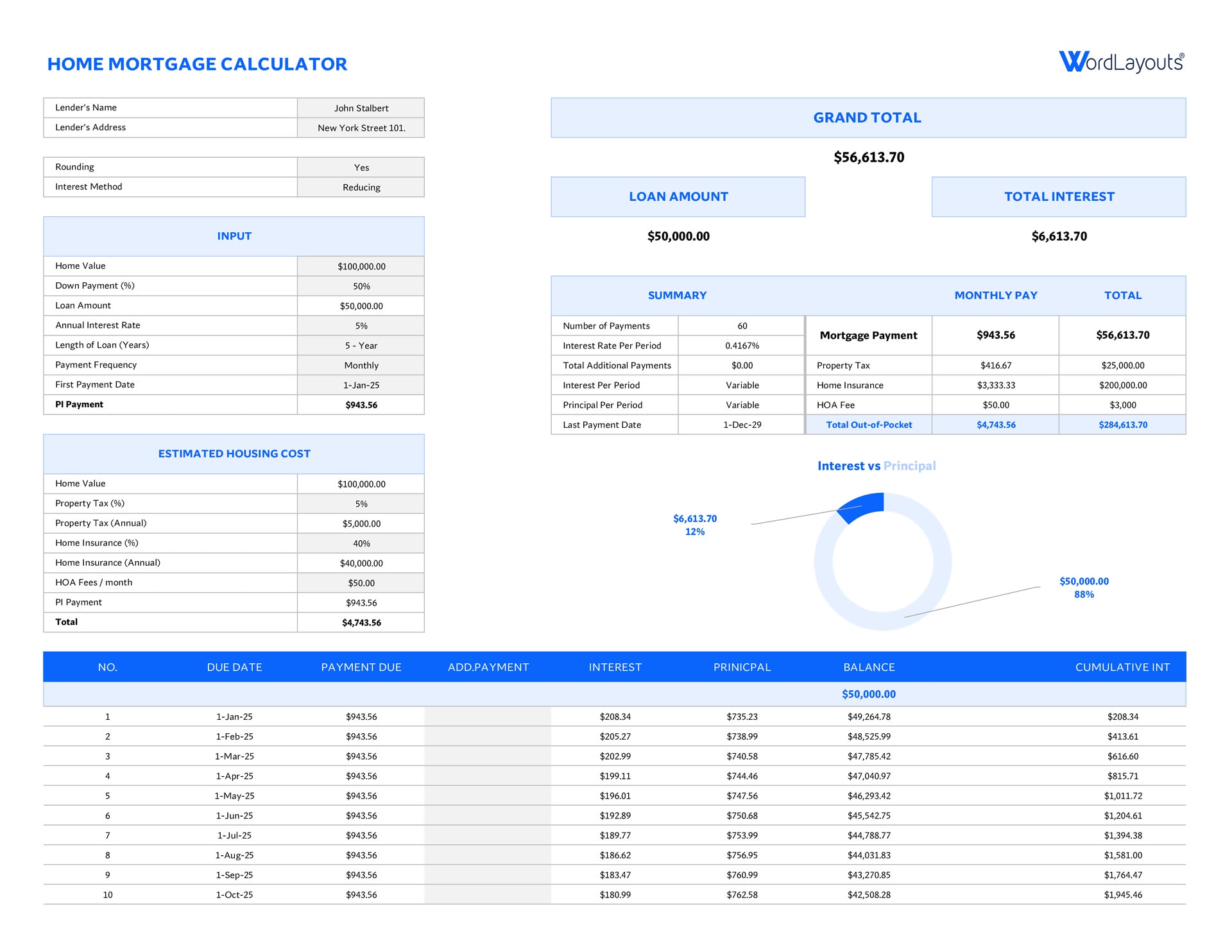
When an entry-level house cost $50,000 against a median household income of $20,000, a high interest rate produced an aggressive but manageable monthly obligation that could be rapidly paid down or refinanced as macroeconomic conditions shifted. By contrast, paying 7 percent interest on an entry-level property priced at $450,000 against a modern median household income of $75,000 consumes an unsustainable percentage of net monthly take-home pay. The mathematical reality proves that modern borrowing costs place a far heavier structural burden on consumers than the double-digit nominal rates of four decades ago.
Systemic Consequences for Buyers Borrowers and Retirees
When an acute mortgage payment shock ripples across generations, it reshapes broader financial behavior. The residential housing market accounts for a massive share of domestic economic output, driving demand for construction materials, household goods, professional legal services, and municipal tax revenues. With contract volumes paralyzed, local governments face emerging property transfer tax shortfalls, while the home improvement and appliance sectors experience cooling consumer demand.
The lock-in effect also immobilizes the American labor market. Workers who would otherwise relocate for higher-paying positions or regional career advancement are opting to remain in their current roles solely to preserve a sub-4 percent borrowing note. This labor immobility stifles workforce productivity and reduces corporate agility. For younger demographics, delayed homeownership defers household formation and equity accumulation, pushing the median age of first-time buyers to historic highs and concentrating residential real estate wealth in fewer, older hands.
Strategic Pathways Through an Unforgiving Housing Climate
Surviving an extended mortgage payment shock requires building liquidity buffers rather than exhausting reserves on oversized down payments. For homeowners currently holding adjustable-rate notes nearing their conversion window, waiting passively for broader macroeconomic rate cuts represents an untenable risk. Borrowers must actively communicate with their loan servicers to explore recast options, fixed-rate transitions, or portfolio loan modifications before an automatic reset triggers financial distress.
Prospective purchasers must also resist the temptation to cut underwriting corners. The indictments brought down in the Southern District of Texas illustrate that regulatory scrutiny over income documentation, source of funds, and employment verification has never been sharper. Attempting to bypass affordability restrictions through creative accounting or unvetted brokers exposes applicants to disastrous legal exposure.
Just as tactical agility and mental resilience determine outcomes in unpredictable high-stakes environments—a phenomenon visible in how clubs navigate the sudden reversals chronicled in the Copa Libertadores 4 Major Shocks Reshaping South American Continental Glory—prospective homeowners and existing borrowers must exhibit disciplined patience rather than impulsive financial risks. Maintaining conservative cash reserves and evaluating non-traditional pathways, such as multi-generational co-buying or debt-free living in secondary markets, increasingly outpaces aggressive debt leverage.
Reevaluating Real Estate Stability in the Modern Economy
As structural interest rates remain elevated, the prevailing mortgage payment shock underscores that real estate can no longer be viewed as a risk-free escalator to middle-class wealth. Decades of declining borrowing benchmarks conditioned the American public to view cheap credit as a permanent birthright rather than an anomaly of global monetary policy. The sudden withdrawal of that monetary stimulus has exposed how dependent the entire housing ecosystem had become on artificially depressed capital costs.
Until home values recalibrate to match median wage growth or financing costs experience genuine structural easing, managing this pervasive mortgage payment shock will remain the defining fiscal challenge for American households. Navigating this climate demands rigorous mathematical realism, strict adherence to institutional standards, and a decisive break from the outdated assumptions of previous economic eras.