Short squeeze mechanics and 4 proven rules to survive devastating market traps
When liquidity evaporates and forced buying takes the wheel, traditional valuation models collapse into dust. Unpack the underlying dynamics of short squeezes and build a bulletproof risk defense.

Mastering short squeeze mechanics is the single most vital skill for protecting capital when asymmetric market pressures rupture everyday trading expectations. In financial markets, selling short feels like an intellectual exercise in finding fraud, overvaluation, or decaying business models. Yet the operational physics of the trade carry an existential hazard that long positions never face. A long position risks one hundred percent of its allocated capital; a short position faces mathematical infinity.
When a heavily shorted asset begins to move upward, the balance of power shifts instantaneously. It is not fundamental optimism that triggers the explosion. It is plumbing. Margin thresholds trip, risk desks issue mandates, algorithmic buying activates, and short sellers rush into an order book that has emptied out. Understanding the machinery beneath this chaos is essential for anyone trading equities, derivatives, or volatile assets.
The Anatomy of Violent Market Asymmetry
When analyzing short squeeze mechanics, the structural flaw begins with the borrowing process. To sell a stock short, an investor borrows shares from a broker, who in turn sources them from institutional lenders, custodial pools, or margin accounts. The seller immediately sells those shares onto the open market, hoping to buy them back later at a lower price and pocket the difference. But those borrowed shares remain a contractual liability secured by cash and collateral.
If the share price declines, the short seller builds equity. If the share price rises, the liability swells. For every dollar the stock advances, the short seller must maintain additional collateral to satisfy margin requirements. This creates an immediate negative feedback loop. In a standard long investment, a falling asset becomes a smaller fraction of the total portfolio, organically de-risking the position. In a short trade, a rising asset consumes an ever-larger proportion of the portfolio, concentrating risk precisely when the thesis is failing.
Brokers do not wait patiently for an investor to be proven right over a three-year horizon. Under regulatory guidelines established by the Financial Industry Regulatory Authority, automated risk protocols monitor equity maintenance thresholds continuously throughout the trading session. When an account breaches maintenance margins, the automated clearing desk executes market buy orders without the trader’s consent. In that moment, valuation ceases to matter. The only metric that counts is executable liquidity.
Why Classical Risk Models Fail Under Liquidity Strain
Standard financial analysis relies heavily on Gaussian distributions, historical volatility, and standard deviations. These models assume that buyers and sellers interact in a balanced continuous auction where prices adjust smoothly. During a severe liquidity squeeze, that assumption evaporates into fantasy. The market transforms from a two-sided auction into a unilateral stampede.
A primary catalyst behind how modern short squeeze mechanics mutate beyond simple share scarcity is the interplay between equity markets and listed options. When retail or institutional momentum traders anticipate a squeeze, they often purchase out-of-the-money call options instead of physical shares. Market makers who sell those calls must remain delta-neutral. To hedge their exposure, market makers buy underlying shares. As the stock rises toward the strike price, the option’s delta climbs rapidly, forcing the market maker to buy progressively more shares to maintain their hedge.
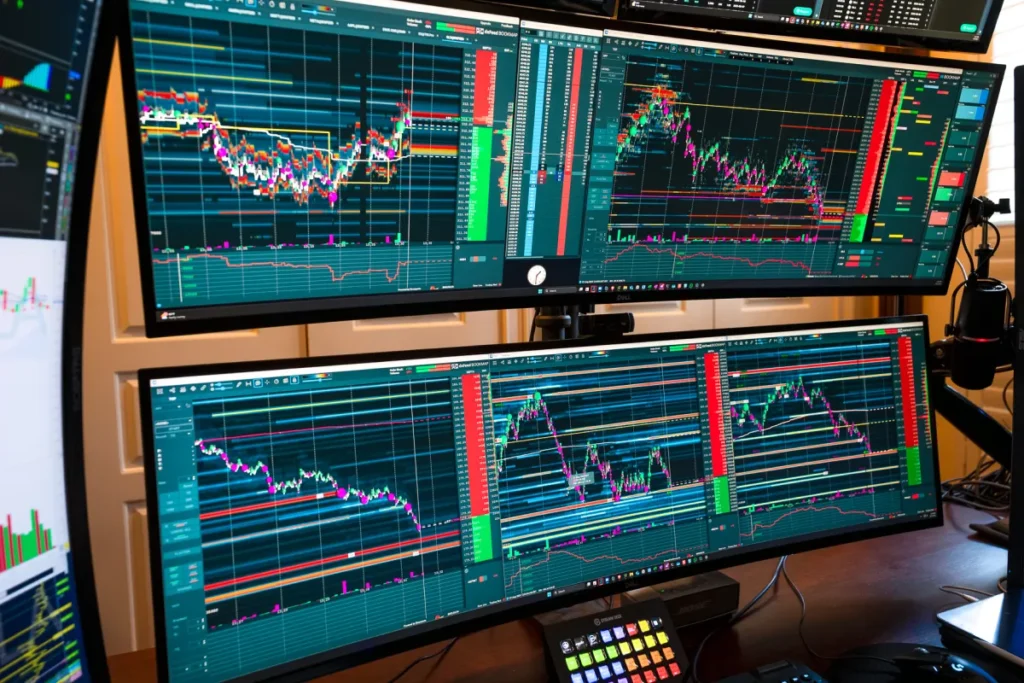
This dynamic, known as a gamma squeeze, acts as a compounding accelerator on top of existing short cover demand. The short sellers are forced to buy shares to close their positions. The market makers are forced to buy shares to hedge their calls. Momentum algorithms detect the volume surge and buy shares to ride the trend. Meanwhile, existing shareholders withhold their stock, recognizing the scarcity. The ask side of the order book vanishes, creating vertical price spikes that defy balance sheets and cash flows.
Four Proven Rules to Defend Capital Against Squeeze Traps
Navigating these treacherous conditions requires a concrete operational playbook. Demystifying short squeeze mechanics requires shifting focus from theoretical valuation to structural supply constraints. These four operational rules establish a defensive perimeter that protects your portfolio from catastrophic liquidation events.
Monitor Days to Cover and True Float Rather Than Headline Short Interest
Many investors glance at short interest as a simple percentage of total shares outstanding and assume that anything below twenty percent is benign. This is a hazardous mistake. A nominal percentage reveals nothing about how easily those shares can be repurchased when trouble strikes. The decisive metric is days to cover, calculated by dividing total short interest by the average daily trading volume.
Furthermore, savvy capital must examine the true tradable float. Institutional lockups, insider holdings, and index fund allocations frequently lock away substantial portions of total shares. If eighty percent of an equity is immobilized in passive retirement funds that do not trade daily, a seemingly modest ten percent short position actually represents half of the real circulating float. When the exit door is narrow, even a minor fire causes a fatal crush.
Calculate Borrow Fee Velocity Before Entering Countertrend Positions
The cost to borrow an equity is rarely static. On highly liquid, uncrowded stocks, the annualized borrow fee sits at a fraction of a percent. But as short inventory dries up, prime brokers ratchet up borrow fees to double or triple digits. This annualized financing charge drains capital every calendar day, including weekends and market holidays.
Pay close attention not merely to the absolute level of the borrow fee, but to its velocity. A borrow fee jumping from three percent to eighteen percent within forty-eight hours signals that prime broker desks are running out of locates. That surge represents an urgent warning flare. When borrow fees skyrocket, retail and institutional short sellers face immense carrying friction, making them hyper-sensitive to any upward movement. Entering or maintaining a short position in an accelerating borrow environment is playing Russian roulette with a loaded order book.
Respect Microstructure Depth and Synthetic Delta Pressure
Price action does not unfold in a vacuum. It is governed by mechanics, resistance levels, and order book depth. Much like the physical laws examined in tennis topspin mechanics and 4 proven rules to generate devastating baseline power, short squeeze mechanics behave according to immutable kinetic boundaries where momentum feeds directly on mechanical resistance.
Examine the concentration of open interest across option expiration cycles. When massive open interest clusters in near-term out-of-the-money strikes, the asset contains latent kinetic energy. If a sudden headline or market surge pushes spot price into those strike zones, the resulting gamma hedging will violently outpace ordinary trading volume. Never attempt to fade an aggressive vertical breakout when synthetic delta pressure is actively draining liquidity from the ask queue.
Enforce Hard Mechanical Liquidation Triggers Over Mental Stops
Mental stops are an illusion created by traders who want to avoid the emotional pain of realizing a loss. In a short squeeze, hesitation is fatal. Because price action during a squeeze can jump across whole dollar increments between trades, slippage expands exponentially with every passing second.
You must establish hard, broker-side contingent stop orders before the trade is ever executed. Better yet, risk should be capped structurally through defined-risk option strategies, such as bear call spreads or purchasing protective long calls, rather than naked shorting. By defining the maximum possible loss at the moment of entry, you completely insulate your portfolio from unannounced buyout offers, hostile capital infusions, or sudden retail coordination campaigns.
The Deadly Cognitive Trap of Valuation Purity
The emotional agony of short squeeze mechanics stems from being mathematically correct about a company’s long-term worth while being bankrupted by its short-term price. Financial history is littered with brilliant hedge fund managers who accurately identified insolvent accounting structures, yet saw their funds liquidated months before the target finally collapsed.
This failure occurs because the market is not a calculator; it is a voting machine operating on leverage limits. When an investor takes a short position, they pit their analytical logic against the structural constraints of the clearinghouse. Insisting that a company is worthless while its stock doubles every session is a fatal form of cognitive dissonance. The market can easily maintain an irrational state far longer than any individual or fund can preserve cash reserves.
Survival demands humility before capital flow. When a squeeze ignites, the fundamental narrative becomes completely irrelevant. The balance sheet of the underlying firm does not dictate the next tick; the balance sheet of the most distressed short seller does. Recognizing this distinction prevents the prideful urge to add to a losing short position under the delusion that it has simply become a better bargain.
Building a Resilient Framework for Asymmetric Exposure
Deep fluency in short squeeze mechanics turns a terrifying liquidity crisis into an orderly execution drill. Whether you are actively shorting overvalued securities or seeking to capture upside momentum from emerging structural traps, the rules of engagement never change. Markets reward those who respect structural mechanics and mercilessly punish those who prioritize personal convictions over physical liquidity.
Treat capital preservation as your non-negotiable baseline. Audit short candidates for borrow availability, analyze the depth of the tradable float, and monitor options positioning for latent gamma imbalances. When the storm hits and the order book fractures, you will not be among the panicked crowd scrambling for nonexistent exits. You will have built a framework that withstands the pressure, protects your capital, and thrives amid market volatility.