Meat brining mechanics and 4 proven rules to prevent dry ruined roasts
Unravel the biological forces that govern muscle tissue and discover how proper salt diffusion prevents your poultry and roasts from drying out under intense heat.
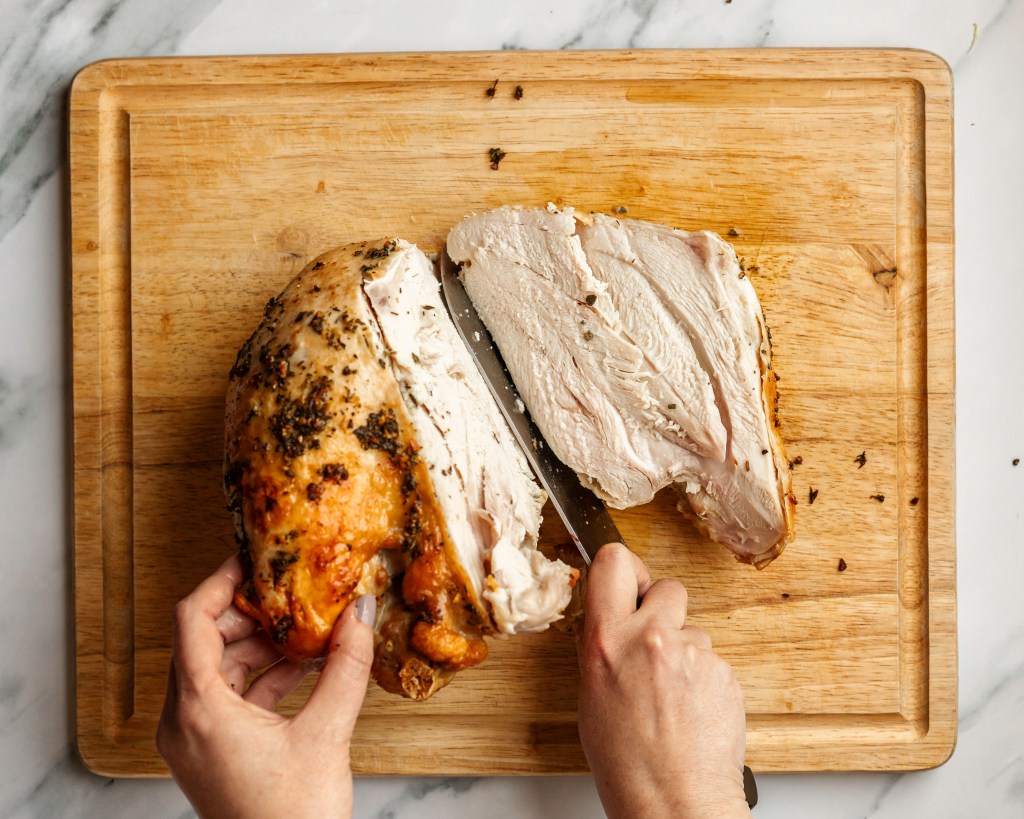
Mastering meat brining mechanics separates limp, chalky roast poultry from an impossibly succulent centerpiece overflowing with rich, savory juices. Almost every home cook has endured the heartbreak of carving into what appeared to be a golden culinary triumph, only to discover that the muscle fibers inside have seized into splintered dry wood. The oven heat acts like an uncompromising vice, relentlessly squeezing liquid out of the cellular matrix until nothing remains but fibrous disappointment. Understanding why this disaster happens requires looking past casual recipe blogs and diving directly into the biophysical architecture of animal muscle.
When you expose unbrined animal tissue to roasting temperatures, muscle fibers shorten violently and squeeze out up to thirty percent of their natural moisture weight. Basting the exterior does virtually nothing to remedy this catastrophe, because surface fats cannot penetrate tightly bound protein sheaths. Transforming your cooking from a gamble into an exact craft demands that you manipulate the electrical charges inside cellular filaments before the meat ever meets heat.
The invisible cellular tug of war inside raw muscle tissue
Muscle tissue is not a uniform sponge waiting to soak up broth or wine. It is a tightly organized lattice of elongated protein cables known as myofibrils, composed primarily of actin and myosin filaments. In living tissue, these filaments slide across one another to generate mechanical force. After harvest, these same proteins rest locked in an unyielding arrangement, bound together by cross-bridges and enveloped by dense connective sheaths called the endomysium.
Water accounts for roughly seventy-five percent of raw muscle mass, but very little of that liquid floats freely. Instead, it is physically held in the microscopic gaps between the actin and myosin filaments by capillary forces and weak electrostatic bonds. As cooking heat elevates the internal temperature of the meat past one hundred and forty degrees Fahrenheit, these protein cables denature. They unwind from their native conformations, cross-link with neighboring strands, and violently contract.
This thermal contraction acts like wringing out a wet bath towel. The space between the protein filaments narrows dramatically, rupturing cell membranes and forcing capillary water out to the pan surface where it rapidly evaporates. Without a chemical intervention to alter the protein structure before cooking, moisture loss remains an unavoidable biophysical certainty.
Why traditional marinades fail while salt penetrates deep fibers
Culinary folklore frequently celebrates thick marinades packed with garlic, citrus juice, cracked peppercorns, and olive oil as the ultimate defense against dryness. Yet when you dismantle meat brining mechanics down to molecular biology, the kitchen transforms into a thermodynamic laboratory that exposes these marinades as superficial surface treatments. Fat, acid, and aromatic molecules are physically too large and chemically incompatible to navigate the dense, hydrophobic maze of muscle fibers.
An organic molecule like an aromatic terpene or a long-chain lipid carries substantial molecular weight and complex stereochemistry. When brushed onto a raw turkey breast or pork loin, these bulky compounds stall at the surface, penetrating less than a millimeter into the outer crust over twenty-four hours. Acids like vinegar or lemon juice behave even more destructively, rapidly denaturing surface proteins without migrating inward, leaving you with mushy exterior tissue wrapped around an unaltered, leathery interior core.
Salt behaves according to an entirely different set of physical laws. Table salt and kosher salt consist of sodium and chloride ions held by simple ionic bonds. The moment salt encounters moisture on meat tissue, it dissociates into tiny, charged particles. These atomic-scale ions possess the agility to slip through narrow channels in the endomysium, traveling inward along moisture gradients and reconfiguring the fundamental electrical environment of the deep muscle tissue.
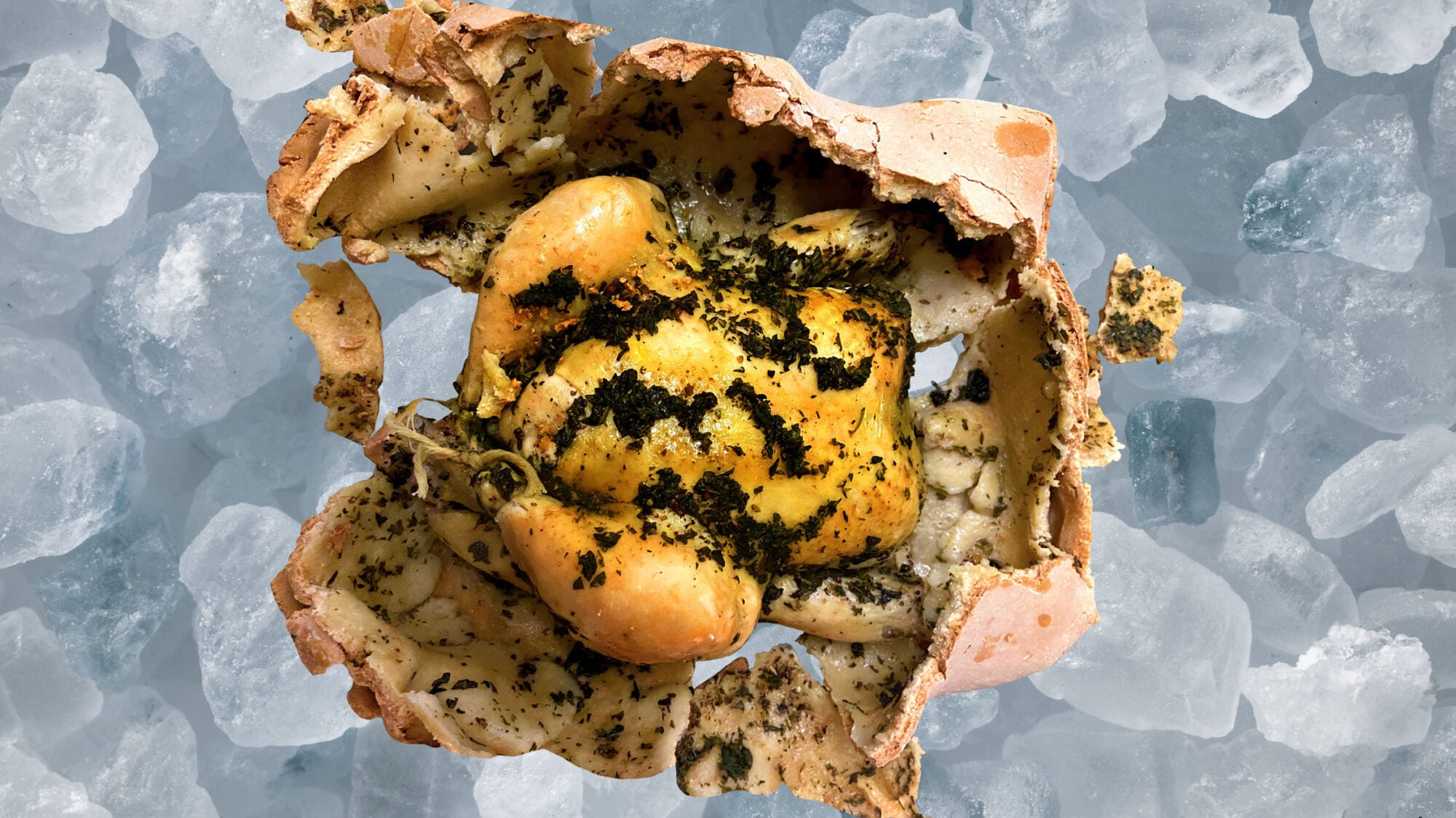
The four fundamental laws of moisture retention and protein restructuring
A thorough grasp of meat brining mechanics reveals that salt does not simply carry water into tissue through passive absorption. Rather, it executes a profound structural renovation of muscle proteins, forcing tightly coiled filaments to relax, unwind, and create permanent physical reservoirs for moisture retention.
Wet brining versus dry brining equilibrium thresholds
Wet brining immerses muscle in a diluted saltwater bath, typically between five and eight percent salinity by weight. Through osmotic pressure, water initially moves across semi-permeable cell membranes toward higher solute concentrations. However, as sodium and chloride ions diffuse into the intracellular space, they disrupt the natural balance, drawing water back inside the muscle bundles until the meat actually gains up to ten percent of its raw weight in fluid.
Dry brining, conversely, relies solely on the meat’s intrinsic cellular fluids to create a localized micro-brine. You sprinkle dry salt across the exterior surfaces at roughly one to one-and-a-half percent of the total meat weight. The salt pulls surface moisture outward via osmosis, dissolves into an ultra-concentrated saline slick, and then diffuses inward through passive mass transfer. While dry brining does not inflate overall tissue weight like a submerged bath, it preserves the authentic concentration of natural juices without diluting poultry flavor into waterlogged blandness.
Temperature windows that govern ionic diffusion rates
Molecular diffusion is fundamentally driven by kinetic energy, meaning that ambient temperature governs the velocity at which sodium ions navigate cellular channels. However, food safety requirements strictly constrain how warm meat can sit. The ideal equilibrium occurs strictly between thirty-four and thirty-eight degrees Fahrenheit, balancing safe microbial control against steady ionic migration.
Cold temperatures slightly retard diffusion speeds, which is why a six-pound whole chicken demands at least twelve to twenty-four hours of dry brining to achieve core saturation. Attempting to accelerate this schedule by leaving poultry at room temperature encourages dangerous bacterial multiplication long before ions reach the bone. Maintaining steady refrigeration preserves cell wall stability while salt methodically reorganizes internal proteins.
The precise math behind cell swelling and denatured myosin
The true magic of saline intervention occurs when sodium and chloride ions flood the spaces between actin and myosin filaments. At resting states, myosin proteins carry neutral or balanced electrical charges that allow them to sit bundled together in tight parallel lines. When chloride ions bind to these protein strands, they impart a uniform negative electrical charge along the filaments.
Because identical electrical charges repel one another, the adjacent protein filaments push apart with remarkable mechanical force. This cellular swelling expands the interstitial matrix, creating cavernous structural voids. Simultaneously, the salt dissolves portions of the myosin heads entirely, neutralizing their ability to contract under heat. This osmotic boundary highlights why meat brining mechanics behave so radically differently when sugar or aromatic compounds enter the matrix, as the pure ionic charge of salt remains the sole driver of filament repulsion.
Surface dehydration dynamics that unlock crisp blistered skin
Retaining internal moisture solves only half the culinary equation; an extraordinary roast must also deliver a shatteringly crisp exterior. Wet-brined poultry often emerges from the oven with rubbery, pale skin because waterlogged dermal layers spend all their thermal energy boiling off excess surface liquid instead of frying in rendered subcutaneous fat.
Dry brining solves this dilemma through surface dehydration dynamics. After the salt dissolves and migrates into the deep muscle, the remaining surface moisture evaporates into the cold, dry air of the refrigerator. This leaves behind a tight, translucent skin layer known as a pellicle. When this dehydrated skin hits oven heat, it instantly triggers high-temperature browning reactions instead of stalling in a lukewarm steam cloud.
Navigating the critical boundary between tender meat and spongy degradation
While salt acts as a structural savior, more is never simply better. Ignoring the temporal limits of meat brining mechanics leads to the dreaded hot-dog texture, an unappetizing culinary failure where meat turns soft, slick, and unnaturally homogenous. When protein filaments remain exposed to high saline concentrations for excessive durations, the structural scaffolding of the muscle completely dissolves.
Myosin and actin provide essential structural bite. If muscle sits in a strong brine beyond forty-eight hours, the ongoing protein solubilization breaks the muscle bundles down into an amorphous gel. Instead of clean flakes of fish or striated, tender shreds of turkey thigh, the cooked protein cuts like luncheon loaf with zero fibrous tooth. Adhering to the established United States Department of Agriculture brining guidelines safeguards your kitchen against both dangerous bacterial proliferation and catastrophic structural degradation.
Translating molecular discipline into everyday kitchen mastery
Transforming food science into unforgettable meals requires letting go of arbitrary internet shortcuts and honoring the physical mechanics of animal muscle. Just as verifying unvetted claims against primary records protects investigative reporters—a concept detailed in our breakdown of anonymous source mechanics and 4 proven rules that prevent devastating credibility collapse—a cook must cross-reference culinary assumptions against molecular realities rather than blindly trusting kitchen folklore.
When you prepare your next roast chicken, prime rib, or thick-cut pork chop, reach for kosher salt well in advance. Weigh your protein on a digital gram scale, measure precisely one point two percent of that mass in salt, and distribute the crystals uniformly over every contour. Leave the meat uncovered on an elevated wire rack in your refrigerator overnight, letting the cold air cure the surface while the ionic charges systematically remodel the internal muscle structure.
Once you internalize these meat brining mechanics, you stop guessing oven times and praying over dry breast meat. Heat ceases to be a destructive enemy that steals moisture and becomes the finishing catalyst that renders fats and caramelizes sugars across a fortified cellular foundation. You gain absolute command over the plate, delivering succulent, structural perfection that endures through every single slice.