Foley sound design mechanics and 4 proven methods that build breathtaking cinema realism
Behind every thunderous cinematic punch and whispering silk dress lies a dedicated Foley artist performing in an acoustic sandbox. Explore the intricate physical mechanics and psychoacoustic illusions that breathe tactile life into silent film frames.
Mastering Foley sound design mechanics allows cinematic storytellers to transform sterile film sets into visceral, living worlds that completely envelop the human senses. When audiences watch an actor trudge through deep snow or slice a fresh apple on screen, they assume the production microphone captured every crisp crunch and wet snap in real time. The reality of cinema production is startlingly different. Production microphones are tuned exclusively to capture clean, intelligible spoken dialogue while deliberately rejecting room tone, ambient rustle, and low-end footfalls. Without post-production intervention, a completed film edit feels hollow, uncanny, and unnervingly flat.
Foley art bridges the sensory gap between cold two-dimensional visual projections and the three-dimensional sonic reality our brains demand. Named after sound pioneer Jack Foley, this discipline combines biomechanics, tactile physics, psychoacoustics, and theatrical performance. Rather than dragging static digital audio files from a hard drive onto a timeline, Foley artists physically perform every movement in specialized studios while watching playback on a monitor. The result is a living tapestry of acoustic textures perfectly matched to on-screen kinetic energy.
The Illusion of Organic Cinema Audio
Every pristine film scene begins as an acoustic wasteland. Shotgun microphones suspended on boom poles hover overhead, targeting the actors’ vocal tracts while narrow pickup patterns filter out environmental noise. Modern digital cameras produce quiet fan hums, camera dollies rumble across temporary tracks, and practical studio floors are often built from hollow plywood that booms unnaturally under real footwear. If a director kept the native ambient production audio, the scene would sound chaotic, boxy, and amateurish.
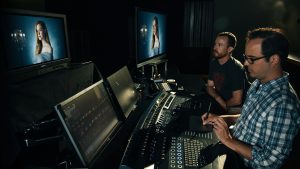
To solve this, re-recording mixers strip away almost everything captured on set except the pure dialogue tracks. In high-action sequences, even the spoken words are frequently discarded and rerecorded through automated dialogue replacement. Consequently, understanding Foley sound design mechanics reveals that mainstream filmmaking is fundamentally a pantomime. The audience watches silent actors moving through a soundless universe until acoustic sculptors rebuild physical reality from scratch, one solitary vibration at a time.
This reconstruction requires an extraordinary grasp of spatial scale and dynamic touch. A featherweight character stepping onto cobblestones produces a vastly different acoustic transient than a heavily armored soldier taking the same step. Every garment, shoe sole, handheld prop, and ambient friction point must be analyzed, performed, and mixed to preserve the illusion that sound and image originated simultaneously from the exact same physical event.
Physics Behind Psychoacoustic Material Matching
Human hearing is exceptionally sensitive to transient attacks, spectral envelopes, and resonant decay times. When an object strikes a surface, the initial impact creates a sharp burst of high-frequency energy lasting only a few milliseconds, followed by a slower dissipation of resonant frequencies determined by material mass, elasticity, and hollow cavity volumes. If a sound designer uses a sound effect where the attack transient arrives three milliseconds too early or lingers two milliseconds too long, the audience’s brain senses a subconscious mismatch.
Cinema immersion depends directly on physical believability rather than absolute literalism. An actual punch to the human face sounds dull, wet, and surprisingly quiet in real life. It does not carry the bone-jarring impact moviegoers expect. Sound artists must deliberately engineer hyper-real sonic profiles that satisfy emotional expectations while adhering to the physical laws of acoustic vibration. At the very core of Foley sound design mechanics is the calibration of physical momentum, kinetic energy transfer, and psychoacoustic resonance.
Achieving this balance requires objective rigor. Just as journalistic integrity hinges on strict verification systems detailed in our breakdown of Anonymous source verification mechanics and 4 proven rules that prevent disastrous newsroom errors, cinematic sound editors must verify the physical authenticity of every acoustic vibration before committing it to the final master. Grounding creative choices in Audio Engineering Society research on psychoacoustics ensures that synthesized sounds align seamlessly with human perceptual expectations.
Core Disciplines That Define Flawless Sound Reproduction
Deconstructing modern Foley sound design mechanics requires breaking down the physical craftsmanship across four interconnected disciplines. Each discipline addresses a specific category of on-screen movement, demanding bespoke studio construction, specialized microphone techniques, and a vast personal archive of peculiar tactile materials.
Dynamic Footstep Articulation and Surface Damping
Footwear performance forms the backbone of any Foley session. Footsteps communicate far more than physical locomotion; they broadcast a character’s emotional state, body weight, health, footwear construction, and underlying psychological urgency. A hesitant character shuffles with light heel contact and extended drag time, whereas a confident detective strikes the surface decisively with rigid heel-to-toe force distribution.
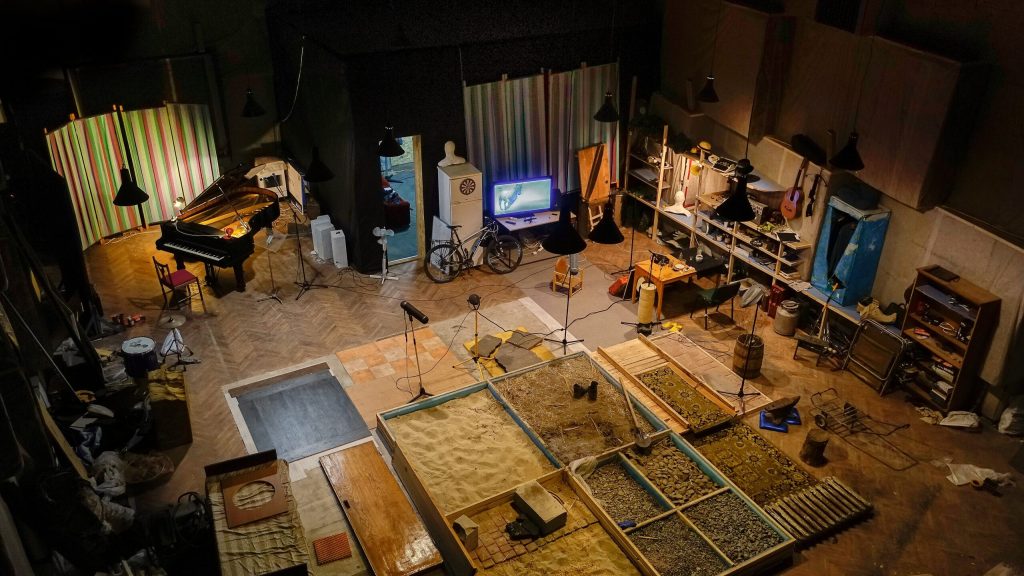
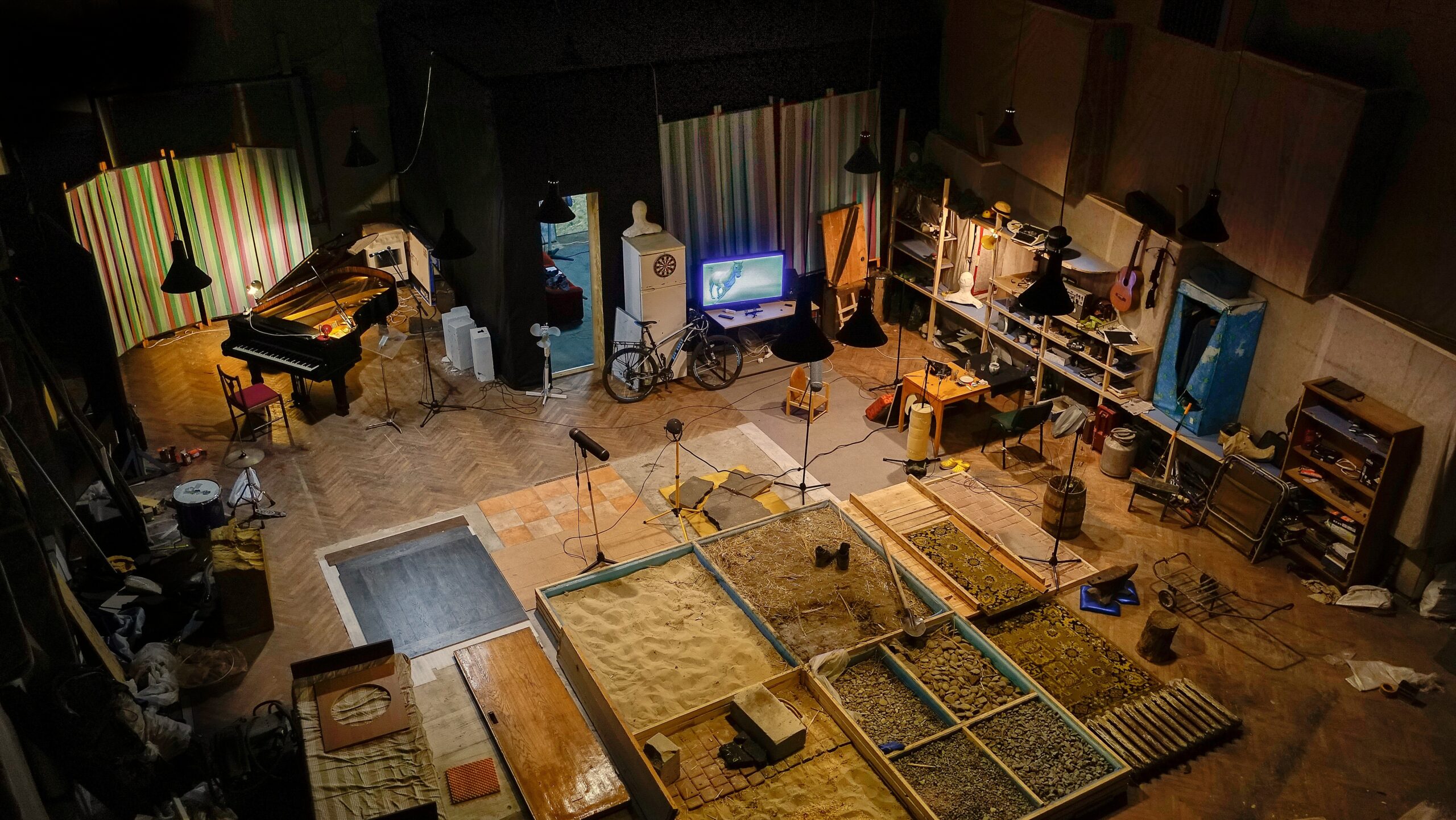
Foley studios build specialized pits sunk into the concrete foundation, filled with gravel, sand, dirt, dry leaves, hardwood flooring, and flagstone slabs. The artist keeps dozens of shoe pairs on hand, ranging from soft-soled vintage sneakers to worn military boots with steel shanks. To capture the authentic weight of a character who might weigh fifty pounds more than the artist, the performer leans into the microphone, modifying physical posture and using controlled knee flexure to simulate heavy skeletal mass impacting the earth.
Micro Texture Cloth Movement and Spatial Depth
Human beings produce a continuous envelope of soft friction as they move through the world. Fabric rubbing against fabric creates micro-textures that tell the subconscious mind where a character is located relative to the camera lens. Cloth tracks provide continuity glue that binds dialogue, music, and dramatic effects into a singular acoustic picture.
Performers hold various textile swatches directly in front of sensitive condenser microphones while watching the film monitor. Denim, heavy canvas, fine silk, coarse wool, and aged leather each possess unique frequency response curves. Silk delivers a light, whispering hiss with fast high-frequency transients, while heavy wool absorbs high frequencies and produces muted mid-range friction. Manipulating these textiles with rhythmic precision remains a subtle pillar of Foley sound design mechanics that anchors human presence on screen without masking delicate dialogue frequencies.
Visceral Prop Manipulation and Bizarre Material Substitutions
The items seen on screen rarely produce the best sound for cinema recording. Plastic props used on film sets sound brittle and hollow, real knives clink rather than gleam with metallic menace, and breaking bones cannot be harvested from live human subjects. The Foley artist operates as a master of material substitution, hunting for everyday household objects that mimic visual motion through completely unexpected acoustic mechanisms.
To create the agonizing crunch of a shattered forearm, an artist bends frozen celery stalks or snaps heads of raw cabbage wrapped in damp chamois leather. The squelch of alien gore is routinely forged by plunging hands into bowls of wet pasta or handling halved cantaloupes. Rusty door hinges, antique clockworks, vintage automobile seatbelts, and heavy iron wrenches become versatile musical instruments in the hands of an experienced practitioner. The metric of success is never what made the sound, but how convincingly the result synchronizes with visual narrative reality.
Acoustic Room Coupling and Environmental Decay
Even the most perfectly executed footstep or leather rustle will instantly shatter cinematic immersion if it sounds like it was recorded in a dry, dead isolation booth while the camera portrays a cavernous cathedral or an open meadow. Audio captured in a soundstage must be acoustically coupled to the visual environment depicted on the silver screen.
Artists achieve this spatial cohesion through strategic microphone positioning and acoustic boundary management. Close-miking a prop isolates dry transients, but pulling the microphone three meters backward introduces natural air absorption and room reflections that match a medium or wide camera shot. Modern sound designers blend these physical studio acoustics with convolution impulse responses, capturing the real reverberation profiles of historic castles, subway tunnels, and forest clearings to seat the Foley performance seamlessly into the cinematic space.
Cognitive Illusion and Why the Human Brain Accepts Acoustic Fakes
The human sensory apparatus is remarkably forgiving when cross-modal sensory cues line up temporally. This phenomenon, known in sensory science as audiovisual binding, means the brain actively merges what the eyes see and what the ears hear into a unified cognitive perception. If an audience member sees a glass shatter on screen within forty milliseconds of hearing an acoustic impact transient, the auditory cortex automatically assumes the visual event produced the noise.
Because the brain is eager to construct a coherent narrative, the ultimate triumph of Foley sound design mechanics rests inside cognitive psychology. The Foley artist does not need to duplicate reality down to the microscopic atomic level. Instead, the artist must replicate the emotional signifiers of an event. By exaggerating key frequencies, such as boosting the heavy low-end thud of an ordinary car door closing, the sound designer delivers a feeling of luxury, durability, and dramatic weight that real life rarely provides.
The Peril of Digital Sterility and Library Exhaustion
In modern digital workflows, the temptation to abandon physical Foley stages in favor of massive commercial sound libraries is intense. Dragging pre-recorded footstep samples onto a digital audio workstation timeline is undeniably cheaper and faster than hiring dedicated artists and renting acoustic facilities. Yet films produced entirely with cut-and-paste sound libraries suffer from a distinct, lifeless monotony that discerning viewers quickly detect.
Pre-recorded samples lack continuous dynamic variation. A human being walking across a room never takes two identical steps. Subtle variations in surface texture, micro-pauses in gait, shoe sole angle, and emotional velocity change from step to step. When sound designers rely exclusively on static digital samples, the brain notices the repetitive acoustic fingerprints, breaking the hypnotic trance of the movie. Protecting authentic Foley sound design mechanics ensures that tactile storytelling never yields to sterile automation, preserving the human soul at the very heart of cinema.