Oregon School Shooting Leaves 3 Critical Questions as Community Demands Real Answers
A devastating elementary school attack in Bend, Oregon unfolded in just three minutes, leaving four dead and sparking national debate over armed civilian intervention. Here is the fact-grounded investigative breakdown of what happened and what comes next.
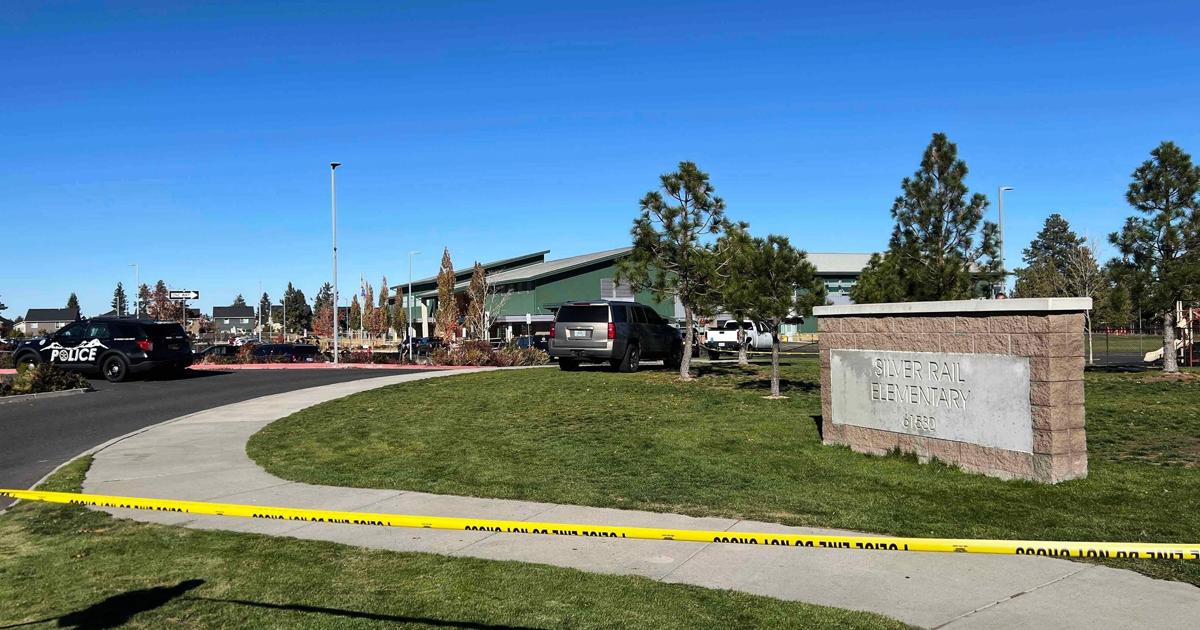
The devastating Bend, Oregon school shooting unfolded with terrifying velocity on an otherwise routine morning, shattering an elementary campus and leaving families in mourning. Within seconds of the initial alarm, law enforcement and emergency responders scrambled to secure the facility, yet the violence was over almost as rapidly as it began. As reported by national outlets including CNN and NBC News, the entire tragic incident spanned a matter of mere minutes, leaving local officials and traumatized residents searching for answers amidst profound grief.
In the wake of the crisis, the municipality of Bend has found itself at the epicenter of a painful national conversation. While modern campus safety protocols are designed around early detection and containment, the suddenness of the attack exposed the razor-thin margin of time schools have to react when violence enters their halls. Emergency medical teams, federal investigators, and district administrators quickly converged on the site to support survivors and begin the long, rigorous process of reconstructing every movement made during the breach.
A Tragic Three Minute Timeline in Bend
According to investigative details published by CNN, the catastrophic assault took just three minutes from the moment the assailant entered the campus until the confrontation concluded. In modern emergency management, three minutes represents an extraordinarily narrow operational window. Even with modern digital dispatch mechanisms, law enforcement response times rarely match the speed with which an armed perpetrator can inflict devastating harm once inside an unprotected educational space.
Surveillance feeds, emergency 911 audio logs, and physical forensic mapping are now being synchronized by state and federal investigators to pinpoint how the perimeter was compromised. A three-minute window highlights the brutal operational reality confronting rural and suburban school districts nationwide. By the time primary dispatch units acknowledged the active shooter code and sounded local sirens, the fatal sequence inside the building had already reached its conclusion, presenting tactical analysts with critical questions about physical perimeter safeguards and instant-alert lock systems.
The findings from Bend indicate that traditional perimeter warnings are frequently outpaced by rapid movement. Investigators examining the sequence note that the speed of modern semi-automatic weapon fire means an attacker can navigate multiple hallways and secure zones before off-site tactical units can complete their vehicle transit. The temporal compression of this tragedy has therefore become the baseline metric through which state security advisers are evaluating current campus threat models.
Targeting a Special Needs Classroom and the Immediate Aftermath
Details reported by NBC News revealed that the violence concentrated directly inside a specialized education environment, specifically an elementary school special needs classroom. The setting of the attack added a heartbreaking dimension to the tragedy. Specialized classrooms are designed as safe, nurturing havens for children requiring individualized developmental and educational support, making the violent disruption uniquely horrific for staff and first responders.
NBC News confirmed that the teenage gunman killed three young children and one dedicated teacher during the rampage before the threat was neutralized. The loss of an educator who remained beside students in their most terrifying moments underscores the courage displayed under unthinkable circumstances. Meanwhile, the trauma experienced by surviving children and neighboring classrooms has required immediate psychiatric mobilization, with crisis counseling networks arriving from across the Pacific Northwest to stabilize the school community.
While international news often tracks unpredictable developments in global culture and sports—such as our recent breakdown of how Bayern Munich Sparks 3 Major Shocks With Surprising Transfer Decisions—the sudden shockwave of the Oregon school shooting instantly redirected the nation’s collective focus toward institutional vulnerability and child protection.
The 3 Crucial Dimensions of the Armed Civilian Confrontation and Investigation
As state authorities assemble the formal investigative file, understanding the Oregon school shooting requires untangling three interconnected facets that define this tragedy and differentiate it from previous school crises across the country.
The Lightning Fast Three Minute Incident
The duration of the incident remains its most technically alarming aspect. CNN confirmed that the entire sequence was confined to roughly 180 seconds. In standard active threat paradigms, law enforcement response times average between five and eight minutes in well-resourced suburban areas. The fact that an entire mass-casualty event occurred inside that typical arrival window has forced a fundamental rethink of passive security. When safety measures rely purely on summoning off-site police officers, those three minutes represent an undefended vacuum that active shooters can ruthlessly exploit.
The Intervention of an Armed Father on School Grounds
A central, highly scrutinized development reported by PBS is that an Oregon father acted as an armed civilian to confront the gunman during the attack. PBS highlighted that this individual became the latest civilian in the United States to draw a firearm against a mass shooter in a public facility. Armed civilian interventions on elementary school property carry intense legal, tactical, and ethical ramifications, generating fierce debate among law enforcement professionals.
Tactical analysts point out that while civilian confrontations can theoretically interrupt an active killer, they also present enormous risks for arriving police officers who must instantly distinguish between the primary aggressor and an armed bystander. The father’s actions in Bend are now being examined by district attorneys and police leadership to determine how civilian presence altered the trajectory of the shooter’s movements inside the building.
The Devastating Toll Inside the Elementary Classroom
The specific human cost documented by NBC News—three children and a teacher slain by a teenage perpetrator—has ignited severe grief throughout central Oregon. The classroom targeted housed children with special developmental needs, students who were uniquely defenseless and dependent on adult assistance to navigate emergency protocols. The loss of four lives within a single instructional room reflects the concentrated nature of the violence and has raised urgent questions regarding classroom door locks, emergency egress routes, and internal architectural hardening.
How a Reeling State Grapples With Trauma and Accountability
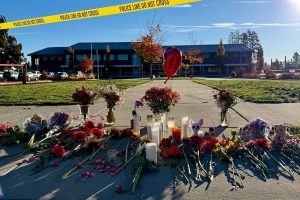
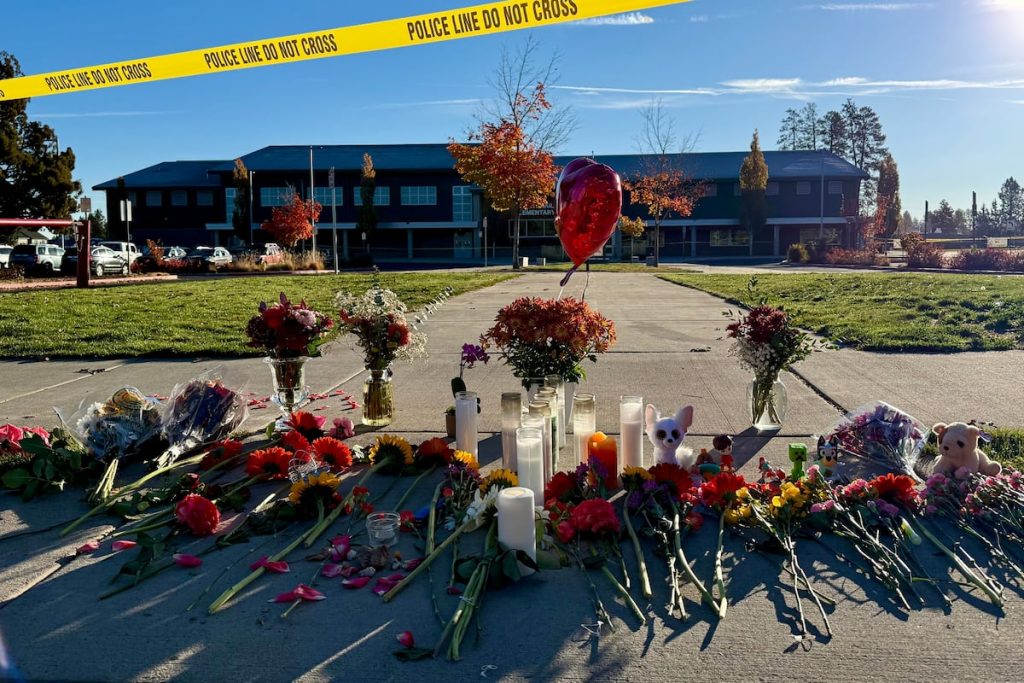
In the hours and days following the bloodshed, an entire metropolitan region has struggled to absorb the emotional weight. CBS News documented how the local population is still reeling, with hundreds attending impromptu candlelight vigils outside civic centers and placing memorial wreaths along the perimeter fence of the school. Parents throughout the district have expressed agonizing uncertainty over returning their children to classrooms, demanding immediate structural audits of all municipal academic facilities.
The cultural dislocation caused by the crisis was palpable across the state. Even as regular public events continued—such as statewide sports coverage tracking the Nebraska Cornhuskers leading the Oregon Ducks 14-9 in the fourth quarter with Dylan Raiola taking snaps, as reported by OregonLive.com—the mood across Oregon was profoundly subdued. The simultaneous occurrence of major athletics and sudden communal devastation highlighted how quickly everyday normalcy is upended when catastrophic violence strikes vulnerable institutions.
Local governance in Bend now faces intense scrutiny. Community members at emergency town hall meetings have challenged district officials on visitor screening protocols, campus access controls during school hours, and the enforcement of perimeter boundaries. School board meetings are expected to draw unprecedented crowds as families demand transparency regarding whether existing threat assessment teams had received any prior warnings about the teenage gunman.
Broader National Reverberations Across School Safety Debates
The tragedy in Bend will inevitably resonate across state legislatures and Capitol Hill. The involvement of an armed parent, detailed by PBS, has thrust Oregon into the center of the fierce national discourse surrounding campus carry laws, civilian intervention doctrines, and school resource officer staffing. While gun-rights advocates frequently argue that armed citizens represent an essential backstop during rapid attacks, safety experts caution that unregulated civilian firearms on elementary campuses create chaotic tactical environments that can endanger first responders and innocent bystanders.
Furthermore, the fatal Bend, Oregon school shooting will inevitably influence legislative hearings regarding adolescent mental health intervention and youth access to firearms. Given that the perpetrator was identified as a teenager, investigators are methodically tracing the chain of custody for the weapon utilized in the assault. State safe-storage statutes and parental liability precedents will likely play a prominent role as prosecutors determine whether secondary criminal charges are warranted.
As funeral services begin for the three young students and their heroic teacher, the community remains unified in grief while resolute in its demand for accountability. The lessons learned from those devastating three minutes in Bend will not remain confined to central Oregon; they are poised to reshape the operational security blueprints of elementary schools across the entire nation.