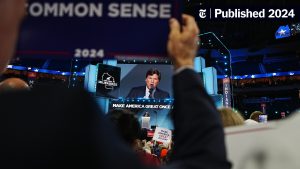
Tucker Carlson Triggers 5 Explosive Battles Across the Political Divide
Tucker Carlson is redefining his political footprint, openly challenging Donald Trump on foreign intervention and sparking fierce civil wars across the conservative media landscape. Here is an investigative breakdown of the major fractures shifting American politics.
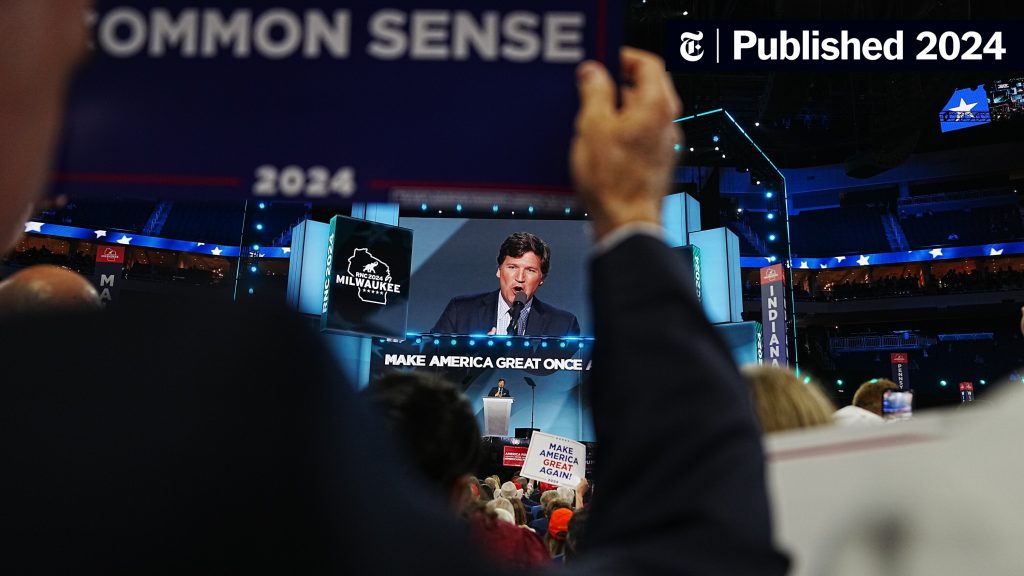
The relentless political trajectory of Tucker Carlson has shattered conventional expectations across Washington, transforming the former prime-time host into an unpredictable power broker willing to challenge traditional partisan alliances. No longer bound by the editorial constraints of cable networks, his independent broadcasting platform has evolved into an ideological arena where conservative orthodoxies face intense scrutiny. From fiery disputes over foreign entanglements to open breaks with Republican leadership, the commentator now exerts a disruptive pull that complicates traditional political strategies on both sides of the aisle.
Rather than functioning merely as an echo chamber for conservative politics, his recent maneuvers reveal a willingness to confront historical allies and endorse unconventional viewpoints. Observers across the political spectrum are actively parsing his escalating rhetoric, which ranges from questioning prolonged foreign military interventions to taking surprising sides in fiercely contested electoral races. Understanding the breadth of this transformation requires dissecting how Carlson has leveraged his digital independence into an unyielding geopolitical and cultural campaign.
The Unprecedented Evolution of an Independent Media Powerhouse
When the platform commanded by Tucker Carlson operates outside traditional studio boundaries, its reach frequently forces legacy institutions to respond. His post-cable transformation has defied standard industry predictions, converting an established broadcast audience into a sprawling, direct-to-consumer digital following. This detachment from network executive suites has allowed him to venture far beyond standard party talking points, embracing anti-interventionist stances, cultural critiques, and provocative historical debates that traditional television formats historically avoided.
This aggressive pivot has drawn sharp scrutiny from journalism analysts. An investigative report by Mother Jones highlighted concerns over how leading legacy publications, including The New York Times and NPR, have documented his ideological evolution. Media watchdogs argue that mainstream profiles have often normalized or softened the severity of his most contentious interviews and positions. Controversies surrounding discussions of World War II historiography, vocal skepticism toward foreign aid, and challenges to traditional diplomatic consensus have raised alarm among critics who argue that legacy coverage frequently understates the radical nature of his viewpoints.
The High Stakes Collision With Trump and Vance on Foreign Policy
Foreign policy has become the most volatile battleground between the independent commentator and establishment conservative figures. Carlson has increasingly positioned himself as an uncompromising voice against American military adventurism abroad, clashing directly with hawkish factions within the Republican establishment. The tension reached new heights amid shifting geopolitical escalations, where the threat of foreign entanglement prompted intense public maneuvering among top national figures seeking to retain credibility with his populist audience.
Live political updates from News.com.au highlighted this dynamic through reporting on Vice Presidential nominee JD Vance, who made urgent overtures toward Carlson amid sharp debates surrounding Donald Trump and military strategies regarding Iran. Vance, long viewed as an ideological bridge between populist nationalism and the traditional ticket, found himself navigating deep fractures over potential Middle Eastern interventions. As public reporting indicated, Carlson emerged as one of the loudest critics of open-ended foreign military engagements, making it politically essential for figures around Trump to address his skepticism directly.
The friction between America First non-interventionism and aggressive military posturing has created unprecedented rifts. The sheer influence of his broadcasts has compelled leaders to appease Tucker Carlson directly, illustrating how digital media figures can exert leverage over national security debates that were once confined strictly to closed-door congressional committees and executive war rooms.
5 Critical Flashpoints Reshaping the Global Influence of Tucker Carlson
The commentator’s trajectory has created multiple distinct battlefronts that are reshaping public discourse and political alignments. Below are five pivotal flashpoints illustrating how his rhetoric is actively redrawing the lines of modern political engagement.
The Nuclear Red Line and the Oval Office Warning
Perhaps the most severe confrontation between Carlson and traditional executive power surfaced in his direct rhetoric regarding military authority. As documented by The Hill, the commentator issued an extraordinary warning regarding the absolute limits of presidential power, declaring that the second any president actively considers the first use of nuclear weapons, that individual should be removed from office immediately. The uncompromising remark highlighted an existential friction point with aggressive defense posturing, underscoring Carlson’s willingness to advocate for constitutional removal rather than endorse escalatory military doctrines.
The Desperate Foreign Policy Appeal From JD Vance
The fracture within Republican ranks became unmistakably clear through diplomatic backchannels and media statements. Reports from News.com.au outlined how JD Vance engaged in careful political outreach toward Carlson to navigate intense disputes over Middle Eastern escalations, specifically concerning military maneuvers in Iran. Vance sought to balance loyalty to Trump with the anti-war sentiment championed by Carlson, demonstrating that the populist base remains deeply resistant to international conflicts that resemble past foreign interventions.
The Bitter Media Schism Involving Ben Shapiro and Candace Owens
The civil war within right-leaning digital commentary reached an intense fever pitch over religious, theological, and international affairs. The Times of India covered how commentator Candace Owens publicly stood firmly beside Tucker Carlson during a rancorous dispute with Daily Wire co-founder Ben Shapiro. The feud erupted over fundamental disagreements regarding the Noahide Laws, international foreign policy priorities, and broader accusations of cultural and religious hostility toward Christians, effectively splintering online conservative media into warring camps.
Crossing Party Lines in the Michigan Senate Race
Demonstrating an unpredictable realignment, Carlson shocked standard political observers by intervening in key domestic races outside conventional Republican loyalty. An investigative analysis by The New York Times revealed that Carlson actively amplified and defended remarks from progressive Democrat Abdul El-Sayed in Michigan. Rather than backing establishment Republican candidate Mike Rogers, Carlson criticized Rogers’ record and hawkish policy background, illustrating his total indifference to baseline party loyalty when confronting politicians he views as aligned with corporate neoconservatism.
The Growing Debate Over Legacy Media Whitewashing
The debate surrounding Carlson extends directly into how journalism itself handles influential populist figures. As Mother Jones reported, severe critiques have emerged regarding mainstream news outlets failing to properly characterize the depth of his revisionist discussions and commentary on historical figures like Adolf Hitler. Critics argue that treating Carlson simply as a colorful political contrarian obscures the degree to which his rhetoric has drifted from standard political debate into uncharted ideological terrain.
Ideological Realignment and the Rapid Velocity of Digital Media
Modern political communication moves with a swiftness that legacy parties struggle to control. Just as athletes analyze Sprint acceleration mechanics and 4 proven rules that build explosive speed to generate maximum velocity from a dead stop, modern political influencers deploy sudden bursts of media momentum to outflank rigid party systems. The calculated maneuvers of Tucker Carlson demonstrate how an independent studio can outpace traditional press briefings, forcing party leadership to spend valuable campaign cycles reacting to digital broadcasts rather than executing predetermined messaging strategies.
This accelerating realignment proves that the modern electorate is no longer organized neatly into binary partisan camps. By combining fierce non-interventionist foreign policy with economic populism and cultural defiance, digital broadcasts can challenge establishment candidates while elevating unexpected political allies. As traditional broadcast viewership shrinks, direct-to-consumer digital commentary has filled the void, converting independent platforms into primary engines of political realignment.
What the Independent Surge Means for American Governance
The institutional consequences of these evolving media dynamics are substantial. Congressional leaders and presidential campaigns can no longer assume unconditional loyalty from conservative voters based solely on party registration. By refusing to toe the line on foreign policy, candidate endorsements, and historical narratives, the enduring sway of Tucker Carlson signals that the American populist movement remains distinct from the party establishment itself.
As upcoming legislative sessions and national elections approach, political campaigns must confront a fragmented media ecosystem where individual podcasters command more attention than traditional network anchors. Whether addressing military policy overseas or mediating fierce internal culture wars, political leaders will face persistent pressure from independent platforms. The ongoing controversies surrounding Carlson prove that the battles defining the future of American governance are increasingly waged far outside the borders of traditional political institutions.