Servicio de Control de Inmigración y Aduanas Faces 3 Major Scrutiny Scandals
Federal immigration operations are facing unprecedented scrutiny after a botched Houston pursuit injured an innocent worker. We break down the errors, high-level political reactions, and controversial expansion plans driving the outcry.
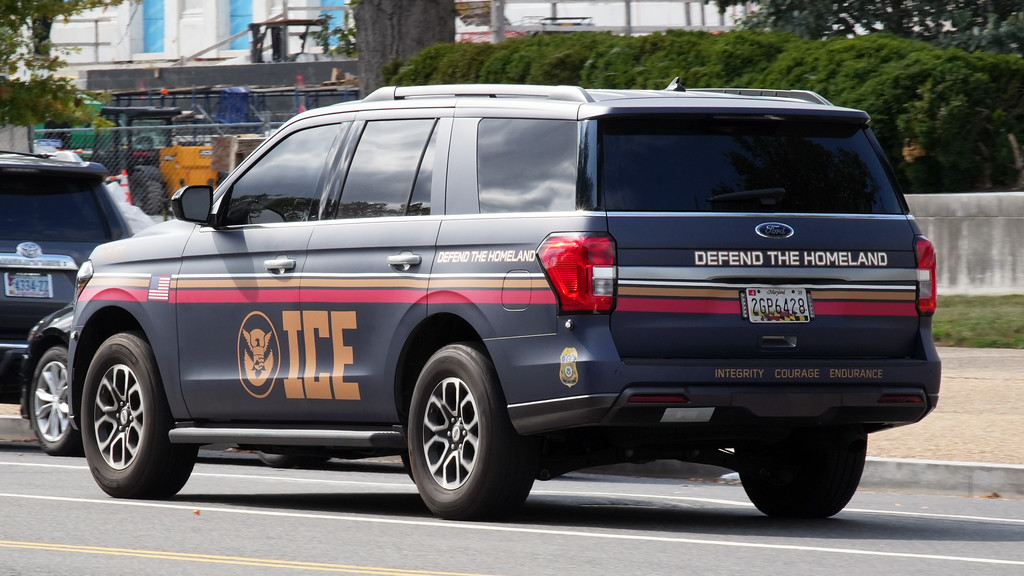
Intense public scrutiny surrounding the servicio de control de inmigración y aduanas erupted across the United States after an enforcement operation went disastrously wrong in Texas, hospitalizing a bystander and exposing profound operational failures. Federal immigration actions rarely escape intense debate, but the convergence of a reckless vehicle chase, admissions of institutional missteps at the executive level, and an unprecedented recruitment drive has thrust the agency into an unforgiving national spotlight.
As reported by Univision and the Los Angeles Times, the catalyst for the current public outcry unfolded in Houston, where federal agents conducted a vehicle pursuit that culminated in severe bodily harm to an innocent bystander. Compounding the tragedy, investigative findings revealed that the individual federal agents were attempting to track down had already been dead for seven years. The fallout from the incident has amplified broader concerns over operational competence, field protocols, and the accountability mechanisms governing armed federal agents in residential communities.
The Houston Botched Raid That Ignited National Outrage
The incident that triggered nationwide outrage took place on a busy weekday morning in Houston, Texas. According to coverage from Telemundo Atlanta, an enforcement team driving an unmarked federal vehicle descended upon an active construction site. In the ensuing chaos of the operation, the vehicle accelerated sharply toward a group of laborers, striking an innocent construction worker who was merely carrying out his daily duties.
The impact left the worker with a fractured leg and substantial trauma, necessitating immediate emergency medical transport. What initially seemed like an unfortunate field accident quickly shifted into a potential criminal investigation. As Telemundo Atlanta reported, a Harris County prosecutor reviewed the scene and available surveillance footage, subsequently stating that the officer behind the wheel appeared to intentionally drive toward and strike the construction worker rather than attempting an evasive stop. The prosecutor’s declaration shocked civil rights groups and instantly elevated the matter from an administrative review to a high-stakes local inquiry.
Subsequent reporting by the Los Angeles Times brought even more staggering details to light. Family members of the injured worker and community advocates revealed that the enforcement squad representing the servicio de control de inmigración y aduanas had arrived at the job site hunting a target who could not possibly have been present. The individual named on their administrative paperwork was deceased, having passed away in 2017. The revelation that armed federal agents deployed dangerous vehicular force in pursuit of a deceased person has catalyzed harsh criticism regarding the quality of intelligence and basic due diligence utilized prior to executing field interventions.
Inside the 3 Critical Fault Lines Facing Federal Enforcement
The Houston catastrophe does not exist in a vacuum. Instead, it reflects systemic pressures confronting federal personnel as policy directives clash with basic operational reality on the ground. A comprehensive analysis reveals three pivotal dimensions currently driving national alarm.
The Fatal Flaw of Pursuing a Suspect Deceased Since 2017
Foremost among the agency’s compounding crises is the complete breakdown of pre-operation intelligence gathering. As Univision corroborated, the formal administrative investigation launched against the operative confirms that the target file used to authorize field deployment had not been verified against standard vital statistics registries. Operating on eight-year-old surveillance leads in a dynamic urban workspace violates standard tactical parameters, placing both officers and civilian bystanders in extreme jeopardy.
When operations conducted by the servicio de control de inmigración y aduanas rely on outdated databases, the burden of error falls disproportionately on local communities. In Houston, the failure to cross-reference basic public records culminated in a catastrophic vehicular impact that ended with an innocent laborer suffering life-altering fractures, raising uncomfortable questions about how many other active warrants rely on obsolete or thoroughly inaccurate historical records.
Vice Presidential Admission of Federal Missteps
Rather than mounting an unconditional defense of field personnel, political leadership has taken an unusual posture. In an interview highlighted by Yahoo, United States Vice President JD Vance openly conceded that federal officers frequently make severe errors in high-pressure environments. Addressing the controversies surrounding field crackdowns, Vance explicitly remarked that at times there are personnel who genuinely make mistakes.
The statement marked a rare executive-level admission that operations under the purview of the servicio de control de inmigración y aduanas are not immune to profound human and institutional error. While political analysts viewed the remarks as an attempt to blunt criticism by acknowledging undeniable facts, civil rights attorneys argued that simply recognizing that officers make mistakes falls dangerously short of enacting systemic reforms to prevent life-threatening vehicle maneuvers during routine checks.
Aggressive Expansion to Add 5000 Agents Under Executive Directives
The third critical fault line centers on scale and rapid growth. As detailed by Spanish daily EL PAÍS, the agency is actively organizing an unprecedented hiring drive to recruit 5,000 new field agents. This surge is specifically engineered to accelerate mass deportation initiatives mandated by the Trump administration, representing one of the fastest domestic law enforcement expansions in modern American history.
However, policy analysts caution that rapidly onboarding thousands of armed personnel while foundational training and verification protocols remain deeply flawed threatens to multiply field blunders. Expanding the ranks of the servicio de control de inmigración y aduanas by 5,000 operatives requires shortening vetting cycles and accelerating field deployment timelines, creating an environment ripe for misidentifications, unauthorized pursuits, and dangerous confrontations with the public.

Escalating Pressure on Harris County and Federal Oversight
The intersection of a local prosecutor’s allegations and federal sovereign immunity has sparked an intense legal showdown in Texas. Local authorities in Harris County have historically encountered significant friction when attempting to investigate federal officers acting within the scope of their employment. Yet, because the Houston prosecutor asserted that the vehicle strike appeared intentional, the case touches upon potential criminal liability that tests standard jurisdictional protections.
Legal scholars point out that federal supremacy clauses often shield agents from state-level prosecution unless local authorities can demonstrate extreme, willful disregard for civilian safety that falls outside legitimate law enforcement duties. As municipal investigators examine the operational protocols within the servicio de control de inmigración y aduanas, pressure is mounting on the Department of Homeland Security’s Office of Inspector General to present a transparent, unredacted accounting of why the unmarked vehicle surged toward laborers on the site.
Meanwhile, Houston community advocates have mobilized, demanding independent oversight and mandatory body-worn cameras for all federal units operating in municipal corridors. The fact that the targeted suspect had been dead since 2017 serves as incontrovertible proof to local leaders that interior enforcement units require far stricter judicial oversight before launching tactical actions in densely populated zones.
The Operational Risks of Rapid Federal Force Multiplication
Attempting to recruit, train, and deploy 5,000 agents in a compressed timeframe creates undeniable operational hazards. Historical precedent within federal law enforcement demonstrates that rapid staffing influxes frequently coincide with lowered entrance thresholds, supervisory dilution, and inadequate tactical seasoning among field agents. When new officers enter dynamic urban environments without extensive tactical discipline, errors in judgment escalate exponentially.
Managing massive institutional overhauls requires structural stability and careful risk management. Sharp, hasty structural transitions consistently induce chaos across large organizations, an organizational reality mirrored across global sectors just as Bayern Munich Sparks 3 Major Shocks With Surprising Transfer Decisions when sweeping institutional mandates abruptly overhaul field operations without adequate transition periods. In federal enforcement, however, the consequences of misaligned strategy extend far beyond internal disruption, translating directly into physical danger for ordinary civilians.
The Houston incident illustrates precisely what occurs when supervisory oversight weakens. An operational unit acting on obsolete information, executing an aggressive maneuver without establishing positive identification, and deploying vehicular force against an uninvolved bystander demonstrates the exact breakdown of command and control that critics fear will become widespread under a rushed 5,000-agent expansion.
What Lies Ahead for Federal Immigration Policy and Accountability
The coming months will serve as a definitive test for both federal accountability and executive immigration strategy. As the administrative investigation into the Houston vehicle strike progresses, federal officials face demands to explain whether the agent involved will face disciplinary termination, civil rights charges, or local prosecution under Texas law.
Simultaneously, the legislative debate surrounding budgetary allocations for expanding the agency will intensify on Capitol Hill. Lawmakers opposing the rapid surge are already citing the Houston hit-and-run and Vice President Vance’s admissions as direct evidence that throwing billions of dollars into accelerated recruitment before repairing structural flaws will only invite further civil rights violations.
Ultimately, as the servicio de control de inmigración y aduanas pushes forward with White House mandates to escalate nationwide deportations, the balance between aggressive tactical enforcement and constitutional safeguards remains profoundly fragile. Until federal agencies implement stringent pre-raid intelligence verification and hold rogue field operatives accountable, the human cost of administrative negligence will remain front and center in the national discourse.