Victor Wembanyama Sparks 5 Major Shockwaves in Historic NBA GM Survey
NBA front offices have delivered a resounding verdict by picking the San Antonio Spurs as title frontrunners behind an unprecedented sweep of individual honors. Here is how an aggressive roster shakeup and historic survey results signal a seismic shift across professional basketball.
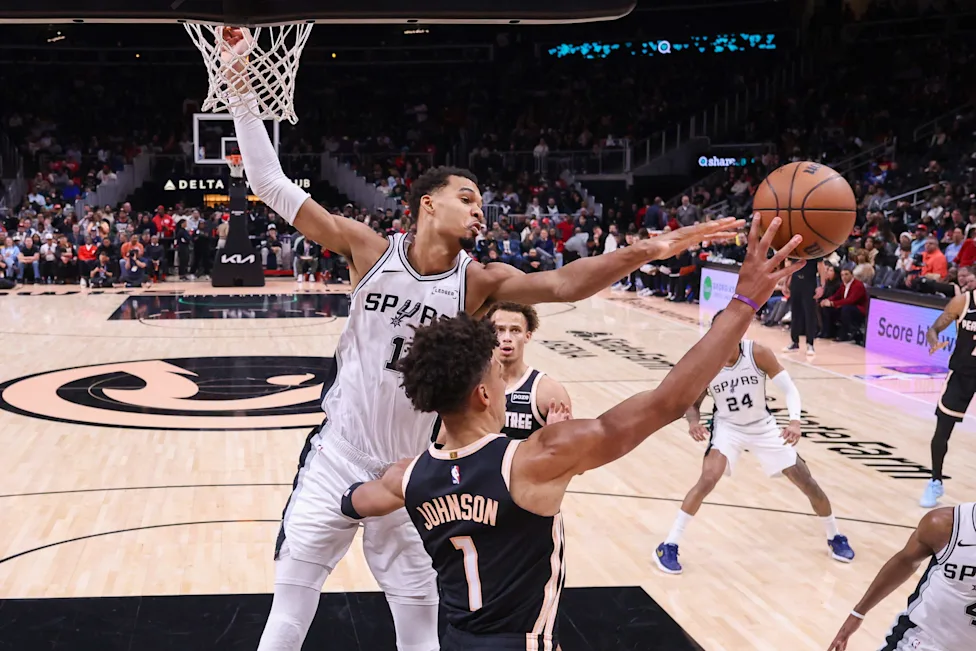
The rapid ascension of Victor Wembanyama has completely reset the strategic foundations of modern professional basketball. When annual surveys of National Basketball Association front office decision makers are published, consensus is typically difficult to establish. Competing franchises guard their strategic intentions, rival executives protect their biases, and parity across the league often fragments opinion. This season, however, the league’s top basketball minds arrived at a conclusion so uniform that it has reverberated through every front office from San Antonio to Philadelphia.
As reported by ESPN, Victor Wembanyama and the San Antonio Spurs dominated the annual assessment, sweeping major categories and instantly altering the competitive hierarchy of the Western Conference. Front office executives, who historically temper expectations for rising young cores, abandoned caution to anoint the French phenom as the primary governing force of the league. The resulting conversations among analysts, coaches, and sports executives reflect a pivotal turning point where developmental projection transforms overnight into immediate championship pressure.
The Unprecedented Consensus of League Decision Makers
The annual NBA general manager survey represents the purest snapshot of executive sentiment in professional sports. Unlike media voting or fan polling, these ballots are cast by the architects responsible for building rosters, negotiating trades, and devising schemes to slow down opposing superstars. When these executives cast their votes for the upcoming campaign, the results departed sharply from previous years of balanced parity.
Reporting from Yahoo Sports detailed that the Spurs emerged as outright favorites to claim the NBA championship, powered almost exclusively by the transformative profile of their franchise anchor. Front offices did not merely view the organization as an ascending dark horse. Instead, they signaled that the competitive timeline in San Antonio has accelerated years ahead of traditional rebuilding benchmarks. Hoops Rumors noted that while general managers also weighed in heavily on aggressive summer transactions across the league, the focal point of the survey remained anchored to the structural disruption generated by San Antonio.
This degree of executive reverence is rare in modern basketball. Typically, reigning champions or veteran powerhouses command the bulk of title consideration. By placing San Antonio at the summit before the core has navigated deep postseason runs together, NBA decision makers revealed a collective belief that individual structural advantages can overwhelm conventional playoff experience.
Behind the Explosive Season Opener Roster Reveal
The timing of the survey results collided directly with tactical revelations emerging from San Antonio’s training facility. Just as debate over executive expectations reached a fever pitch, ESPN reported a monumental tactical announcement regarding San Antonio’s opening night rotation. Head coach Gregg Popovich and the Spurs coaching staff will unleash a hyper-dynamic three-guard starting unit featuring De’Aaron Fox, Stephon Castle, and Dylan Harper alongside Devin Vassell and Victor Wembanyama when they open their campaign against the Oklahoma City Thunder.
Deploying Fox, Castle, and Harper simultaneously represents a profound departure from traditional two-big or wing-heavy opening lineups. Fox brings elite open-court acceleration and half-court shot creation. Castle provides ferocious perimeter point-of-attack defense and cerebral connective passing. Harper injects secondary playmaking, positional size, and downhill rim pressure. Flanked by Vassell’s proven floor spacing and perimeter shot-making, the entire construction exists to maximize vertical and horizontal operating space.
This unconventional perimeter alignment illustrates why executive survey respondents expressed such confidence in the franchise. By surrounding their defensive anchor with elite lateral quickness and multiple high-IQ ball handlers, San Antonio eliminates the perimeter containment vulnerabilities that often compromise center-centric systems. The opener against the Oklahoma City Thunder instantly becomes an essential case study in modern positional balance.
5 Critical Shifts Reshaping the Modern Basketball Landscape
The convergence of overwhelming survey results and an audacious opening-night tactical framework points to broader structural transformations. Analyzing the survey data alongside live operational decisions reveals five distinct shockwaves currently altering front office philosophies across the sport.
Complete Domination Across Individual Player Categories
According to Yahoo Sports, Victor Wembanyama dominated individual player categories across the ballot, capturing dominant majorities for honors ranging from defensive player accolades to the ultimate franchise building block. Front office executives overwhelmingly selected him as the single player they would choose to launch a new franchise today, an honor previously contested among established multi-time championship winners.
The margin of victory across these categories reflects how thoroughly executive evaluations have shifted. Opposing general managers no longer view elite rim protection and perimeter versatility as separate skill sets. Instead, the combination of eight-foot wingspan disruption, transition ball-handling, and off-the-dribble perimeter shooting has forced evaluators to recalibrate standard positional values entirely.
The Accelerated Championship Expectations for San Antonio
Assigning title favorite status to a roster featuring young guards represents a dramatic break from historical NBA precedent. Championship contenders are customarily forged through repeated postseason failures, veteran cohesion, and battle-tested fourth-quarter execution. The Spurs vaulting to the top of executive ballots indicates that front offices believe raw two-way ceiling can bypass normal developmental stages.
This rapid escalation carries distinct operational weight. When a franchise transitions from an intriguing young project to an expected champion, the external margins for error vanish. Every close fourth-quarter possession, coaching substitution, and late-game possession will face intense tactical deconstruction from both opponents and global media outlets.
A Radical Guard Heavy Architecture Built for Rim Protection
The newly confirmed starting lineup consisting of De’Aaron Fox, Stephon Castle, Dylan Harper, Devin Vassell, and their superstar center solves a fundamental tactical dilemma. Modern offensive schemes relentlessly hunt drop-coverage big men through high pick-and-roll screening actions. By surrounding the paint with three disruptive perimeter guards who can switch, fight through screens, and harass ball handlers, San Antonio creates a dynamic containment web.
This defensive architecture operates on calculated risk. Opposing teams attempting to exploit smaller perimeter matchups are funnelled directly toward the paint, allowing Victor Wembanyama to erase defensive breakdowns and anchor the interior without being pulled continuously out of rebounding position. Offensively, having multiple dynamic initiators ensures that defensive doubles cannot easily stagnate the offensive flow.
Skepticism and Scrutiny Over Unprecedented Respect
Not every sector of the basketball landscape accepts this executive consensus without reservation. An investigative breakdown from The New York Times examined whether the Spurs are receiving too much respect before validating their superiority on the hardwood, asking whether the league has bestowed Victor Wembanyama and his supporting cast with premature adulation.
The skepticism outlined by The New York Times highlights legitimate organizational questions. Integrating dynamic ball-dominant guards like Fox and Harper alongside emerging perimeter playmakers takes competitive time. Chemistry is rarely instantaneous, and Western Conference contenders like the Oklahoma City Thunder possess established defensive continuity and institutional cohesion. Facing heightened expectations means that any early-season shooting slumps or defensive communication missteps will invite scrutiny regarding whether league executives overreacted to raw talent.
The Redefinition of Roster Construction Economics
The ripple effects of this executive shift extend far beyond south Texas. As detailed by Hoops Rumors, while front offices evaluated aggressive offseason moves like Philadelphia’s summer recalibration, the overarching conversation among general managers centered on how to build rosters capable of surviving against unique physical prototypes. Teams can no longer construct rosters designed solely around traditional perimeter wings or plodding rim runners.
The media appetite surrounding these organizational shifts mirrors broader shifts in how global audiences track live entertainment spectacles. Just as contemporary entertainment analysis demonstrates how Twitch Streaming Trends Reveal 5 Critical Shockwaves Gripping the Digital World, modern basketball discourse thrives on rapid digital distribution, analytical engagement, and instant community debate. Front offices are adjusting to an environment where tactical trends proliferate instantly, forcing general managers to execute strategic counter-measures years before their current championship windows officially close.
The Strategic Collision Awaiting the Western Conference
As the season opener against the Oklahoma City Thunder approaches, theoretical survey projections give way to physical execution. Opposing scouting departments spent the entire summer reviewing tape, constructing specialized defensive zones, and testing novel screening angles designed to pull generational rim protectors out of the lane. Yet the overarching reality is that Victor Wembanyama alters court geometry in ways scouting software cannot easily capture.
The pairing of elite perimeter quickness alongside historic length creates an operational blueprint that will dictate Western Conference game planning for the next decade. Whether San Antonio fulfills the lofty title expectations established by rival executives immediately, or encounters the natural growing pains of a daring three-guard perimeter experiment, one fact remains uncontested. The strategic foundation of the entire league has shifted, and front offices across professional basketball are now scrambling to adapt to the new reality.