Jayson Tatum Faces 3 Critical Celtics Realities After Shocking Jaylen Brown Trade
Following the seismic blockbuster trade that sent Jaylen Brown to Philadelphia, Jayson Tatum confronts an altered Boston Celtics hierarchy and a transformed roster. Here is an investigative look at the tactical shifts, franchise realignments, and silent locker room dynamics redefining Boston.
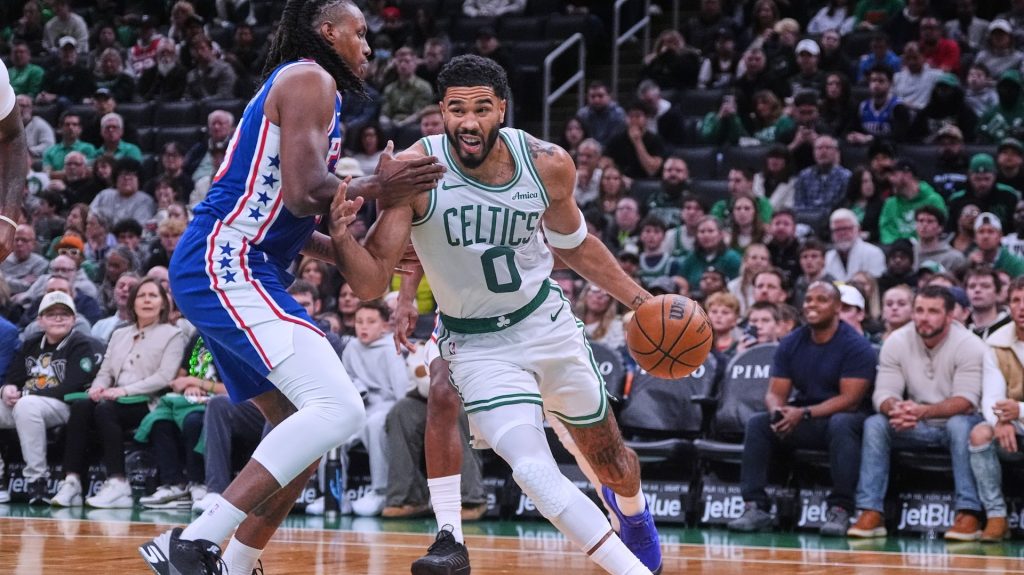
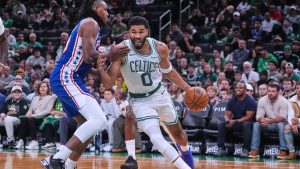
Boston Celtics superstar Jayson Tatum enters a completely transformed basketball universe following a summer of structural upheaval that shattered the league’s most scrutinized partnership. When front-office architects pulled off the blockbuster trade sending Jaylen Brown to the Philadelphia 76ers last July, they did more than break up a championship-winning wing tandem. They effectively dismantled an eight-year ideological framework, leaving Boston to rebuild its tactical identity around a solitary franchise cornerstone.
The fallout has generated intense speculation across the basketball landscape. From persistent chatter surrounding the icy social divide between former teammates to radically rebuilt preseason rotations, the organization is pivoting in real time. For years, the narrative in Boston centered on dual stewardship, where two elite wings balanced offensive loads, defensive assignments, and locker room influence. That era is definitively over, and the operational burden has shifted entirely onto the shoulders of one man as the regular season approaches.
The Cold Silence Following a Blockbuster Separation
The cultural shockwaves of the trade reverberated far beyond standard roster transactions. According to reporting from Bleacher Report, communication between the former co-stars evaporated almost immediately following the July trade that sent Brown to the 76ers. The reporting highlights that the two haven’t really spoken since the transaction was executed, illustrating the abrupt emotional rupture that frequently accompanies high-stakes executive decisions.
The dynamic quickly caught the attention of long-time observers in New England. Dan Shaughnessy of The Boston Globe recently took measure of the evolving relationship, playfully wondering when the duo’s quiet detachment began resembling the celebrated rap feud between Kendrick Lamar and Drake. While basketball executives often downplay interpersonal chilliness as natural byproduct of competitive realignment, the silence between the former franchise cornerstones speaks volumes about the abruptness of the separation.
When reporting confirmed that Jayson Tatum and Jaylen Brown had essentially halted direct communications, it underscored the human cost of modern roster construction. Partnerships spanning nearly a decade do not simply dissolve without creating friction. Even inside the executive suites, leadership recognized the emotional gravity of the split, prompting candid conversations regarding player morale, psychological focus, and the sudden shift in team hierarchy.
The Radical Lineup Experiment in Preseason Action
On the court, the franchise has wasted no time deploying experimental configurations designed to evaluate fringe talent and insulate key contributors from early fatigue. According to official updates reported by CBS Sports, Jayson Tatum was ruled out for Friday’s final exhibition matchup against the 76ers, denying fans and analysts an immediate on-court reunion between the estranged stars.
Rather than fielding a conventional secondary unit, head coach Joe Mazzulla shocked onlookers by rolling out an entirely unconventional starting five. As broken down by CelticsBlog, Boston initiated their final preseason tune-up with Milos Uzan, Hayden Gray, Tucker DeVries, Gabe McGlothan, and Chris Cenac Jr. taking the floor. The lineup represented an extreme developmental exercise, resting traditional veterans while testing developmental depth under game speed.
Resting the primary star against Philadelphia served multiple strategic functions. Beyond preventing physical wear ahead of opening night, it deliberately avoided providing the media with theatrical confrontation fodder before regular-season stakes arrive. The contrast between Boston’s developmental lineup and the star-laden Philadelphia roster highlighted how comfortable the Celtics coaching staff feels prioritizing tactical evaluation over exhibition optics.
3 Critical Shifts Reshaping the Boston Championship Blueprint
With the dual-wing infrastructure dissolved and the preseason serving as a sandbox for experimental personnel, three fundamental realities now dictate Boston’s tactical trajectory.
1. Rebuilding Playmaking Dynamics with Frontcourt Additions
Perhaps the most fascinating tactical evolution surrounds the arrival of center Mitchell Robinson. For years, critics questioned Boston’s vertical spacing and the absence of a dynamic rim-running lob threat in half-court sets. Robinson’s arrival has introduced an entirely new dimension to the offense, catching even his teammates off guard during preliminary scrimmages and practices.
As reported by Basketball Network, Mitchell Robinson admitted genuine astonishment at receiving pinpoint alley-oop passes from Jayson Tatum during team runs. Robinson explicitly described the unexpected precision of those feeds, remarking that he had never witnessed those types of passes from his new teammate before. The ability to manipulate defensive rotations out of high pick-and-roll schemes by threatening both perimeter pull-ups and vertical rim finishes gives Boston an unpredictable edge that previous rosters severely lacked.
2. The Emotional Distance from a Decade-Long Partnership
Navigating the psychological wake of a franchise-altering trade is rarely straightforward. For years, the tenured brotherhood between Brown and Jayson Tatum had endured countless playoff battles, Finals appearances, and incessant public critique about whether two ball-dominant wings could truly coexist at the highest level. Overcoming that constant scrutiny forged a unique bond, making the subsequent radio silence all the more striking.
While hyperbole comparing the rift to modern rap battles provides entertainment value, the athletic reality is more pragmatic. Elite athletes operating on opposing conference contenders inevitably establish emotional boundaries. With Brown now anchoring the perimeter in Philadelphia, Boston’s primary star must recalibrate his leadership voice. There is no longer a co-leader to absorb defensive attention or media focus. The leadership hierarchy is singular, direct, and unshared.
3. Roster Depth Realignment and Frontcourt Integration
The bizarre preseason lineup featuring Uzan, Gray, DeVries, McGlothan, and Cenac Jr. demonstrated a deeper philosophy taking root within the TD Garden practice facility. Rather than leaning on established mid-tier veterans to carry secondary minutes, Boston is actively seeking cost-effective, high-energy contributors capable of executing hyper-specific role mandates around their core superstar.
The modern luxury tax system penalizes top-heavy rosters with extreme severity. By clearing massive future payroll through the summer trade, the front office bought flexibility, but also placed immense pressure on player development. If developmental assets can absorb functional regular-season minutes, it preserves the primary creator for high-leverage postseason moments, fundamentally altering how Boston intends to survive the grueling 82-game campaign.
Front Office Calculus and Brad Stevens Steady Hand
Behind the radical transformation sits front-office leader Brad Stevens, whose calculated maneuvers continue to reshape the franchise’s championship window. While unexpected disruptions across the country capture headlines—much like when the Clima Alerts Reveal 4 Critical Weather Threats Shaking US Communities—in professional basketball, tectonic realignments occur inside front-office war rooms. Stevens has approached the public fallout with characteristic equilibrium.
Speaking on the broader state of the roster, Stevens addressed the organizational reset with clear-eyed pragmatism. Evaluating the dynamic between his former stars, Stevens emphasized that professional sports inevitably demand structural reinvention. Stevens has worked to ensure that Jayson Tatum remains insulated from extraneous noise, providing him with defensive length, interior verticality, and perimeter shooting tailored specifically to optimize his offensive gravity.
The decision to pivot away from a proven, title-winning duo required extraordinary institutional conviction. Stevens recognized that maintaining financial flexibility while simultaneously acquiring complementary pieces like Mitchell Robinson could prolong the franchise’s elite window far longer than paying exorbitant luxury tax penalties for a stagnant core. The strategy represents an aggressive refusal to succumb to roster inertia.
The Solitary Path Toward Another Banner
As the regular season dawns, the narrative surrounding Boston basketball has been permanently recast. The debate over shot distribution between two All-NBA wings is officially defunct. In its place stands an upgraded, structurally balanced squad built to accentuate a singular primary engine capable of operating as scorer, playmaker, and defensive anchor.
The silence between former brothers-in-arms will undoubtedly reignite when Boston and Philadelphia clash in regular-season action with conference supremacy on the line. Yet inside the Celtics locker room, the focus has shifted entirely inward toward tactical execution, new chemistry with rim-running bigs, and rotational maturity. With the franchise blueprint realigned and the organizational noise tuned out, the ultimate burden now rests upon Jayson Tatum to chart an autonomous championship path and validate the most daring gamble of the modern Boston era.