Order book mechanics and 4 proven rules that eliminate costly trade slippage
Market orders frequently conceal brutal execution penalties behind seamless digital interfaces. Discover how order book mechanics match capital and how to protect trades from costly slippage.
Understanding order book mechanics reveals why careless market orders suddenly disintegrate into devastating execution losses the moment sudden volatility rattles an electronic exchange. Retail traders routinely assume that clicking a buy button executes an exchange of assets at the neat, stationary price flickering on their digital screens. That digital ticker, however, is merely a historical shadow. It is an artifact of the last completed transaction, not a binding guarantee of where your incoming capital will land. In the relentless arena of modern electronic exchanges, every active dollar enters a living queue governed by rigid matching algorithms, microsecond queue priorities, and structural liquidity depth.
When you peel back the simplified interfaces provided by retail brokerages, every liquid asset on Earth—from sovereign debt and blue-chip equities to foreign currencies and commodities—clears through a continuous double auction. In this electronic arena, buyers and sellers wage a quiet war of attrition. Bids line up in ascending order of enthusiasm below the current price, while asks stack in descending order of greed above it. The space between them is the bid-ask spread, a friction zone where market makers harvest modest margins and impatient market participants pay an invisible toll for immediate execution.
The Anatomical Architecture of Modern Market Matching
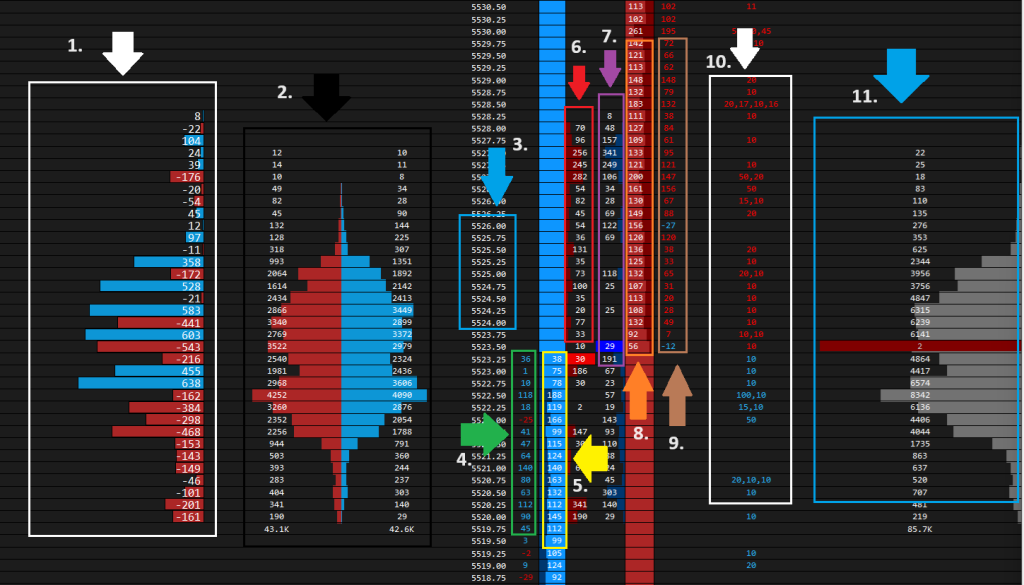
Beneath the surface of static price charts, order book mechanics dictate how capital commits to risk through deterministic priority algorithms. At its structural core, an order book consists of two mirrored queues sorted by price and time, commonly designated as First-In, First-Out (FIFO) or price-time priority. If two traders place an identical bid to purchase an asset at ninety-nine dollars, the deterministic matching engine rewards the participant whose packet crossed the exchange gateway first. This structural reality turns market timing into a mechanical discipline governed by latency and structural queue placement.
Market participants interact with this ledger through two foundational mechanisms that represent opposing trading philosophies: limit orders and market orders. Limit orders serve as liquidity makers. They signal an absolute price ceiling for buyers or a floor for sellers, patiently resting on the exchange matching engine until an opposing counterparty steps forward to fill them. Limit orders offer price certainty at the expense of execution certainty; your order will never fill at an inferior price, but during explosive moves, the market may abandon your resting bid entirely.
Market orders behave in the exact opposite manner as aggressive liquidity takers. By deploying a market order, a participant demands immediate execution at any available price, voluntarily crossing the spread and consuming the resting limit orders stacked on the other side. As documented in the CFA Institute foundational study on market microstructure, this mechanical transfer from liquidity maker to liquidity taker forms the operational backbone of price formation across global asset classes. Depth of market displays—ranging from standard Level 1 top-of-book quotes to granular Level 2 ladders—reveal how many units rest at each incremental tick level, exposing the true thickness of immediate market supply and demand.
Why Surface Liquidity Evaporates During Rapid Volatility
The visible order book frequently presents an illusion of stability that vanishes precisely when capital protection matters most. Traders who look at a deep Level 2 quote screen often see towering walls of bids and assume an impenetrable buffer exists to support prices. Yet modern algorithmic trading relies on high-speed cancellations, revealing how contemporary order book mechanics process millions of fleeting quote cancellations every minute. In institutional trading environments, quote-to-trade ratios routinely exceed twenty to one, meaning that the vast majority of visible limit orders are exploratory probes rather than committed capital.
When macroeconomic shocks or systemic catalysts hit an exchange, market makers rapidly withdraw their resting limit orders to shield their inventories from toxic flow. The algorithmic market makers who maintain tight spreads during quiet afternoons are under no regulatory obligation to provide sacrificial exit liquidity to panicking traders during turbulent sessions. Within milliseconds, quote depth collapses, spreads widen exponentially, and what once appeared to be a tranquil pricing ladder degenerates into a sparse, discontinuous vacuum.
This vacuum gives rise to execution slippage, the punishing difference between the expected price of an order and the actual weighted average price at which the trade executes. When an aggressive market order exceeds the volume available at the best bid or ask, the matching engine does not pause to solicit cheaper inventory. It sweeps straight through the book, matching remaining shares at increasingly punitive price tiers until the entire order fills. In illiquid or panicked conditions, a single oversized market order can slice through dozens of price increments, causing severe self-inflicted portfolio damage.
Four Proven Rules to Navigate Depth and Eliminate Slippage
By internalizing order book mechanics, disciplined operators abandon careless market clicks and execute with institutional precision. Mitigating execution drag requires aligning order types with market depth rather than gambling on blind exchange fills.
Patience Demands Staging Limit Orders Outside High Density Clusters
Amateur traders frequently place their resting limit orders squarely inside obvious round-number psychological barriers, assuming massive bid walls will guarantee their safety. In practice, placing your bid directly at a congested support level pushes your order to the back of a massive queue. As institutional sellers dump inventory into that level, your order languishes while thousands of preceding contracts absorb available fills. Worse still, if the wall finally breaks, your resting order fills at the exact microsecond the market rolls over into a liquidity cascade.
To bypass this adverse selection trap, stage your resting limit orders slightly in front of or deliberately outside high-density clusters. Bidding one tick ahead of a major liquidity wall grants your order immediate queue priority over the herd, ensuring complete execution before the broader cluster even sees action. Alternatively, staging orders well below an exhausted level allows you to capture distressed liquidity after a cascading liquidation event exhausts aggressive selling momentum.
Volume Weighted Execution Neutralizes Invisible Market Impact
Transacting size without disrupting local equilibrium requires slicing capital into methodical tranches. The physical law of market impact demonstrates that price distortion scales non-linearly with order size relative to available depth. Firing an institutional-sized market order directly into the order book guarantees heavy slippage, as the order sweeps through the visible layers and triggers defensive reactions from rival algorithms that quickly step in front of your trade.
Employing algorithmic execution models such as Time-Weighted Average Price (TWAP) or Volume-Weighted Average Price (VWAP) partitions a large trade into smaller algorithmic packets distributed over extended intervals. Slicing execution into micro-orders matching historical volume distributions allows resting market-making algorithms to replenish liquidity levels continuously. This orderly absorption prevents your own orders from triggering synthetic price spikes against yourself.
Crossing the Spread Requires Calculating True Fill Costs Before Pulling the Trigger
Impatience carries a quantifiable mathematical surcharge that compounds over hundreds of trading executions. When a trader crosses the spread via a market order, they pay not only the explicit commission demanded by their broker, but also the structural toll of the bid-ask differential. In instruments characterized by wide spreads, paying the ask and selling the bid imposes an instant negative expected value that must be overcome merely to achieve breakeven.
Before executing any market sweep, evaluate the cumulative depth of the current order book rather than the surface quote. Calculate the volume-weighted average price across all levels required to swallow your order size. If your trade will consume more than ten percent of the volume residing at the top three price tiers, using a market order ceases to be an execution choice and becomes capital negligence. In such scenarios, employing marketable limit orders capped at a rigid threshold prevents the engine from sweeping into distant, unfavorable pricing pockets.
Hidden Liquidity Patterns Always Betray Algorithmic Distribution
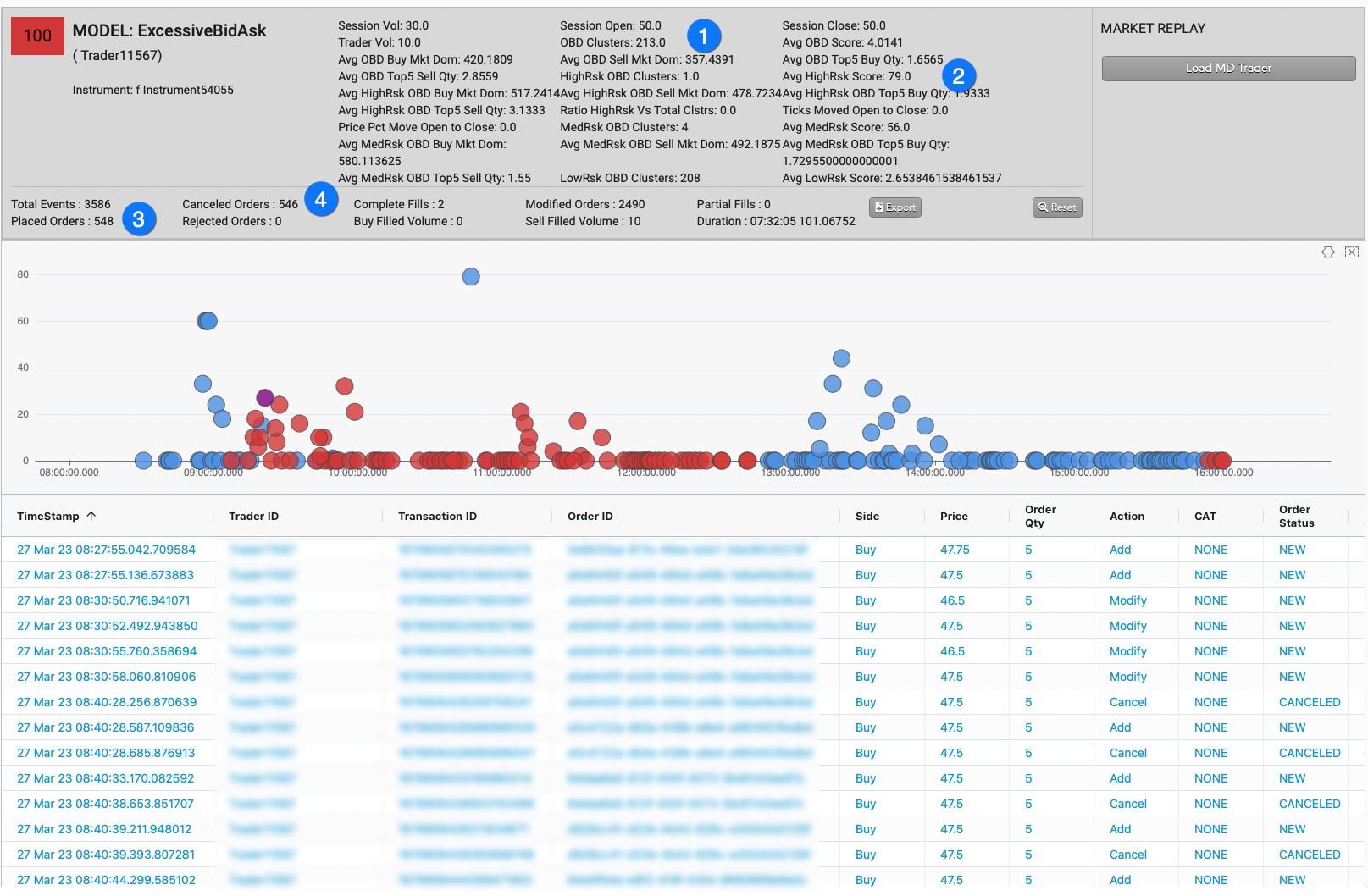
Applying a forensic view of order book mechanics exposes how institutional players disguise their actual footprints. Institutional participants rarely leave large limit orders completely visible on public quote streams. Doing so alerts competitors, who quickly front-run the order or retreat from the market. Instead, smart money utilizes native iceberg orders and dark liquidity mechanisms, displaying only a tiny fractional tip of their true position on public exchanges while hiding thousands of contracts behind the curtain.
Traders can identify these synthetic liquidity walls by observing tick tape cadence alongside order book depth. When aggressive market orders repeatedly strike the top ask, yet the displayed quantity instantly replenishes at the exact same price increment without allowing price to advance, an iceberg order is actively absorbing inventory. Identifying this dynamic allows you to hitch your wagon to large-scale accumulation or distribution campaigns rather than fighting against an invisible institutional wall.
How Organic Market Structures Mirror Biological Systems
Viewing order book mechanics through the lens of dynamic equilibrium highlights how financial liquidity mirrors living ecosystems. An electronic order book is not a rigid concrete monument; it is a metabolic network where passive limit orders act as stored nutritional reserves and aggressive market orders represent active metabolic consumption. When energy input matches resource availability, the ecosystem maintains healthy structural homeostasis, characterized by tight bid-ask spreads and stable, smooth price transitions.
Just as natural living processes rely on balanced environmental tension—a principle thoroughly explored in our guide to sourdough fermentation mechanics and 4 proven rules that create extraordinary wild crumb—financial exchanges depend on dynamic equilibrium between patient liquidity providers and impatient order takers. When the rate of consumption outpaces the regeneration of limit orders, the localized environment suffers immediate systemic shock. Spreads blow out, the order ladder fragments into gaping pricing voids, and the exchange undergoes the digital equivalent of metabolic collapse until fresh speculative capital arrives to reseed the ledger.
Mastering Order Flow to Secure Institutional Level Execution
Modern electronic trading environments are engineered to extract profit from market participants who fail to look past the surface ticker. Retail brokers design gamified, friction-free buttons that disguise the intricate matching engine grinding behind the glass. Clicking buy without auditing current depth, spread width, and queue congestion is equivalent to entering a high-stakes auction blindfolded, trusting the auctioneer to settle your bill fairly while high-frequency algorithms harvest the variance.
Ultimately, mastering order book mechanics transforms erratic trading guesswork into rigorous, mathematical risk management. By respecting the physical limitations of market depth, measuring the hidden friction of crossing spreads, and reading the subtle footprints left by iceberg orders, you eliminate execution drag and reclaim structural control over every transaction. The exchange floor is an unforgiving machine that rewards patience, respects precision, and systematically punishes those who treat market execution as an afterthought.