Asset rebalancing mechanics and 4 proven rules that protect generational wealth
Portfolios quietly drift into dangerous territory during roaring bull markets. Discover the underlying mathematics of asset rebalancing and the disciplined framework needed to capture the rebalancing bonus.

Mastering asset rebalancing mechanics gives disciplined investors an indispensable operational shield against the emotional euphoria and panic that routinely decimate capital. Every multi-asset portfolio begins as an intentional blueprint. You decide how much capital belongs in growth engines like equities and how much belongs in stabilizing reserves like sovereign bonds or cash equivalents. That deliberate distribution reflects a precise calibration of risk tolerance, investment horizon, and required return. The moment real-world prices start moving, however, that pristine blueprint begins to warp.
Equities surge during extended expansions, swelling far beyond their designated boundaries. Fixed income contracts or stagnates, shrinking into an afterthought. Before long, an investor who intended to hold a balanced, moderate allocation wakes up holding an aggressive, equity-heavy risk profile on the eve of a correction. Understanding how asset rebalancing mechanics harvest volatility requires shedding the instinct that selling strong performers is inherently foolish. Rebalancing is not a bet on market timing. It is a systematic, mathematical mechanism designed to control systemic vulnerability and monetize market swings without guessing what tomorrow holds.
The Counterintuitive Mathematics Behind Systematic Portfolio Realignment
Most market participants assume rebalancing exists merely to dial down risk. While risk suppression is its primary duty, the quantitative architecture under the hood generates an intriguing secondary phenomenon known as the rebalancing bonus, or Shannon’s Demon. Originally modeled by mathematician Claude Shannon in information theory and later translated into finance, this principle demonstrates that periodically rebalancing between two assets—even if one or both exhibit zero net upward trend but high independent volatility—can generate an upward-sloping compounding curve.
The mechanics rely entirely on asset covariance and geometric variance reduction. When an asset class surges upward, its geometric return outpaces its long-term arithmetic mean, creating a temporary state of overextension. By systematically paring down that winning asset, you trim exposure at higher valuation multiples. You simultaneously deploy those harvested gains into lagging, undervalued asset classes whose forward-looking expected returns have mathematically improved due to lower entry prices. Over decades, this counter-cyclical feedback loop drives mean-reversion profits into the portfolio baseline.
Crucially, this mathematical advantage only functions when the underlying assets are non-correlated or negatively correlated. If your portfolio holds six funds that all move in lockstep with the broader equity market, rebalancing merely shuffles money between identical risk vectors, incurring transaction frictions without harvesting structural variance. True diversification fuels the mechanical engine that makes portfolio realignment mathematically advantageous.
Why Passive Portfolios Silently Mutate Into Dangerous Concentrations
Human psychology resists selling winners. During a sustained bull run, momentum feels permanent. An investor who builds a classic sixty-forty portfolio of global equities and high-grade debt will watch equities expand to seventy, seventy-five, or even eighty-five percent of the total pie if left unattended over a multi-year expansion. The nominal balance looks fantastic on paper, creating an illusion of prosperity that masks deep structural fragility.
When left alone, the underlying asset rebalancing mechanics are abandoned in favor of psychological inertia, turning moderate growth portfolios into ticking time bombs. The portfolio ceases to reflect the investor’s actual capacity for loss. When the inevitable market regime shift arrives, an un-rebalanced portfolio suffers maximum drawdown velocity precisely because the stabilizing assets have been starved of weight. The psychological trauma of an unexpected forty percent decline frequently triggers the cardinal sin of investing: selling at the absolute cyclical trough.
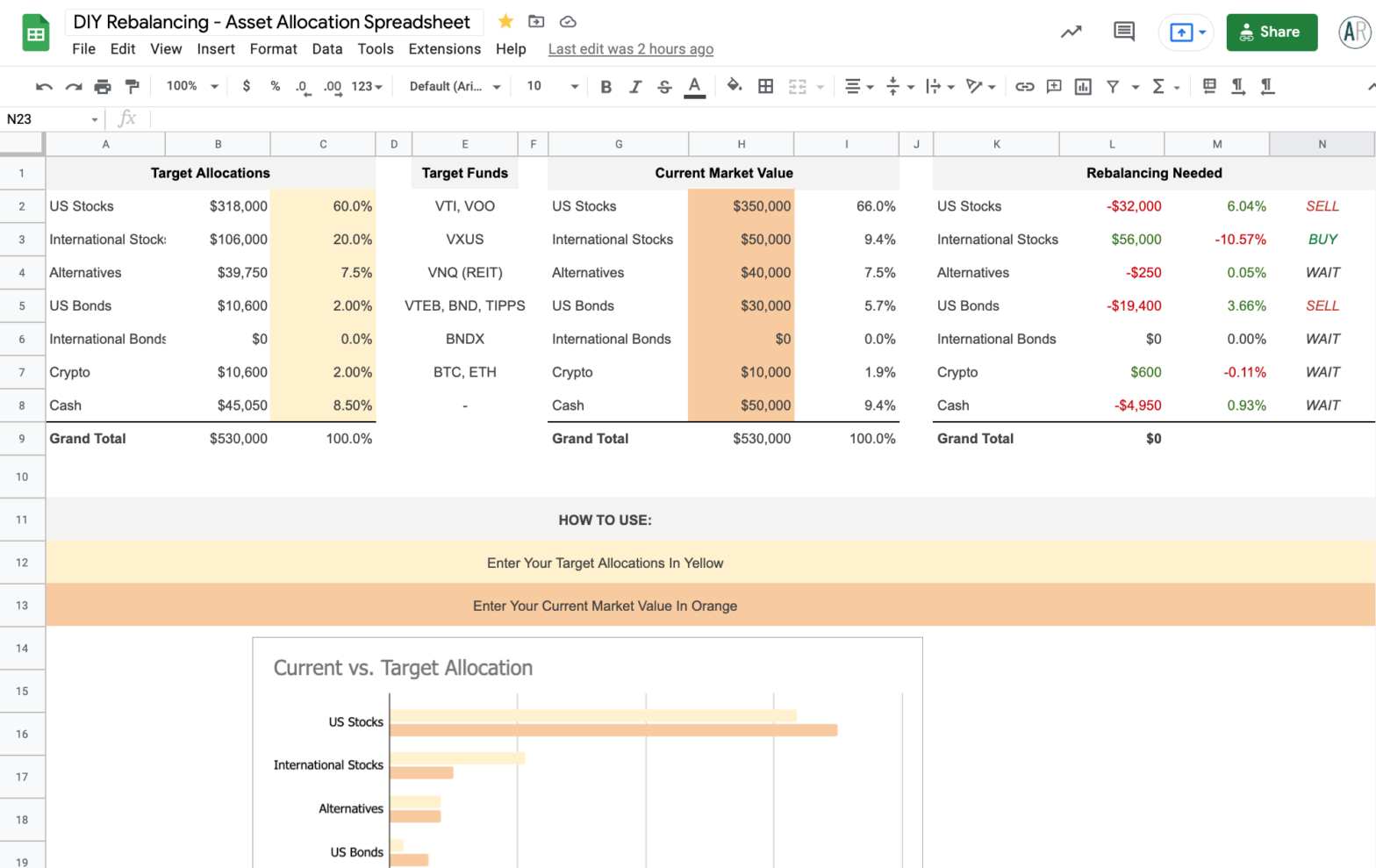
Rigorous empirical portfolio rebalancing research by Vanguard Investment Advisory Methodology confirms that while buy-and-hold un-rebalanced portfolios might occasionally produce higher raw returns during uninterrupted generational bull markets, they do so with exponentially greater tail risk and terrifying drawdowns. Realignment is an engineering solution designed to keep risk static so the compounding engine can survive long enough to bear fruit.
Four Proven Rules That Maximize the Asset Rebalancing Premium
Executing sound asset rebalancing mechanics does not mean reacting to daily financial headlines or guessing market tops. Successful portfolio maintenance requires predetermined operational parameters that eliminate discretionary judgment. By instituting clear, systematic guidelines, you remove emotional hesitation from the trade execution process.
Establish Dynamic Volatility Bands Instead of Arbitrary Calendar Dates
Many wealth managers default to calendar-based rebalancing, resetting allocations on the first business day of the quarter or year. This practice is operationally convenient for institutions, but market volatility does not care about calendar pages. A quarterly schedule might force you to trade during low-volatility plateaus where transaction costs erode returns, yet completely miss an explosive mid-quarter dip and recovery.
A vastly superior approach is threshold-based rebalancing using dynamic tolerance corridors. Under this system, you establish a percentage band around every target allocation. For instance, an asset targeted at fifty percent might carry an absolute corridor of five percent, triggering action only when its weighting reaches forty-five percent or fifty-five percent. Highly volatile asset classes receive wider relative corridors, whereas stable assets require narrower bounds. You only execute trades when price divergence breaks outside these predetermined limits, ensuring that every rebalance captures meaningful price dispersion.
Channel New Cash Inflows and Yield Distributions Directly to Lagging Assets
Selling assets outside of tax-sheltered accounts carries an immediate structural penalty: realized capital gains taxes. Savvy investors sidestep this friction by executing what allocators call synthetic rebalancing. Instead of selling overweighted assets to raise cash, you allow your regular salary contributions, fresh capital injections, bond coupons, and stock dividends to pool into an unallocated cash reserve.
When capital deployment day arrives, direct one hundred percent of those accumulated inflows toward whichever asset class has fallen furthest below its target threshold. This asymmetric accumulation process continuously pulls the portfolio back toward equilibrium without initiating a single taxable sale. Over decades of wealth accumulation, funding underweight buckets with fresh liquidity preserves capital velocity and avoids triggering premature tax drag.
Harness Shannon Volatility Harvesting Across Uncorrelated Asset Classes
The mathematical power of the rebalancing bonus multiplies as the correlation coefficient between asset pairs approaches zero or turns negative. When building the asset allocation matrix, select foundational building blocks that dance to entirely different economic rhythms. Equities thrive on commercial innovation and real earnings expansion; high-quality nominal bonds respond primarily to deflationary shocks and interest rate policy; real estate hedges structural inflation; commodities reflect raw industrial consumption and resource bottlenecks.
This counter-cyclical engine sits at the very heart of asset rebalancing mechanics, transforming erratic market turbulence into tangible capital growth. When one asset experiences violent liquidation, its counterpart frequently catches safe-haven bid streams. By forcing yourself to trim the surging component and feed the distressed asset, you programmatically capture volatility and convert systemic panic into discounted long-term yield.
Shelter Portfolio Realignment Inside Tax-Advantaged Accounts to Eliminate Drag
Asset location is just as vital as asset allocation. When true portfolio divergence occurs and synthetic cash injections are insufficient to bridge the gap, sales become inevitable. If you execute those sales inside standard taxable brokerage accounts, the federal and regional revenue departments will claim a sizable share of your harvested gains, instantly destroying the mathematical edge of your rebalancing corridor.
Solve this structural inefficiency by conducting all internal asset liquidations inside tax-deferred or tax-free wrappers such as individual retirement accounts or corporate pension plans. Treat your total net worth as one unified balance sheet spread across distinct structural silos. Keep high-turnover, high-dividend, and rebalancing-intensive assets inside sheltered environments, while parking tax-efficient, ultra-low-turnover broad index funds in your taxable accounts. When thresholds breach, execute the necessary offsetting trades entirely within the sheltered perimeter.
Friction Points and Hidden Costs That Threaten Long-Term Compounding
Taxes and transaction frictions present the greatest threat to pure asset rebalancing mechanics outside of sheltered accounts. Excessive trading frequency turns compounding into a grinding friction contest. Every transaction incurs subtle costs: the bid-ask spread charged by market makers, broker clearing fees, currency exchange spreads, and potential market impact on illiquid securities.
Just as physical momentum in sprinting demands precision ground contact rather than wild overstriding—a principle detailed in sprint acceleration mechanics and 4 proven rules that produce blistering speed—portfolio momentum requires calculated cadence rather than reactive leaps. If an investor rebalances every single time an asset drifts by a fraction of a percent, the compounding drag of execution friction quickly surpasses any statistical rebalancing bonus. Realignment must be patient, deliberate, and triggered solely by significant, sustained divergence.
Another dangerous friction point is mental accounting. Investors often separate their assets into emotional compartments, dreading the act of selling a stock that has generated glowing headlines. They convince themselves that selling early sacrifices upside. Yet historical financial data reveals that every excessive run eventually encounters a cyclical cliff. Realignment is not an indictment of an asset’s quality; it is an unyielding enforcement of survival math.
Building an Enduring Capital Allocation Framework That Silences Emotional Noise
The deepest virtue of systematic portfolio management lies in its psychological utility. When financial markets descend into irrational hysteria, human biology betrays the rational mind. The amygdala activates, flooding the decision-making faculties with fight-or-flight hormones. Investors without a rigid framework become prisoners of sentiment, pouring savings into parabolic bubbles at market peaks and liquidating sound assets at cyclical bottoms.
True financial security does not come from forecasting the future, but from trusting asset rebalancing mechanics to enforce relentless discipline. A mechanical rule removes subjective narrative from the trade desk. You do not buy beaten-down emerging markets or long-term treasuries because you feel brave; you buy them because an algorithm on your spreadsheet crossed an objective threshold. You do not trim a triumphant tech stock because you hate growth; you trim it because mathematics demanded that its oversized risk footprint be brought to heel.
Establish your asset allocation weights with clarity. Calculate your tolerance corridors with mathematical intent. Direct incoming capital toward starved positions, isolate taxable liquidations within sheltered walls, and permit the mechanical laws of mean reversion to work in your favor. Wealth is not built by chasing lightning. It is preserved and multiplied by building a shock-absorbing structure that relentlessly turns market instability into lasting prosperity.