Curveball spin mechanics and 4 proven rules that unlock unhittable pitch movement
A devastating curveball does not break by magic or aggressive wrist snapping. Discover the real aerodynamic forces, seam interactions, and release mechanics that create unhittable downward drop.

Mastering curveball spin mechanics separates erratic amateur hurlers from pitchers who can make a leather sphere drop off a sheer cliff. To a hitter standing sixty feet away, an elite breaking ball looks identical to a fastball at commitment time before abruptly tumbling out of the hitting zone. For over a century, baseball folklore attributed this baffling movement to magical wrist snaps or supernatural finger dexterity. Modern high-speed cameras and laboratory pressure sensors tell a far more fascinating story grounded in fluid dynamics, rotational torque, and boundary-layer physics.
Throwing an untouchable breaking pitch is not an innate genetic gift reserved for a select few. It is an engineering challenge that requires aligning human biomechanics with the physical laws governing a sphere hurtling through air. When you decode how rotation interacts with atmospheric friction, you stop fighting your anatomy and start manipulating the air to do the heavy lifting for you.
The invisible physics that bend a baseball through thin air
Every breaking ball exists at the mercy of the Magnus effect. When a pitcher imparts forward topspin onto a baseball, the top surface rotates against the oncoming airflow while the bottom surface rotates in the same direction as the stream. This creates a severe velocity imbalance. Air moving over the crown encounters friction and decelerates, accumulating into a high-pressure zone. Beneath the ball, the surface pulls the air along rapidly, creating a localized pocket of low pressure.
Because physical systems naturally migrate from high pressure toward low pressure, the baseball gets forced downward far faster than gravitational acceleration alone could ever drag it. Here, the underlying curveball spin mechanics govern how air velocity differentials create a high-pressure zone that forces the ball downward along its trajectory. The 108 raised red stitches amplify this imbalance substantially. As the baseball spins, these cotton seams repeatedly trip the thin boundary layer of air clinging to the leather, converting smooth laminar flow into turbulent flow and establishing asymmetrical pressure differentials that dictate pitch shape.
Why traditional wrist snapping cues destroy break and elbows
Generations of youth pitchers grew up hearing flawed advice from well-meaning coaches who instructed them to snap their wrists like cracking a whip or twist their forearms like turning a doorknob. These cues are biomechanically catastrophic. Attempting to violently twist or snap the wrist joint during the microsecond window of ball release places immense, unnatural valgus stress on the ulnar collateral ligament while simultaneously pulling the fingers out of alignment with the ball’s center of mass.
Elite pitchers do not snap their wrists at release. Electromyography data demonstrates that the wrist joint remains relatively isometric through the acceleration phase. The wrist is pre-set into a supinated and slightly flexed orientation before the arm ever accelerates forward. Rotational torque comes not from isolated wrist flicks, but from the kinetic chain transferring rotational energy from the hips, through the ribcage, down the humerus, and directly into the fingertips gripping the raised seams.
The 4 foundational pillars of devastating pitch movement
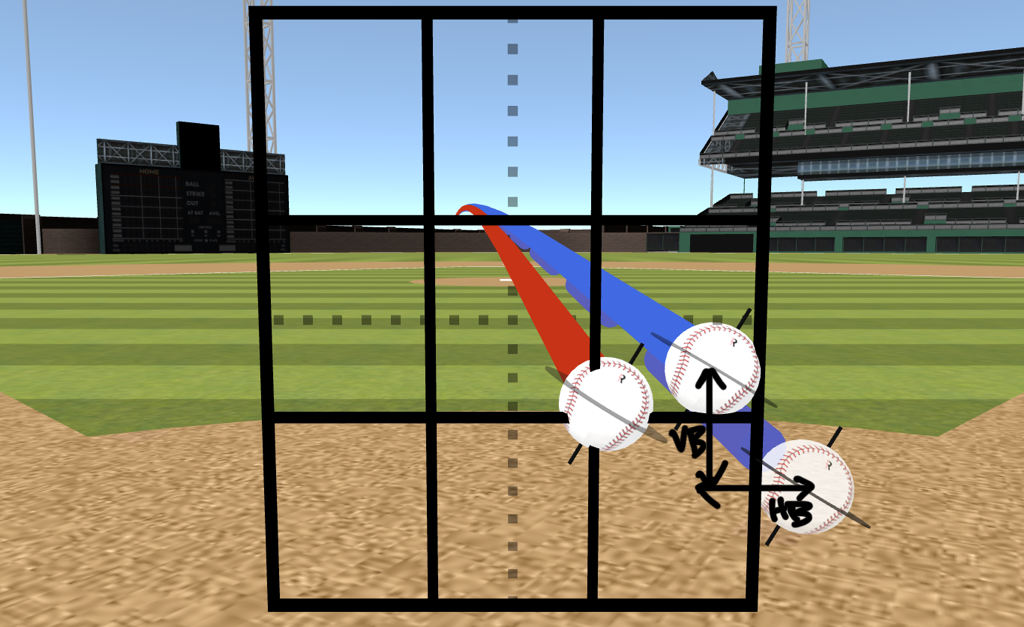
Decades of high-speed optical tracking have refined curveball spin mechanics into quantifiable, repeatable checkpoints. Achieving late, violent depth requires syncing finger pressure, wrist posture, rotational tilt, and wake turbulence into a single continuous delivery.
Position the middle finger along the high horseshoe seam
The middle finger is the primary engine of forward spin. While the index finger rests gently on the leather or lifts slightly off the surface to minimize skin friction, the middle finger must establish firm, flush contact along the interior edge of a horseshoe seam. This structural stability is the heartbeat of pure curveball spin mechanics, preventing the ball from sliding out prematurely and ensuring that downward rip converts entirely into rotational velocity.
The thumb functions as an anchor point directly beneath the ball. Rather than pinching inward, the thumb should press upward against the bottom leather with the flat pad or the lateral edge of the knuckle. When release occurs, the middle finger acts as a fulcrum, ripping down the back of the seam while the thumb stabilizes the launch angle, generating high spin rates without parasitic wobble.
Maintain supreme supination through the release window
To deliver true topspin without wrecking the elbow joint, the pitcher must preserve forearm supination throughout the acceleration phase. Think of the hand slicing through the air like a karate chop. The pinky finger leads the descent toward home plate while the palm faces inward toward the pitcher’s neck or chest.
As the arm reaches full extension, the pitcher pulls down against the seam rather than twisting around it. The ball naturally rolls up and over the stationary index finger, kicked loose by the forward momentum of the arm. Supination ensures that all acceleration transfers into rotational torque rather than lateral shear, protecting the medial elbow while producing elite downward break.
Align the true spin axis to maximize aerodynamic lift deficit
A baseball spinning at three thousand revolutions per minute will still hang over the middle of the plate if its spin axis is tilted incorrectly. Spin efficiency describes the percentage of total revolutions that contribute directly to Magnus movement. If a pitch possesses excessive gyro spin, which behaves like a spiraling football, the air passes symmetrically around the ball without generating lateral or vertical deflection.
To produce an authentic twelve-to-six drop, the spin axis must align parallel to the horizon. Just as mastering delicate culinary shear stresses in emulsion sauce mechanics and 4 proven rules that eliminate disastrous broken sauces demands absolute respect for microscopic boundary layers, tuning your pitch’s spin axis prevents gyro tilt from bleeding away your downward bite. Aligning the axis allows every single rotation to fight against the air, pulling the pitch toward the dirt at the absolute last possible second.
Harness seam shifted wake to create sudden late departure
For decades, physicists believed the Magnus effect was the sole force governing breaking pitches. Recent computational fluid dynamic studies reveal an equally potent phenomenon known as seam-shifted wake. When a baseball rotates with specific seam orientations, one side presents smooth leather to the oncoming air while the opposite side presents raised, turbulent stitches.
This asymmetry forces the separation point of the boundary layer air to occur earlier on one side of the sphere than the other, tilting the aerodynamic wake behind the ball. This wake deviation pushes the ball in the opposite direction without requiring additional Magnus spin. By deliberately pairing traditional spin with intentional seam-shifted wake, pitchers create an unpredictable, late trajectory change that leaves hitters swinging at empty air.
Translating laboratory spin metrics into repeatable mound execution
Data tracking devices and photometric monitors have revolutionized how pitchers evaluate pitch quality, but raw metrics are useless if an athlete cannot repeat the physical feel. Pitchers often obsess over spin rate, believing that higher numbers automatically equate to better results. Yet raw spin rate is merely potential energy. Without high spin efficiency and deliberate directional tilt, high spin simply creates an energetic pitch that fails to drop.
When evaluating modern curveball spin mechanics, high-speed cameras reveal that elite pitchers do not alter their foundational arm slot. If a pitcher drops their elbow or drops their shoulder angle to force a breaking ball, the batter’s peripheral vision immediately identifies the mechanical tell. The delivery must remain visually indistinguishable from the pitcher’s primary fastball until the instant the ball leaves the hand, traveling down the exact same initial tunnel before diverging into its distinct flight path.
Diagnosing flat pitches and mechanical leaks before game day
When a breaking ball lacks bite, the culprit is rarely a lack of effort. Most flat curveballs, commonly referred to as cement mixers, stem from premature pronation or improper finger contact. If the pitcher lets the thumb push forward or allows the hand to turn inward prior to release, the spin axis shifts into a harmless spiral, causing the ball to hover flatly in the hitting zone.
Coaches often attempt to fix poor breaking action by prescribing more wrist flexion, fundamentally misunderstanding how curveball spin mechanics actually operate. The true remedy almost always involves cleaning up the grip and ensuring the lead hip does not fly open early. Extensive aerodynamic research cataloged at The Physics of Baseball research portal at the University of Illinois confirms that tiny structural flaws at release yield massive deviations at home plate. Checking slow-motion footage ensures your middle finger remains the final point of contact, driving directly through the centerline of the ball.
The enduring mastery of aerodynamic manipulation
The legendary curveball remains one of sports’ most mesmerizing optical illusions, but its execution is pure applied physics. By discarding outdated wrist-snapping drills and embracing how seams, pressure differentials, and kinetic sequencing interact, any dedicated pitcher can build a weapon that defies hitter anticipation.
Ultimately, commanding elite curveball spin mechanics transforms pitching from a guessing game into an exercise in applied fluid dynamics. When you control the grip, honor the kinetic chain, and command the spin axis, you dictate how the air treats the baseball. The result is a pitch that begins with the confident promise of a strike and finishes in the dirt, completely out of reach.