Tennis serve biomechanics and 4 proven rules that unlock devastating power
Discover the precise kinetic sequence behind world-class tennis serves and eliminate the energy leaks holding back your velocity. Learn how ground forces and elastic recoil produce effortless racket head speed.
Mastering tennis serve biomechanics transforms a tentative point-starter into the single most lethal offensive weapon anywhere on a tennis court. Most recreational players approach the delivery as an upper-body throwing contest, muscling the racket through the strike with clenched forearms and desperate shoulder rotation. The ball sails long, dies in the net tape, or worse, grinds the rotator cuff into chronic inflammation. Meanwhile, tour-level athletes make blasting a hundred-and-twenty-mile-per-hour flat delivery look like an effortless whip snap. The difference does not stem from raw biceps girth. It stems from pure mechanical synchronization.
A tennis ball sits on the strings for merely four to six milliseconds during contact. In that razor-thin sliver of time, the racket must transfer immense kinetic energy while moving on an upward, outward trajectory. If any link in your physical sequence fires out of turn or locks up prematurely, you bleed speed before the racket face ever meets the felt. Mastering this discipline requires viewing your body not as individual moving parts, but as a dynamic torsion spring that collects force from the baseline concrete and snaps it through the sweet spot.
The Kinetic Chain Illusion Why Arming the Ball Destroys Velocity
Decades of high-speed kinematic video prove that understanding tennis serve biomechanics begins with abandoning the arm-centric fallacy. The human arm represents less than ten percent of your total body mass. Expecting those relatively small muscle groups to accelerate a balanced graphite frame into a speeding projectile places an impossible burden on the glenohumeral joint. When you attempt to muscle the ball, you unconsciously shorten your swing path, tighten your grip, and disrupt natural proximal-to-distal sequencing.
The kinetic link principle functions exactly like a cracked bullwhip. The handle of the whip travels slowly over a wide arc, sending a wave of momentum traveling down progressively lighter and more flexible leather segments. As each broader segment decelerates, its energy transfers into the next narrower segment, multiplying speed exponentially until the tip breaks the sound barrier. In tennis, your feet, legs, and pelvis serve as the heavy handle. Your racket tip is the supersonic cracker. Disconnecting the arm from that continuous flow forces the shoulder to generate force from a dead stop, which suffocates pace and invites severe labral wear.
The Physics of Ground Reaction Force and Elastic Recoil
Every dynamic serve starts deep in the court surface. Rigorous research in modern tennis serve biomechanics shows that nearly fifty percent of total kinetic energy and upward momentum originates beneath the waist. As you drop into knee flexion, your quadriceps, glutes, and calves drive downward into the court. According to Newton’s third law of motion, the court pushes back with equal and opposite force. This ground reaction force is the raw fuel for your entire stroke.
As this upward drive uncoils through extended knees, it initiates an explosive hip rotation. The pelvis opens toward the target while the shoulders remain coiled perpendicular to the baseline. This deliberate rotational offset between the hips and the shoulder girdle creates the legendary stretch-shortening cycle across the core musculature. Your abdominal obliques, latissimus dorsi, and pectoral muscles stretch like heavy rubber bands pulled to their absolute limits. When these stretched elastic tissues recoil, they release stored mechanical energy at rates muscular contraction alone could never replicate, as verified by a comprehensive kinetic chain analysis documented in sports medicine journals.
Four Proven Biomechanical Rules That Deliver Devastating Serve Velocity
When you break down elite tennis serve biomechanics into actionable components, four universal physical principles govern every millimeter of motion. Implementing these fundamentals shifts your delivery from an unpredictable muscle heave into a repeatable, high-output mechanical engine.
Anchor the Kinetic Foundation Through Deep Leg Drive
You cannot launch a rocket from an unstable canoe. Whether you employ a pinpoint stance where the back foot slides forward or a platform stance where the feet remain spaced, your center of mass must load downward before driving vertically into the ball. Knee flexion should reach approximately fifty to seventy degrees during the loading phase. This is not a casual squat; it is a coiled pre-stretch. The upward drive must propel your entire body upward and into the court, ensuring you strike the ball at the apex of your jump while momentum carries forward.
Perfect the Toss Window to Maximize Thoracic Extension
A flawed ball toss sabotages clean physics before your racket begins its forward ascent. The ball must climb smoothly from an extended, non-dominant arm without wrist flick or erratic spin. Place the apex of the toss roughly twelve to eighteen inches inside the baseline and slightly to the dominant side of your head. This precise spatial window forces your upper spine into healthy thoracic extension rather than destructive lumbar arching. It allows your chest to face the sky during the loading phase, opening up a massive launch corridor that lets you attack the ball at the absolute highest reachable elevation.
Master the Racket Drop and Elbow Cartwheel
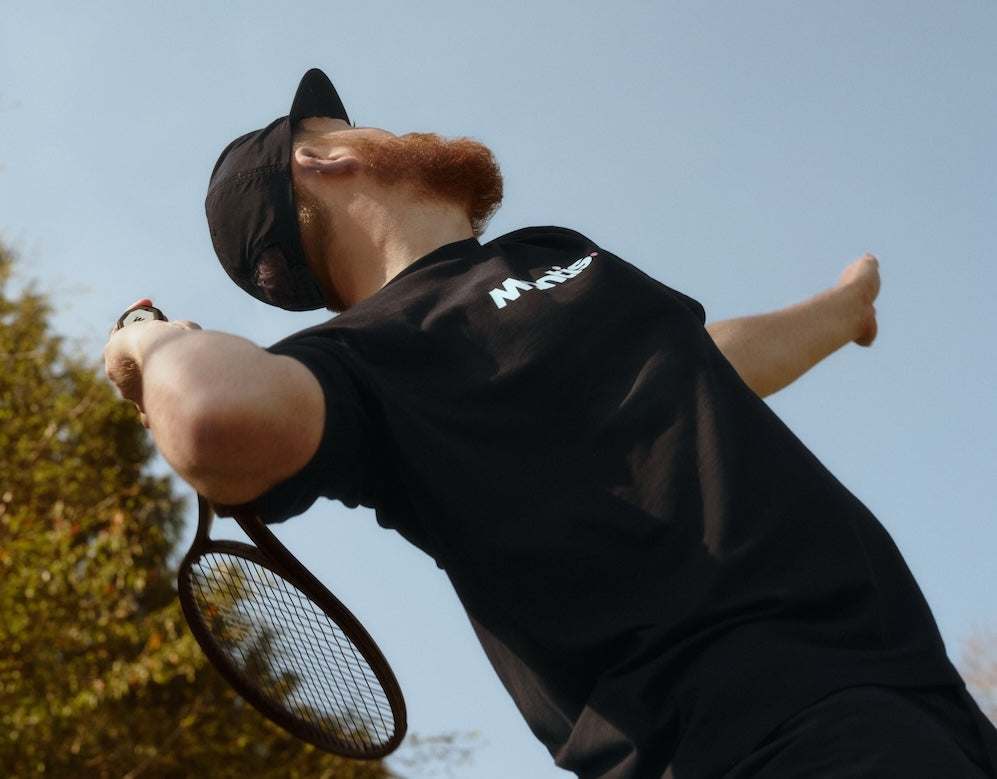
Amateurs frequently make the mistake of pulling the racket directly forward toward the ball from the trophy pose. Elite servers do the exact opposite: they let the racket head plummet downward behind their back while the elbow maintains elevation. This creates an optical illusion known as the cartwheel effect. As the hitting shoulder drives up and over the non-dominant shoulder, the racket head lags deep down the spine. This extreme lag extends the swing radius, providing a massive runway over which the racket can accelerate before reaching the impact point.
Unleash Pronation and Long Axis Internal Rotation
Perhaps no mechanical element is more misunderstood than pronation. You do not hit flat serves by pushing an open racket face straight through the ball like a frying pan. Instead, you approach the ball on edge, as if slicing into it with the frame edge. In the microsecond before contact, your forearm pronates and your humerus rotates internally along its long axis at astonishing speeds surpassing two thousand degrees per second. The racket face squares up at the precise instant of impact, snaps flush against the ball, and continues rolling outward so the hitting side faces away from your body on the follow-through. This rotary snap delivers blistering flat speed while preserving an effortless release.
How Professional Players Rebuild Broken Delivery Patterns
Rebuilding an unstable overhead action through strict tennis serve biomechanics requires stripping away compensations and re-sequencing the kinetic chain from the ankles upward. Even the most gifted ball strikers can fall victim to timing breakdowns when mental tension or mechanical drift disrupts their rhythm. When stress strikes, the toss creeps backward, the knee bend shrinks, and the arm tries to take over the workload.
When mechanical hitches infect the service motion under supreme tournament pressure, elite athletes must deconstruct their kinetic sequence entirely. We witnessed this profound transformation when Aryna Sabalenka Faces 3 Crucial Battles in Fierce WTA Wuhan Comeback, relying on a rebuilt, biomechanically stable delivery that turned former double-fault nightmares into devastating championship weapons. By cleaning up toss drift, stabilizing the core load, and trusting smooth internal rotation, top performers eliminate the catastrophic hitches that derail matches under heat.
Diagnosing Energy Leaks in Your Serving Motion
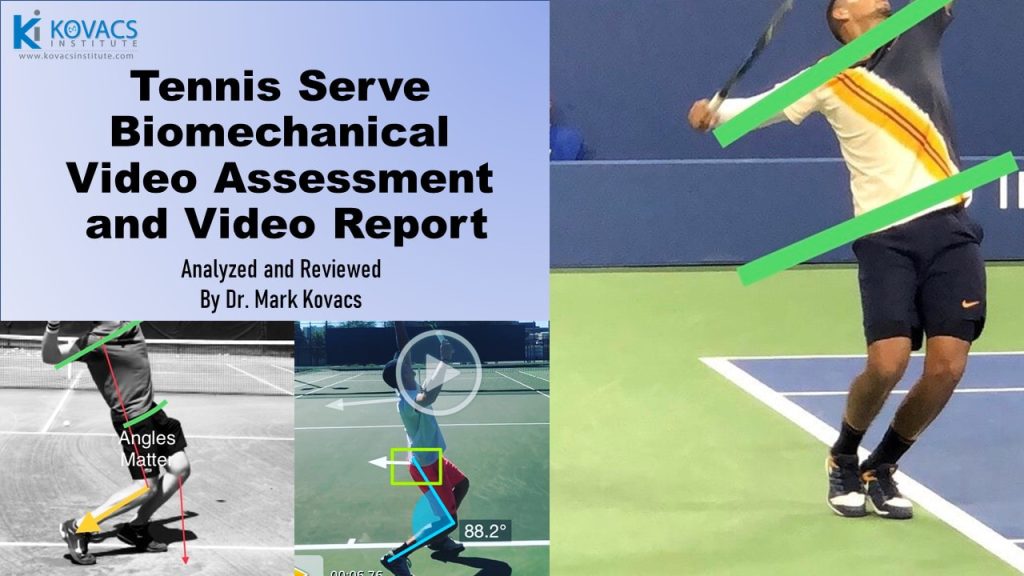
Diagnostic slow-motion video analysis has completely democratized tennis serve biomechanics for everyday players seeking to escape frustrating plateaus. You no longer need a high-tech university laboratory with reflective motion-capture markers to pinpoint where your power is escaping. Filming your serve at two hundred and forty frames per second from both behind the baseline and down the side angle instantly reveals the critical leaks in your kinetic chain.
Watch your non-dominant arm during the transition into the strike. If your tossing arm drops like a dead weight before your hitting shoulder begins its upward drive, your chest collapses forward prematurely, killing your upward launch angle. Keep that tossing arm extended upward toward the ball as long as humanly possible, then tuck the elbow sharply against your ribs to act as a rotational brake that accelerates the hitting shoulder around your center axis.
Next, scrutinize your grip pressure. Clinging to the handle with white knuckles chokes off natural wrist flexibility and freezes your forearm pronation. Grip tension should rarely exceed a four on a scale of ten. A relaxed hand allows the racket head to lag deeper during the drop and whip through contact with crisp, loose velocity. When your structural fundamentals align, power stops feeling like an exhausting cardiovascular chore and begins feeling like an automated physical law. Committing your muscle memory to true tennis serve biomechanics provides a lifelong blueprint that balances searing racket speed with orthopedic longevity.