Kashim Chowdhury Juggled 5 Remote Civil Service Jobs in Shocking UK Fraud Trial
A former UK civil servant allegedly contracted 183 hours of work across five simultaneous government roles, using makeup and sick leave to conceal the overlap. Southwark Crown Court heard how remote work oversight failed to catch the multi-department operation.
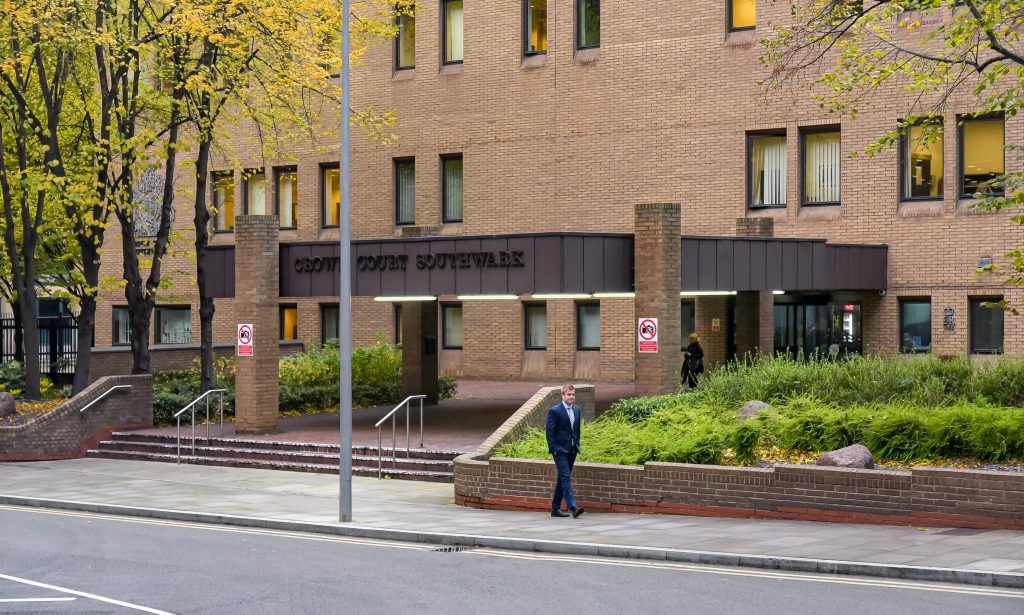
Former civil servant Kashim Chowdhury stands accused at Southwark Crown Court of executing one of the most audacious remote working schemes ever brought before British justice. As reported by the BBC, Chowdhury allegedly held down five full-time public sector positions simultaneously from his home in Whitechapel, east London, drawing overlapping taxpayer-funded salaries while providing a fraction of his contracted commitments. The prosecution outlined an intricate web of deliberate omissions, fabricated medical excuses, and cosmetic trickery designed to keep departmental managers completely in the dark.
The case has sent shockwaves through Whitehall and municipal authorities across Britain, highlighting glaring blind spots created in the wake of the post-pandemic work-from-home revolution. While moonlighting and the internet phenomenon of being quietly overemployed have stirred corporate debates worldwide, this prosecution alleges deliberate criminal fraud against the Crown. Jurors learned that the defendant did not merely take on side gigs or freelance assignments, but orchestrated five simultaneous, full-time government-funded contracts that demanded round-the-clock physical impossibility.
The Unprecedented Scale of the Whitechapel Civil Service Investigation
According to coverage from Sky News and Personnel Today, prosecutors alleged that Kashim Chowdhury systematically exploited the civil service’s decentralized hiring processes between 2021 and 2023. Rather than informing prospective government employers of his existing duties, Chowdhury signed contracts that legally bound him to distinct departments and agencies as a dedicated, full-time employee. Each position carried the clear contractual requirement of exclusive professional commitment during standard operating business hours.
Investigators piece together an operation that traversed central government bodies and local authorities. The prosecution told the court that Chowdhury acquired roles across different agencies by concealing his employment history and falsely declaring his availability. The sheer geographic detachment enabled by work-from-home directives shielded him from casual workplace encounters where overlapping duties might have surfaced instantly.
By operating out of his residence in Whitechapel, Chowdhury managed to interface with diverse managerial teams strictly through screens, email channels, and messaging platforms. The court heard that multiple departmental HR portals operated in administrative silos, unable to communicate with one another or flag identical national insurance and bank details being routed into parallel payroll streams. What began as an apparent remote work arrangement slowly morphed into an enterprise that siphoned public resources across separate taxpayer-funded entities.
The Mathematics of an Impossible 183 Hour Work Week
As documented by The Independent, the mathematical reality of the allegations borders on the surreal. Southwark Crown Court heard that at the absolute peak of the overlapping contracts, prosecutors demonstrated that Kashim Chowdhury was officially contracted to log 183 hours of labor in a single seven-day span. A standard calendar week contains only 168 hours in total. The schedule meant that even if Chowdhury had forsaken all sleep, meals, and basic biological needs for seven consecutive days, he still would have fallen 15 hours short of fulfilling his contractual obligations to the British state.
The crown argued that such arithmetic is not merely a matter of poor scheduling or overly ambitious ambition, but prima facie evidence of fraud by false representation. Each department that hired him operated under the legitimate expectation that their payroll was securing roughly 36 to 37.5 hours of dedicated, focused labor per week. Instead, Chowdhury allegedly divided fractional attention between competing duties or neglected operational queues altogether while drawing full compensation.
Colleagues across various departments occasionally flagged missed meetings, slow response times, and unfulfilled administrative tasks. Yet, in the fluid environment of remote civil service work, these performance lapses were initially interpreted as typical operational bottlenecks or genuine personal hardship rather than systemic deception. The physical separation created by home offices provided Chowdhury with a durable buffer, allowing him to trade on the inherent trust of public sector employment.

Five Revealing Tactics Heard at Southwark Crown Court
During the opening stages of the trial, the prosecution presented a detailed breakdown of how Kashim Chowdhury allegedly managed the daily operations of five full-time positions without immediate detection. The methods presented to the jury outline a calculated exploitation of modern corporate tools and workplace empathy.
Cosmetic Illness and Video Call Deceptions
One of the most extraordinary revelations brought before the jury involved the calculated manipulation of physical appearance. As reported by both the BBC and the Hindustan Times, the prosecution alleged that Chowdhury deliberately applied makeup and cosmetic products to his face before logging onto mandatory webcam calls with managers. By giving his skin an unnaturally pale, sallow, and sickly hue on screen, he visibly reinforced claims of severe physical exhaustion and lingering illness, successfully deflecting managerial scrutiny and securing sympathy instead of disciplinary reviews.
Strategic Exploitation of Overlapping Sick Leave
The court heard that when conflicting workloads or synchronous video meetings made double-booking unmanageable, medical absence became the primary operational valve. According to court filings reported across British media, prosecutors revealed that Kashim Chowdhury utilized paid sick leave as an operational shield, submitting authentic or fabricated medical certificates to one department while actively logging full shifts and collecting regular wages from another. When one employer pressed for return-to-work timelines, he reportedly rotated sick leave into another role to balance his commitments.
Concealed Declarations and Fabricated Employment Histories
Every role secured by Chowdhury required formal pre-employment declarations regarding concurrent employment, conflict of interest, and outside business activities. The prosecution told jurors that the defendant repeatedly signed binding legal forms stating that he had no secondary employment, had ceased work with prior departments, or was entirely unencumbered by competing contractual duties. These misrepresentations formed the foundation of the criminal fraud charges laid out at Southwark Crown Court.
Navigating Siloed Civil Service Monitoring Systems
The structure of the modern civil service relies heavily on delegated authority, where individual agencies, executive departments, and councils manage their human resources independently. Chowdhury allegedly capitalized on this lack of interconnected visibility. Because the central government lacked an automated, real-time cross-checking mechanism across all affiliated bodies, multiple public sector entities were able to employ him simultaneously without a centralized database flashing an immediate compliance alert.
Digital Attendance and Multi Laptop Logistics
Jurors were informed of the physical setup required to maintain the illusion of active employment across distinct agencies. Working with multiple government-issued laptops, remote tokens, and corporate accounts, Chowdhury reportedly mastered the art of passive digital presence. By juggling various corporate chat apps, responding sporadically to maintain active status lights, and moving between separate hardware setups, he preserved the outward appearance of full-time dedication while completing minimal substantive work.
Broader Institutional Fallout for Public Sector Remote Working
The trial of Chowdhury lands at a deeply sensitive moment for the British civil service, which has faced sustained political and media scrutiny regarding remote working productivity. Ministers and senior civil service leaders have engaged in fierce debates regarding mandatory minimum days in the office, with critics arguing that working from home erodes institutional standards and oversight. This case provides ammunition to those pushing for aggressive return-to-office mandates and strict digital surveillance software.
The revelations also underscore widespread vulnerabilities in public procurement and internal verification mechanisms. While private enterprises have rapidly adopted digital tracking software, keystroke loggers, and background audits, public institutions have historically operated on foundational principles of professional trust and administrative integrity. The institutional vulnerability detailed in this trial mirrors broader concerns across public administration, where systemic operational gaps allow bad actors to manipulate public systems. A similar dynamic of administrative gaps enabling widespread misconduct was examined in depth when analyzing how the Bank Fraud Surge Triggers 4 Critical Alerts from Federal Probes to Global Treaties, highlighting how complex regulatory networks often fail to spot interconnected financial deception until serious damage has occurred.
Personnel specialists emphasize that the case should not be conflated with everyday flexible working practices. Human resources analysts quoted by Personnel Today pointed out that millions of civil servants and remote professionals operate with absolute honesty and heightened productivity outside traditional office walls. The alleged actions being tried at Southwark Crown Court represent an extreme, deliberate breach of statutory trust that exploited pandemic-era protocols designed to keep vital public services running during national lockdowns.
What the Southwark Crown Court Trial Signals for the Future of Remote Oversight
The legal proceedings against Chowdhury establish an important precedent regarding the criminalization of extreme multi-jobbing within the public sector. While employment tribunals regularly handle dismissals for gross misconduct involving unauthorized secondary employment, the Crown Prosecution Service chose to bring formal criminal fraud charges carrying potential custodial sentences. This decision reflects the substantial financial sums involved, the public interest in protecting taxpayer funds, and the systematic nature of the alleged deceptions.
Civil service bodies are already reviewing cross-departmental vetting standards in response to the operational gaps exposed during the investigation. Discussions in Whitehall are focusing on creating automated data-matching programs between the Department for Work and Pensions, HM Revenue and Customs, and Cabinet Office payroll records to prevent any individual from maintaining simultaneous active full-time payroll accounts across state institutions.
As the jury at Southwark Crown Court weighs the extensive evidence, documents, and digital logs, the proceedings serve as an essential reality check for post-pandemic workplace design. The trial illuminates the fragile balance between workforce flexibility and verifiable accountability. Whether through makeup applied for a digital webcam or sick notes swapped between government agencies, the case demonstrates that while remote infrastructure can expand operational agility, it requires robust institutional oversight to ensure that basic public integrity remains intact.