Bank of America Fine Triggers 4 Major Shocks Across Global Banking
United States regulators have penalized Bank of America with a historic $1.2 billion enforcement action over money laundering and sanctions violations. Here is an investigative breakdown of the systemic failures, regulatory fallout, and what the banking sector faces next.
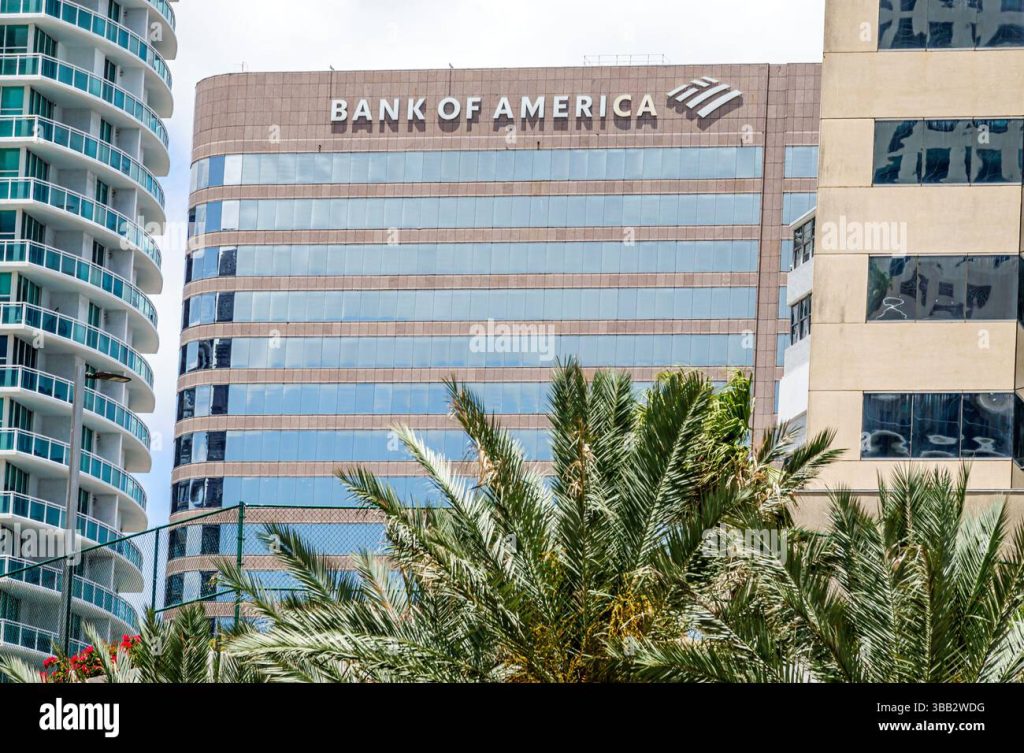
The announcement of a massive Bank of America fine totaling $1.2 billion has sent tremors through the global financial architecture, marking one of the most punitive regulatory actions leveled against a domestic mega-bank in recent history. Federal watchdogs confirmed the historic penalty following exhaustive investigations that exposed deep vulnerabilities across the lender’s anti-money laundering safeguards and national sanctions compliance controls. As reported by AP News and CNBC, the sweeping enforcement action penalizes the institution for systemic deficiencies that allowed billions in transactions to bypass critical screening thresholds over multiple operating cycles.
Financial markets absorbed the shockwaves immediately as disclosures from NBC News, Yahoo Finance, and the Financial Times underscored the severity of the charges. Rather than an isolated procedural discrepancy, enforcement officials described a structural breakdown in institutional oversight. Federal authorities revealed that Bank of America failed to maintain a surveillance apparatus capable of identifying suspicious transaction patterns and preventing potential violations of national sanctions mandates. For Wall Street, the penalty delivers an unmistakable signal that regulatory tolerance for operational apathy within systemically important financial institutions has evaporated.
The Anatomy of a Historic 1.2 Billion Dollar Enforcement Action
Monetary penalties exceeding the ten-figure benchmark are exceptionally rare in the banking sector, reserved almost exclusively for cases where regulators identify pervasive, long-term non-compliance. In this instance, regulators made clear that the Bank of America fine reflects years of unchecked compliance deficits that exposed the United States financial apparatus to serious illicit finance risks. Multi-agency investigations determined that internal controls at the Charlotte-based banking giant suffered from chronic underinvestment, leaving transaction surveillance systems outdated and ill-equipped to handle modern payment velocities.
Federal authorities, led by the U.S. Department of the Treasury and allied regulatory bureaus, detailed how the institution neglected fundamental mandates established by the Bank Secrecy Act and federal sanctions frameworks. When financial giants operate at the scale of Bank of America—processing trillions of dollars in daily clearing activity—even a fractional percentage of unmonitored flow can facilitate illicit capital transfers. Regulators determined that the bank’s automated alert mechanisms frequently failed to trigger manual reviews for high-risk accounts, creating blind spots that persisted through repeated supervisory review periods.
The punitive $1.2 billion settlement encompasses both direct civil monetary penalties and mandated restitution frameworks designed to force comprehensive institutional restructuring. Wall Street analysts tracking bank capital reserves note that while Bank of America retains substantial liquidity buffers to absorb the fine without endangering its core tier-one capitalization, the reputational sting and the prospective cost of mandatory compliance overhauls will linger across multiple quarterly earnings reports.
Inside the Anti-Money Laundering and Sanctions Failures
At the center of the regulatory action lies a dual breakdown encompassing anti-money laundering protocols and international sanctions enforcement. When examining the anatomy of the Bank of America fine, regulatory filings reveal how deeply rooted the institutional oversights became across operational units. Modern anti-money laundering compliance requires commercial banks to construct dynamic risk-scoring models that evaluate account holders, cross-reference high-risk jurisdictions, and file timely Suspicious Activity Reports with the Financial Crimes Enforcement Network.
According to investigative summaries highlighted by the Financial Times and NBC News, Bank of America’s transaction monitoring architecture lagged significantly behind statutory expectations. Transaction backlogs grew unchecked, and algorithmic transaction filters failed to capture complex layering techniques commonly utilized by criminal syndicates to disguise source funds. Crucially, the bank allegedly processed transactions connected to parties or jurisdictions subject to strict federal sanctions prohibitions, bypassing filters intended to freeze prohibited assets on contact.
Sanctions enforcement has emerged as a cornerstone of national security policy, particularly as global geopolitical friction escalates. Regulators expect prime domestic clearing institutions to serve as the front line of defense against illicit foreign capital. When a premier institution fails to maintain robust filters, it creates operational liabilities not merely for its private shareholders, but for the stability and credibility of the global financial clearing system at large.
4 Critical Lessons from the Landmark Penalty
Federal enforcement measures of this scale do not occur in an institutional vacuum. Beyond the immediate balance sheet impact, understanding why the Bank of America fine reached unprecedented historic scale requires analyzing four interconnected operational failures that regulators are no longer willing to overlook.
Escalating Costs of Monitoring Blind Spots
Automated transaction monitoring is only as effective as the rules and data pipelines governing its algorithms. Federal investigators found that Bank of America relied on fragmented legacy IT architecture that created structural information silos between regional retail operations and international commercial payment rails. As daily transfer volumes surged over the past five years, the institution’s surveillance algorithms failed to calibrate to shifting risk indicators, resulting in thousands of unflagged, high-risk wire transfers. The failure demonstrates that relying on outdated automated systems without ongoing stress-testing inevitably creates catastrophic regulatory exposure.
Heightened Scrutiny Over Global Sanctions Enforcement
The convergence of financial regulation and geopolitical policy has transformed sanctions screening into a zero-tolerance arena. While past enforcement actions often prioritized domestic fraud prevention, this joint regulatory action focused heavily on cross-border transactions involving restricted jurisdictions. Regulators established that the bank lacked sufficiently agile list-updating protocols to intercept illicit funds moving through nested correspondent banking networks. For global financial institutions, manual or delayed list matching is no longer defensible in an era of real-time regulatory mandates.
Direct Accountability Pressures on Corporate Governance
Federal oversight agencies have deliberately shifted their enforcement posture from issuing symbolic corporate slaps on the wrist to demanding structural governance reform. The settlement orders do not simply collect cash; they mandate independent external oversight, binding audit reviews, and explicit board-level reporting structures dedicated solely to remediation. Senior executives and risk committees can no longer insulate themselves behind delegated compliance officers. The enforcement decree requires direct board verification that remedial benchmarks are being achieved on strict operational timelines.
A Severe Wake-Up Call for Peer Institutions
The punitive impact reaches far beyond Charlotte. Compliance analysts tracking the fallout note that the Bank of America fine sets a new enforcement precedent that will reverberate across JPMorgan Chase, Citigroup, Wells Fargo, and international peers operating within the United States. Federal prosecutors and regulatory agencies have signaled that scale is no longer an excuse for systemic gaps. By demonstrating a readiness to extract over a billion dollars in penalties from a cornerstone American bank, regulators have put every major treasury desk and compliance executive on notice that similar deficiencies will trigger identical consequences.
Broader Industry Implications and the Road to Remediation
In the aftermath of the historic Bank of America fine, the Charlotte-based lender faces an uphill battle to restore institutional trust and modernize its operational infrastructure. The financial penalties represent only the opening chapter of what will be an intensive, multi-year internal overhaul. Independent compliance monitors will now embed within the organization to inspect codebases, re-examine customer due diligence records, and verify that suspicious activity reports are delivered to federal authorities without algorithmic filtering delays.
The ripple effects of this regulatory clampdown are already spreading across corporate boardroom agendas. Financial compliance departments that previously struggled to secure internal IT budgets are now commanding top-tier priority. Just as federal agencies regularly reassess costly systemic missteps—much like how NASA Space Exploration Faces 3 Critical Milestones and Major Budget Setbacks during public program reviews—financial watchdogs are demonstrating zero patience for governance deficits within critical private-sector infrastructure.
Bank executives across the industry must now confront the reality that compliance can no longer be treated as a cost center ripe for operational trimming. The cost of non-compliance—measured in direct regulatory forfeitures, legal expenses, independent monitoring fees, and equity market discounts—vastly outstrips the capital required to build resilient transaction monitoring systems in the first place. Ultimately, the $1.2 billion Bank of America fine marks a turning point in federal enforcement, affirming that no bank is too large, too established, or too central to the financial system to escape severe accountability when its institutional safeguards collapse.