Foley sound design mechanics and 4 proven rules that create cinematic magic
Movie magic is an acoustic illusion built from worn leather, cornstarch, and vintage cutlery. Discover how Foley artists reconstruct the physical world to captivate moviegoers.
Mastering Foley sound design mechanics requires understanding that what the eye perceives on screen is rarely what the microphone captured on set. When a solitary detective walks down a dim alleyway, his leather coat creaking against the damp night air, almost none of that auditory grit originated on location. Production microphones are engineered to isolate dialogue, banishing the messy, rustling noises of the real world. Without a secondary layer of crafted sound, films feel hollow, detached, and unsettlingly artificial.
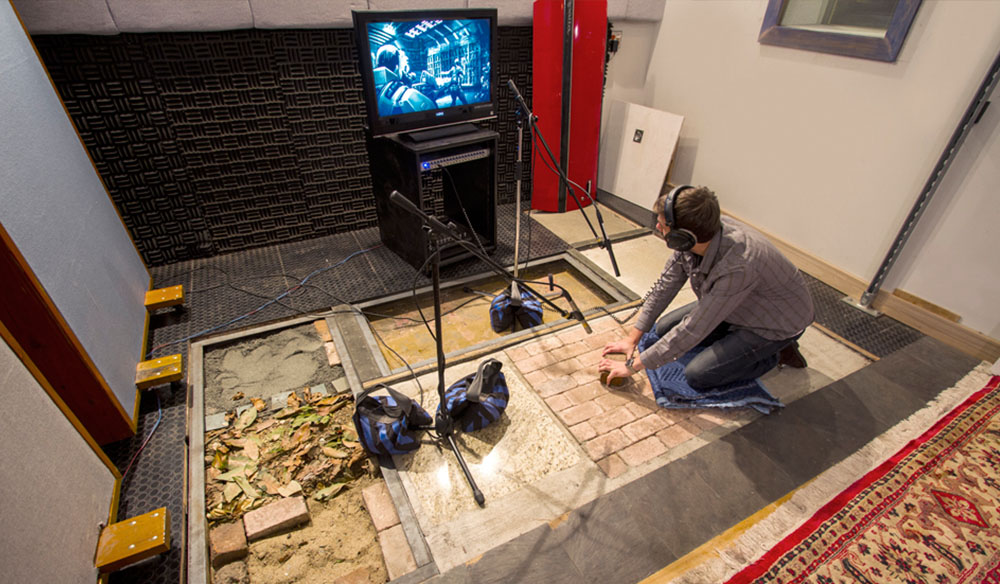
Jack Foley solved this dilemma in the late 1920s by projecting film reels and performing synchronous sound effects live in front of a single microphone. Today, the craft has evolved from a simple broadcast fix into an intricate acoustic science. Artists work on specialized stages packed with debris, gravel pits, water troughs, and hundreds of mismatched shoes. They do not merely reproduce noise; they translate tactile motion into emotional weight, giving flat digital images the visceral texture of real life.
The Acoustic Illusion Behind Everyday Cinema
At its core, Foley sound design mechanics operate on the principle of psychoacoustic replacement. The human auditory system is remarkably forgiving yet intensely skeptical. If an actor drops a brass key onto an oak table, the visual cue creates an instant expectation of weight, resonance, and metallic ring. Yet a direct recording of a tiny brass key hitting wood often sounds thin, clicky, and unimpressive when played back through theater speakers.
The brain expects recorded sound to reflect the psychological importance of an object rather than its literal acoustic footprint. A gun holster must not just slide; it must creak with weathered leather authority. A sword being drawn does not actually ring with a shimmering pitch in real combat, but without that metallic chime, the audience never registers the lethal sharpness of the blade. The Foley artist bridges this divide between physical reality and cinematic expectation.
Achieving this balance demands deep familiarity with material resonance and transient impact. Transient sounds—the initial burst of acoustic energy when two surfaces collide—provide the brain with spatial and physical data within milliseconds. If that transient lacks low-frequency thump or high-frequency sharpness, the object appears weightless. Skilled performers constantly audition disparate objects to find the transient profile that fits the narrative scale of the scene.
Why Pure Production Audio Fails the Human Ear
Film sets are chaotic environments dominated by hums, generator buzz, refrigeration units, and camera dollies. Production sound mixers utilize highly directional shotgun microphones aimed directly at the actors’ mouths. This narrow polar pattern captures pristine vocal frequencies between 100 Hertz and 8 kiloHertz while actively rejecting peripheral noise. Consequently, footsteps, clothing rustle, and incidental touch are either muffled, distorted, or lost entirely in the noise floor.
If dialogue editors were forced to retain production footsteps, every ambient cut between camera angles would produce an intolerable jump in room tone. A wide shot would carry a hollow, distant reverberation, while a close-up would sound tight and dry. To maintain a smooth vocal track, editors strip away the location audio surrounding speech. This leaves dialogue floating in an eerie vacuum that instantly shatters narrative immersion.
Understanding these Foley sound design mechanics explains why an audio engineer treats clean set recordings merely as an empty canvas rather than a finished product. Foley artists do not just rebuild the missing footsteps; they construct a coherent spatial environment that anchors every physical movement to the visual geometry of the screen.

Four Proven Rules That Transform Physical Movement Into Art
Creating believable audio takes far more than banging pots together in a studio. Studio veterans rely on systematic Foley sound design mechanics to construct visceral illusions that bypass our conscious disbelief. These four core rules guide the translation from bodily movement to acoustic storytelling.
Synchronous Rhythm and Micro Timing Adjustments
Perfect synchronicity on a Foley stage is rarely achieved by lining up audio transients mechanically to the exact video frame. Human perception of sound and light operates on differing temporal tracks. Because light travels far faster than sound, our brains are hardwired to accept subtle timing discrepancies in nature. If a performer steps on gravel fifty feet away, the sound naturally reaches our ears slightly after the visual strike.
When a Foley artist performs, they match the stride of the actor while introducing delicate micro-delays or micro-advances depending on shot composition. An extreme close-up requires immediate sync, matching within a single frame, otherwise the effect feels loose and detached. In wide shots, leading or trailing the footstep by two frames allows the ear to process the visual motion before the acoustic impact lands. This humanized, elastic approach prevents footsteps from sounding like sterile drum samples quantized to a rigid grid.
Material Texture Substitution and Organic Metaphors
The literal prop shown on screen is rarely the prop that produces the most convincing sound. Freshly cut pineapples and cabbages make far more convincing flesh wounds and broken bones than any piece of meat. Wet chamois leather cloths beaten against tile simulate heavy mud splatters with startling accuracy. Cornstarch packed inside a leather pouch produces the crisp, dry crunch of boots walking through sub-zero snow, far outperforming actual shaved ice, which melts and turns slushy under studio lights.
This intuitive translation forms the tactile heart of Foley sound design mechanics, transforming mundane grocery items into alien landscapes. The artist must dissect the visual components of an action into distinct acoustic layers: the impact, the friction, and the release. A simple leather jacket movement might require an artist to layer a soft calfskin purse for the delicate collar rustle alongside a heavy motorcycle jacket for the creaking shoulders, blending them into a single, cohesive character texture.
Spatial Depth and Dynamic Room Modeling
Microphone technique on a Foley stage is just as important as the prop in the artist’s hand. If a character appears fifty yards down a hallway, recording the Foley two inches from the microphone and simply turning down the volume fader in post-production fails utterly. Proximity effect will boost the low frequencies unnaturally, signaling to the human brain that the sound source is intimate and close, regardless of volume.
Foley artists and recording engineers constantly adjust their physical distance from the capsule to mimic the camera’s lens. A wide lens requires the artist to step back several feet, allowing the sound to interact with the reflective surfaces of the studio. Sound engineers treat acoustic distance like a physical barrier, recognizing that scale requires disciplined calculation—much like how an investigative report on NASA Space Exploration Faces 3 Critical Milestones and Major Budget Setbacks illustrates the unforgiving physics governing deep-space telemetry. According to acoustic research documented in the Audio Engineering Society technical archives, early reflections and direct-to-reverberant ratios dictate human perception of distance far more effectively than overall gain. When mixers balance these Foley sound design mechanics with cinematic perspective, the listener ceases to hear an artificial layer.
Emotional Subtext and Character Weighting
Foley is acting without words. Two characters wearing identical wingtip shoes walking across the exact same marble floor will produce entirely different sounds based on their psychological state. A confident corporate executive walks with deliberate heel strikes, committing downward force before rolling forward onto the ball of the foot, producing an assertive, authoritative slap. An anxious character walks on their toes, hesitating, producing scuffs and micro-drags that betray internal tension.
The artist must inhabit the character physically, mirroring posture, breathing, and emotional pacing. Carrying extra weight on one hip, dragging an ankle, or leaning forward into a stride transfers physical kinetic energy directly into the floor pits. This emotional subtext cannot be extracted from a digital sound library. It requires a living performer to interpret dramatic intention and project that narrative tension through the soles of their feet.
The Enduring Mastery of Physical Performance in a Digital Era
In an age dominated by artificial intelligence and comprehensive digital audio sample libraries, one might wonder why film studios still maintain soundstages filled with dirt, gravel, and vintage junk. The answer lies in the sheer unpredictability of physical human friction. Pre-recorded digital libraries present static snapshots of sound; they capture an isolated footstep, but they cannot replicate the fluid, continuous momentum of a human body navigating a complex physical space.
When a human walks, no two steps are ever identical. Velocity fluctuates, fabric brushes against itself with microscopic variations in resistance, and weight shifts unpredictably with terrain. Digital sampling requires extensive modulation to avoid the unnatural “machine-gun effect”—the robotic repetition of identical audio files. Modern digital workstations can manipulate waveforms infinitely, yet analog Foley sound design mechanics remain irreplaceable because physical performance carries unpredictable micro-dynamics.
The craft continues to evolve, expanding into video games, virtual reality environments, and spatial audio installations where interactive realism is paramount. Yet the fundamentals remain rooted in the visceral connection between performer and material. When you hear the soft click of a lock picking open or the terrifying clatter of a creature skittering across concrete, you are not merely listening to an effect. You are experiencing a century-old physical tradition of tactile storytelling that convinces the human mind to believe in the impossible.