Newsroom verification mechanics and 4 proven rules that prevent costly editorial disasters
When breaking stories erupt, editorial speed often collides violently with factual accuracy. Here is how modern newsrooms build bulletproof verification systems to prevent catastrophic reporting errors.
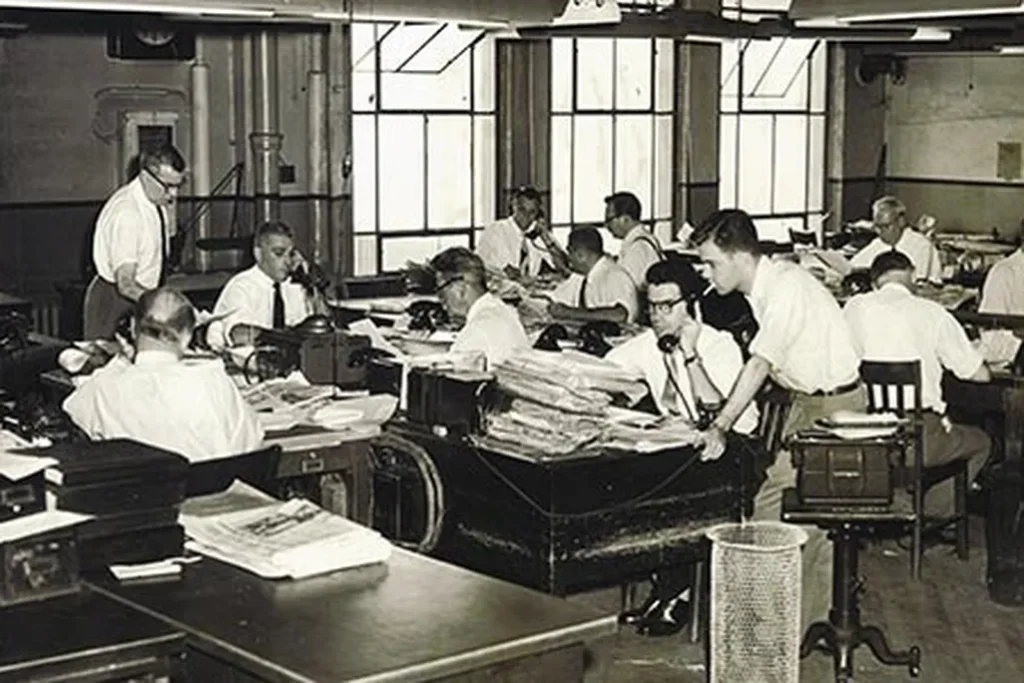
Mastering newsroom verification mechanics separates trusted journalism from catastrophic fabrications when breaking events trigger chaos across the editorial desk. Newsrooms operate in an unrelenting theater of friction. A police scanner crackles with unconfirmed casualties. A mysterious video surfaces on social platforms depicting an apparent explosion. An anonymous tipster drops encrypted files into an inbox. In that dizzying vortex, the human impulse is to publish immediately and verify later. The commercial incentives of modern media reward speed, yet a single unverified detail can incinerate a century of institutional credibility in minutes.
Truth in journalism is never an accidental byproduct of good intentions. It is the product of deliberate forensic friction. Every reputable dispatch that reaches the public represents an iceberg tip; beneath the waterline sits an unseen gauntlet of cross-examinations, document authentication, geolocations, and adversarial editing. Understanding how professional editorial desks interrogate unvarnished reality reveals why real reporting is fundamentally different from reactive commentary. It is an engineering discipline applied to human testimony, volatile leaks, and chaotic real-world developments.
The anatomy of editorial verification in high-pressure newsrooms
At their core, newsroom verification mechanics function as an intellectual firewall designed to filter signal from noise under extreme time pressure. This process begins the moment raw data breaches the newsroom threshold. Seasoned editors do not treat incoming tips as verified facts; they treat them as hypotheses requiring aggressive corroboration. The primary goal during breaking coverage is not merely determining whether a story sounds plausible, but systematically discovering every conceivable reason why it might be wrong.
The traditional baseline of verification relies on the two-source rule, but high-stakes reporting frequently exposes the fatal flaw in that shorthand metric. Two individuals repeating the same unvetted rumor do not constitute two independent sources; they constitute an echo chamber. Genuine independence requires distinct origin points. If a government liaison and an industry lobbyist both confirm a pending policy enforcement action, but both individuals received their information from the same closed briefing memo, the reporter possesses exactly one source duplicated across two mouths. Real corroboration demands separate investigative pathways that do not cross-pollinate.
Verification mechanics classify evidence into distinct tiers of evidentiary weight. Primary documentary records, signed contracts, audited financial statements, and verifiable video metadata anchor the highest tier. On-the-record eyewitness testimony holds the middle ground, provided the witness was physically positioned to perceive the event directly and possesses no disqualifying financial or personal conflict. Anonymous leaks and secondary hearsay occupy the lowest tier, serving solely as directional compasses rather than standalone proof.
Just as financial reporters must grasp the underlying math behind currency carry trade mechanics and 4 proven rules that prevent catastrophic portfolio wipeouts before interpreting wild exchange rate swings, general assignment desks must understand the systemic forces driving institutional statements. Every source possesses incentives, biases, and blind spots. Verification is the conscious act of subtracting those human distortions until only reproducible reality remains.
How raw information mutates before publication
Information in the wild behaves like water flowing through contaminated soil. By the time an eyewitness account travels from a chaotic city street through messaging apps, aggregators, and opportunistic social media accounts, its essential facts have mutated. When editors ignore newsroom verification mechanics during breaking crises, unsubstantiated rumors quickly harden into accepted media consensus.
The degradation curve accelerates due to algorithmic amplification. Modern distribution networks reward sensationalism and emotional extremity over nuanced ambiguity. A dramatic falsehood spreads ten times faster than a meticulous retraction. Newsrooms frequently fall victim to pack journalism, where editors assume an unverified claim is safe to publish simply because three rival outlets have already broadcasted it. This circular reporting creates an illusion of consensus built on nothing more than collective negligence. One wire service aggregates an unverified local broadcast, two international outlets rewrite the wire dispatch, and suddenly a phantom rumor becomes global conventional wisdom.
Furthermore, digital fabrication has progressed far beyond rudimentary photo alterations. Deepfakes, synthetic audio, coordinated sock-puppet networks, and sophisticated astroturfing campaigns are weaponized specifically to bait news desks into embarrassing retractions. Disinformation actors understand editorial deadlines and deliberately leak partially accurate dossiers salted with toxic falsehoods. An editor who evaluates incoming media based solely on surface plausibility is an easy mark. Verification demands rigorous forensic scrutiny of the container, the carrier, and the transmission path before a single word enters the content management system.

Four proven rules that protect investigative reporting from catastrophic errors
Implementing systematic newsroom verification mechanics requires concrete protocols rather than vague appeals to journalistic intuition. High-performing editorial desks enforce strict operational constraints to prevent errors before ink hits the paper or pixels hit the wire. These four disciplines represent the core operational architecture of durable, error-resistant investigative journalism.
Triangulate primary documentary evidence independently
Never settle for oral testimony when paper trails exist. Human memory is notoriously malleable, prone to retroactive justification, and distorted by stress. When an informant describes a clandestine corporate meeting, an unrecorded regulatory concession, or an accounting irregularity, the primary assignment is finding contemporaneous corroboration. Meeting minutes, digital server access logs, corporate filings, flight manifests, and audited bank records do not suffer from emotional bias or faulty recollection. Independent triangulation means obtaining these artifacts directly from multiple non-communicating repositories rather than accepting a single curated dossier handed over by an interested party.
Interrogate metadata and digital provenance before attribution
Treat every digital asset as a potential Trojan horse until its technical footprint is validated. Open-source intelligence techniques allow modern reporters to strip apart EXIF metadata, dissect shadow angles using solar calculation software, and cross-reference satellite imagery against local architectural landmarks. If a viral video claims to show an event taking place at dawn in Eastern Europe, but the shadow cast by a building indicates a solar azimuth corresponding to late afternoon in East Asia, the claim collapses instantly. Digital provenance establishes the unbroken chain of custody from the exact moment a file was recorded to its arrival in the newsroom.
Isolate source motivations from verifiable facts
Sophisticated newsroom verification mechanics demand that reporters decouple an informant’s emotional or political agenda from the factual accuracy of their disclosures. Sources rarely share explosive documents out of pure civic altruism. They leak information to wound corporate rivals, influence ongoing litigation, settle bitter workplace scores, or manipulate market sentiment. A reporter’s duty is neither to judge the informant’s morality nor to become an unwitting instrument of their vendetta. The professional mandate is straightforward: establish whether the leaked evidence is undeniably authentic, independently verify its context, and assess whether publication serves the public interest irrespective of who benefits from the revelation.
Enforce rigorous adversarial stress testing across the copy desk
The most dangerous phase of an investigation occurs right after the narrative seems complete. When reporters spend months gathering evidence, confirmation bias inevitably creeps into the workspace. Writers subconsciously downplay contradictory data points that threaten the story’s dramatic arc. To counteract this natural cognitive failure, newsrooms must institutionalize adversarial editing. A designated senior editor or red-team reporter who had zero involvement in the reporting steps in with one clear objective: dismantle the draft line by line. When senior copy editors apply rigorous newsroom verification mechanics to every disputed assertion, they catch logical leaps, weak attributions, and uncorroborated assumptions that beat reporters overlook.
The organizational discipline behind perennial credibility
Credibility is an asymmetric asset. It requires decades of painstaking accuracy to cultivate, yet a single reckless retraction can shatter an outlet’s reputation overnight. The difference between legacy media institutions that endure across generations and ephemeral digital aggregators lies in their structural appetite for institutional discipline. Editorial standards are not a bureaucratic impediment to swift reporting; they are the guardrails that make sustained speed possible without reckless catastrophe.
Adherence to transparent professional guidelines, such as the Society of Professional Journalists Code of Ethics, anchors newsrooms during turbulent geopolitical and cultural storms. When an inevitable error occurs, an authoritative publication handles it with immediate, conspicuous transparency rather than quiet deletions in the dead of night. Publishing a clear correction note that details what was wrong, why it was wrong, and what the corrected facts are does not weaken an outlet. It demonstrates accountability and respect for the historical record.
Ultimately, enduring newsroom verification mechanics transform a vulnerable publishing outlet into an unshakeable institutional authority. In an era saturated with automated content generation, hyper-partisan rhetoric, and ephemeral digital noise, the public does not suffer from a shortage of raw information. The world suffers from an acute scarcity of verified truth. Newsrooms that master this forensic art remain the indispensable arbiters of our shared reality.