Cash drag effect and 4 proven strategies that rescue idle capital
Holding unallocated cash in settlement accounts feels comforting, but it quietly erodes your wealth over decades. Discover how disciplined liquidity rules and automated allocation frameworks prevent idle capital from silently cannibalizing your returns.
The cash drag effect quietly siphons away portfolio returns while convincing investors they are merely playing it safe. On paper, holding an unallocated cash balance feels completely harmless. The account statement never shows a sudden negative red percentage next to cash reserves. There are no gut-wrenching daily fluctuations, no margin calls, and no panicked headlines threatening an overnight liquidation. Yet beneath that placid surface, idle purchasing power steadily bleeds out against the relentless upward trajectory of consumer prices and productive enterprise earnings.
Cash drag occurs whenever an investor holds excessive amounts of currency or cash equivalents within an investment portfolio rather than deploying those resources into productive, return-generating assets like equities, real estate, or fixed income securities. While having immediate liquidity is indispensable for short-term survival and emergencies, allowing investment capital to languish unallocated in settlement accounts acts as an invisible brake on long-term compound growth. Over a working lifetime, what felt like prudence often turns out to be the single most expensive habit in personal finance.
The deceptive psychology behind hoarding unallocated cash
Human beings are wired for loss aversion. Behavioral finance consistently demonstrates that the psychic pain of losing a thousand dollars is roughly twice as intense as the joy of gaining that same amount. When markets whipsaw through sudden pullbacks or macroeconomic uncertainty dominates the news cycle, our instinct is to retreat into nominal certainty. Cash provides an immediate dopamine hit of control. You can see the exact dollars and cents, untethered from the chaotic swings of the stock exchange.
This emotional defense mechanism routinely manifests as market timing under the polite disguise of patience. Investors tell themselves they are simply waiting for the dust to settle, waiting for a clearer picture, or waiting for a ten percent discount before entering the market. Unfortunately, the dust never truly settles in global finance. By the time macroeconomic conditions look serene, asset prices have already rebounded, leaving sideline capital permanently behind. Investors often misjudge how severely the cash drag effect degrades compounding over a multi-decade horizon, mistaking temporary peace of mind for financial preservation.
Worse still is the psychological trap of mental anchoring. If you sit on cash while an index climbs fifteen percent, buying in later feels like paying a self-inflicted penalty. That hesitation leads to further paralysis, prolonging the uninvested state for months or even years. What began as a tactical pause transforms into an entrenched posture of inactivity, sacrificing years of exponential upside for the false comfort of an unmoving bank ledger.
Mathematical reality of compounding versus idle liquidity
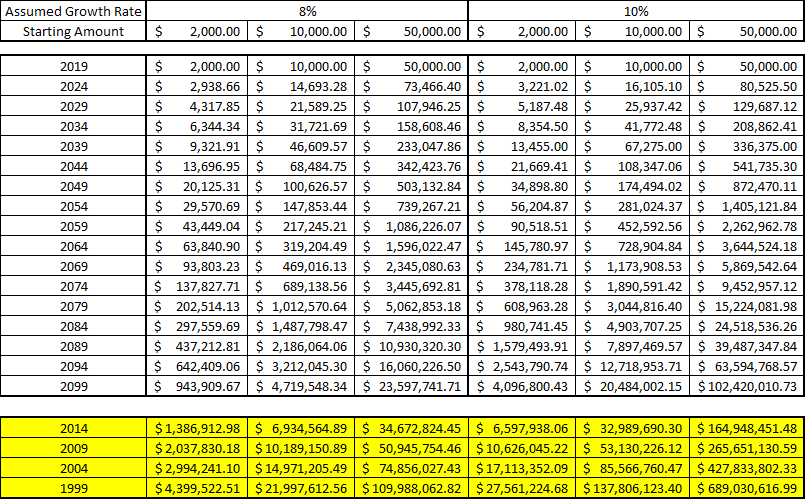
The arithmetic of compounding is ruthless because time is its most critical exponent. When you calculate the terminal wealth of an investment strategy, returns multiply geometrically, whereas cash balances grow arithmetically at best, frequently failing even to maintain purchasing power after taxes and inflation. Decades of market history confirm that equities historically yield a positive real return after inflation, while cash equivalents frequently generate flat or negative real yields during prolonged inflationary cycles.
Consider the mechanics of the equity risk premium. Investors are paid a premium precisely because productive capital takes operational, entrepreneurial, and competitive risks. When you remove capital from those risks, you surrender the associated compensation. When volatility surges, the cash drag effect feels like a psychological sanctuary, yet it locks in permanent purchasing power deficits that no subsequent burst of market timing can easily repair.
Just as understanding the delicate balance between dispersed oil droplets and water prevents structural breakdown—a concept explored in our deep dive into Emulsion Stability in Sauces and 4 Proven Rules for Flawless Texture—managing portfolio liquidity requires balancing uninvested cash against market exposure so the broader system does not curdle under inflation. Every dollar lingering in a brokerage settlement account dilutes the overall rate of return of the productive capital alongside it. If ninety percent of your wealth grows at eight percent while ten percent earns two percent, your blended return is noticeably compromised. Over thirty years, that seemingly modest friction shaves hundreds of thousands of dollars off a retirement nest egg.
Core principles to eliminate uninvested cash drag
Breaking free from unallocated capital traps demands systematic rules that eliminate guesswork and replace emotional hesitation with disciplined execution.
Establish a rigid liquidity threshold for non-negotiable cash needs
The primary step in solving idle liquidity is establishing a pristine operational boundary between your working reserves and your wealth-building capital. Many people suffer from portfolio drift simply because their money lacks clear structural definitions. Emergency reserves, upcoming tax payments, tuition dues, and investment capital mingle inside the same omnibus account, making every investment decision feel fraught with immediate liquidity risk.
To fix this, determine your precise runway requirements based on verifiable monthly living expenditures. For most households, three to six months of baseline survival expenses in a dedicated high-yield savings account or money market fund provides adequate operational security. Once that reserve threshold is fully funded, declare that account locked. Every subsequent dollar that enters your financial ecosystem must be categorized as growth capital. Mitigating the cash drag effect requires establishing strict liquidity boundaries rather than hoarding reserves out of fear, ensuring that defensive buffers never encroach upon your compounding engine.
Implement disciplined dynamic dollar cost averaging schedules
When facing a large lump sum—whether from an annual bonus, an inheritance, or the proceeds of a business sale—fear of catastrophic timing often paralyzes decision-making. Investors stare at the market ticker, terrified that deploying capital today guarantees buying at the absolute peak.
While quantitative market research confirms that lump-sum investing mathematically outperforms dollar cost averaging roughly two-thirds of the time due to the upward drift of markets, human psychology cannot always tolerate the potential regret of an immediate drawdown. The solution is not to sit frozen in cash indefinitely. Instead, establish an inflexible, pre-committed schedule. If you cannot stomach lump-sum deployment, divide the capital into four equal tranches deployed across ninety days, or six tranches over six months. Automate the transfers on the first business day of each month regardless of prevailing market headlines. Once the rule is written, discretionary intervention is forbidden. Systematizing the cadence removes emotional hesitation entirely.
Automate dividend reinvestment and cash sweep protocols
Cash drag does not always arrive in dramatic, lump-sum windfalls. More often, it accumulates as a quiet leakage across multiple accounts. Quarterly dividend distributions, interest payments, and settled bond maturities slowly collect at the bottom of portfolio ledgers. If you run a diversified portfolio yielding two to three percent annually in dividends, that steady flow creates a lingering cash pool that silently dilutes your overall performance if left unmanaged for quarters at a time.
Activating automated dividend reinvestment plans, commonly known as DRIPs, ensures that payouts immediately buy fractional shares of the underlying security the very day funds settle. If your strategy relies on index mutual funds or exchange-traded funds rather than single equities, configure automatic brokerage cash sweeps that funnel any uninvested balance above a nominal threshold straight into your primary asset allocation. By automating reinvestment cycles, you neutralize the cash drag effect before unallocated dividends accumulate into dead weight, maintaining relentless exposure to market compounding.
Deploy ultra short duration alternatives for planned capital reserves
Not every dollar should be locked into volatile equities, particularly if capital is earmarked for a home purchase or a corporate investment within eighteen to thirty-six months. Yet holding medium-term reserves in zero-earning checking accounts is an unnecessary surrender to inflation.
Smart portfolio architecture applies asset-liability matching to short-term obligations. Instead of leaving dry powder vulnerable, allocate anticipated expenditures to ultra-short Treasury bills, short-duration government bond funds, or Treasury inflation-protected securities whose maturities coincide directly with your liquidity deadlines. By capturing prevailing risk-free short-term benchmark rates while locking in principal protection, you transform uninvested cash into a productive holding pattern without taking equity volatility risk. The capital remains completely safe, liquid, and purposeful, yet immune to the erosion of pure neglect.
Institutional asset allocation frameworks for retail portfolios
Professional institutions and university endowments never let capital drift without an explicit mandate. According to extensive portfolio construction analysis from Vanguard research, the primary differentiator between institutional consistency and retail underperformance is the rigorous adherence to systematic asset allocation policies rather than subjective market reactions.
Institutional treasuries monitor the cash drag effect with rigorous tracking to ensure every dollar serves an intentional purpose. When an endowment manager holds cash, it is not an accidental byproduct of indecision; it is an engineered allocation designated for capital calls or liquidity rebalancing. To mirror this institutional precision, retail investors can implement target allocation corridors with defined rebalancing bands.
For example, if your target asset allocation is eighty percent equities and twenty percent fixed income, set a rebalancing corridor of five percentage points. If a roaring bull market pushes equities to eighty-five percent, you systematically trim equities and redeploy the proceeds into bonds. Conversely, if equities drop to seventy-five percent, you pull capital from fixed income to purchase discounted shares. This mechanical discipline forces you to buy low and sell high without ever parking discretionary liquidity on the sidelines out of fear.
Building lifelong friction free wealth allocation habits
Long-term financial freedom is not constructed through dazzling market forecasts or heroic trades. It is forged through the elimination of avoidable friction. Just as high investment expense ratios, frequent trading commissions, and tax inefficiency silently eat away at compounding capital, unmanaged liquidity creates a quiet, persistent drag that degrades your financial trajectory over time.
The path forward requires an honest audit of your existing accounts. Review every checking balance, brokerage settlement fund, and dormant savings account. Challenge every idle dollar. Ask whether its position represents deliberate, budgeted risk management or unconscious procrastination. Eliminating the cash drag effect does not mean abandoning safety, but rather giving every single dollar an explicit job. When every cent across your balance sheet is tethered to a deliberate purpose, your portfolio transforms from an accidental collection of bank balances into an engine of compounding wealth.