
Alexander Zverev Faces 4 Major Battles on His Path to World Number One
As Alexander Zverev inches closer to the ATP World No. 1 ranking, tennis legends and rival players question his temperament and legacy. Here is the full breakdown of his contentious climb.
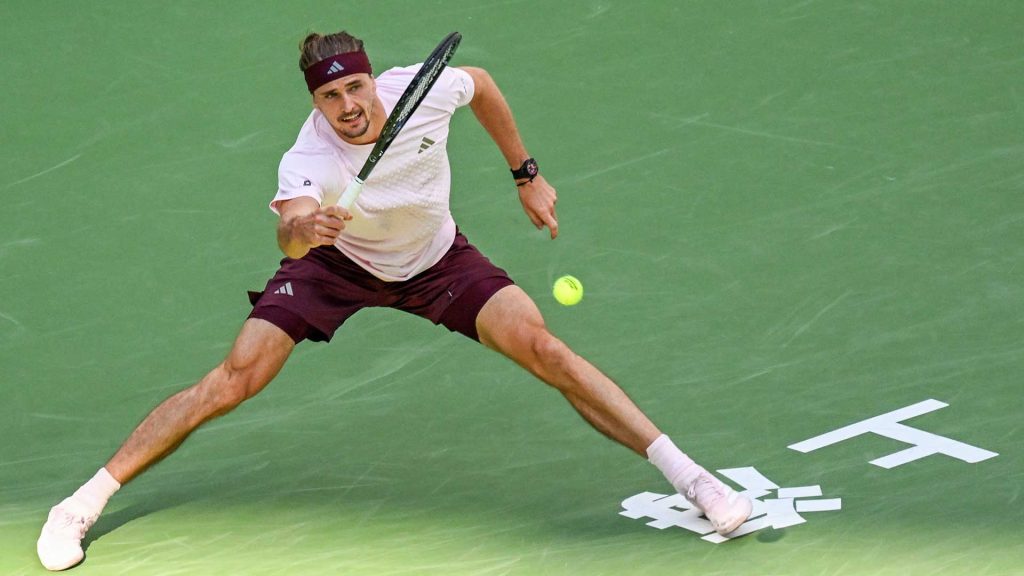
The relentless ascent of Alexander Zverev toward the pinnacle of men’s professional tennis has sparked an intense global debate across the tour. While Jannik Sinner and Carlos Alcaraz have collected the Grand Slam silverware this season, the ATP ranking computers reward unwavering week-in, week-out consistency. That mathematical reality has pushed the towering German to the brink of securing the top spot in men’s tennis for the first time in his career.
Yet his climb is anything but simple. Even as numerical projections turn in his favor, controversy trails closely behind. From veteran champions revising their past criticisms to opponents blasting his on-court conduct in Shanghai, the narrative surrounding the German star is fraught with tension. Reaching the summit of tennis requires both ranking points and emotional fortitude, two arenas where he currently faces fierce scrutiny.
Understanding this moment requires unpacking the convergence of mathematics, locker room friction, and legacy questions. With the season racing through its demanding autumn schedule, the battle for the sport’s throne has exposed conflicting viewpoints about what makes a true World No. 1.
Jimmy Connors Shifts His Stance on the German Contender
Former World No. 1 Jimmy Connors recently reassessed Alexander Zverev after previously expressing sharp skepticism about the German’s tactical passivity. As reported by Tennishead, Connors remarked that it is now a matter of when rather than if the German will officially capture the World No. 1 ranking. The American eight-time Grand Slam champion had spent years scrutinizing Zverev for retreating into defensive shells during critical junctures of major matches, but the sheer volume of victories has forced a recalibration.
Connors highlighted that despite missing out on a maiden Grand Slam trophy, the German has built an imposing points base by going deep into nearly every ATP Masters 1000 tournament he enters. Winning an Olympic gold medal, two ATP Finals titles, and multiple Masters crowns proves that his baseline game can overpower the vast majority of the tour. In the eyes of Connors, consistency over an eleven-month calendar deserves athletic recognition, regardless of stylistic gripes.
This shift from Connors carries genuine weight across the tennis landscape. Connors was famous for playing with raw aggression and unyielding fire, the very attributes critics often claimed Zverev lacked on the biggest stages. By acknowledging that the top ranking is virtually within Zverev’s grasp, Connors validated the attritional grind required to stay in the upper echelon of modern tennis.
Tensions Erupt on Court at the Shanghai Masters
Wu Yibing lost to Alexander Zverev at the Shanghai Open, yet the Chinese wildcard refused to let the defeat pass without voicing his frustration. As reported by Tennis365, Wu openly criticized the top seed for what he termed unnecessary behaviour during their second-round encounter at the Rolex Shanghai Masters. The match was characterized by heated interactions, demonstrative body language, and prolonged complaints directed toward the chair umpire.
Wu did not mince words when evaluating the confrontation afterward. The Chinese star argued that the German frequently allowed his emotions to boil over into gamesmanship, creating unnecessary drama when the focus should have remained strictly on athletic execution. Rather than being intimidated, Wu expressed irritation that an established top-tier professional felt compelled to engage in theatrical outbursts to gain an edge.
Furthermore, Wu offered a direct tactical contrast between facing the German and competing against Carlos Alcaraz. The Chinese player noted that Alcaraz presented a distinctly superior sporting test, characterized by creative shot-making, dynamic court coverage, and respectful conduct. Wu remarked that while Zverev relies heavily on a booming serve and heavy baseline rallying, Alcaraz challenges every dimension of an opponent’s physical and mental preparation without resorting to unnecessary histrionics.
Four Critical Factors Shaping the Fight for Top Ranking
The quest to overtake the field involves complex competitive variables that go far beyond a single tournament outcome. Zverev finds himself navigating mathematical windows, tactical divides, physical workloads, and historical expectations simultaneously.
Mathematical Scenarios Across the ATP Tour Calendar
Official calculations published by the ATP Tour and Sports Illustrated outline a tangible road map where Alexander Zverev could theoretically eclipse his rivals. Because ranking points drop off precisely fifty-two weeks after they are earned, the timing of autumn tournaments plays a decisive role. Jannik Sinner faces the burden of defending massive point totals from his blistering late-season run in the previous year, whereas Zverev has fewer points to protect during select indoor events.
If the German maximizes his results at ATP Masters 1000 stops like the Paris Masters and capitalizes at the ATP Finals in Turin, the point differential could compress dramatically. Sports Illustrated highlighted that the race for the Year-End No. 1 ranking often hinges on small margins during the European indoor circuit, where fast courts reward devastating servers who rarely surrender service games.
Tactical Contrasts with Carlos Alcaraz and Jannik Sinner
Wu emphasized that Carlos Alcaraz presented a far more daunting athletic puzzle than Alexander Zverev because the Spaniard attacks from every corner of the court. That tactical critique mirrors a broader perception on the ATP Tour. Alcaraz and Sinner possess lethal offensive velocity that can take the racket out of an opponent’s hands, forcing defensive players into desperate lunges.
Zverev counters this offensive firepower through sheer consistency and height-leveraged serving. His backhand remains one of the most reliable weapons in tennis, capable of withstanding relentless crosscourt rallies. However, when pushed into passive baseline patterns, he occasionally struggles to finish points at the net, leaving an opening for elite attackers to dictate terms during high-pressure tiebreaks.
Physical Durability Through Relentless Tour Schedules
Reaching the summit requires an extraordinary capacity to withstand physical punishment over dozens of weeks. The German player’s recovery from a catastrophic ankle ligament tear suffered at Roland Garros in 2022 stands as a testament to his elite conditioning and medical rehabilitation. Returning from an injury that threatened his career required months of grueling physical therapy.
Since returning to full fitness, he has played one of the heaviest schedules among the top five. While rivals like Sinner and Alcaraz have navigated occasional muscular fatigue or tactical schedule reductions, Zverev regularly enters ATP 500 and 250 tournaments alongside mandatory Masters events. That relentless schedule keeps the ranking points flowing, even when his peak form fluctuates.
The Lingering Void of a Grand Slam Breakthrough
No conversation about tennis greatness can ignore the ultimate measurement of prestige, the four Major tournaments. Marcelo Rios remains the only man in the Open Era to reach World No. 1 without ever winning a Grand Slam singles title. Zverev has reached two Major finals, falling agonizingly short in a fifth-set tiebreak at the 2020 US Open and losing a five-set war at Roland Garros in 2024.
Ascending to the top of the rankings without a Grand Slam crown inevitably invites intense public debate about legitimacy. In modern sports culture, reaching the pinnacle without capturing the defining hardware triggers monumental scrutiny, an athletic evolution reminiscent of how Lash Legend Strikes With 4 Crucial Milestones Transforming WWE History to shatter entrenched norms and prove elite credibility under intense spotlight. For the German, erasing that specific asterisk remains the defining mission of his career.
Divided Fan Reception and the Question of Tennis Legitimacy
As analyzed by Tennis World USA, Alexander Zverev faces an unusual cultural predicament where reaching the pinnacle of the ATP rankings may not translate into unconditional adoration. The sport of tennis has long celebrated champions who embody both athletic dominance and charismatic sportsmanship, from Roger Federer and Rafael Nadal to the rising magnetism of Alcaraz.
Public reception toward the Hamburg native remains deeply polarized. Off-court legal controversies, alongside periodic on-court altercations with umpires and opponents, have left a segment of the global tennis audience decidedly unenthusiastic about his potential coronation. While loyal supporters point to his undeniable athletic resilience and triumph over severe physical injury, detractors remain vocal in stadium stands and across digital platforms.
The ATP ranking system does not account for popularity or sentiment. It is an objective ledger that measures victories, rounds reached, and tournament titles. If the numbers align, the German will lift the year-end trophy regardless of external skepticism. Yet as history frequently demonstrates, occupying the throne is one challenge, while winning the hearts of the global sporting public is an entirely different battle altogether.