Anonymous Source Verification and 4 Proven Rules That Shield Journalism from Catastrophic Errors
When critical leaks emerge from behind closed doors, reporters cannot rely on blind faith. Explore the forensic newsroom mechanics that turn anonymous whispers into bulletproof public reporting.
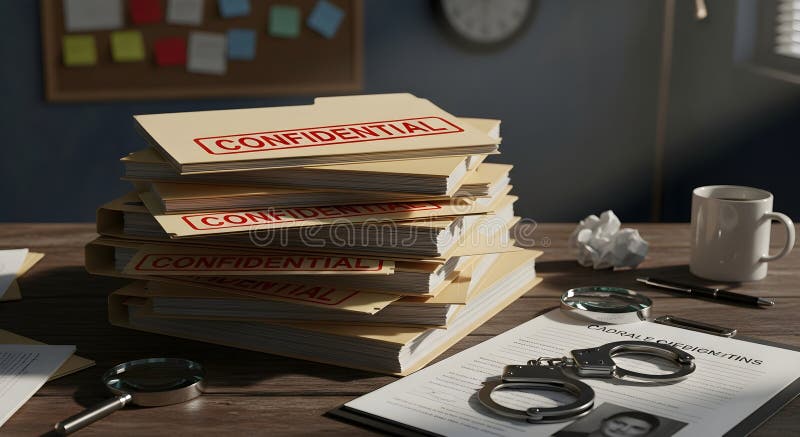
Rigorous anonymous source verification represents the absolute dividing line between high-impact journalism and catastrophic institutional defamation. When an unnamed voice whispers critical intelligence inside an encrypted channel, the newsroom does not celebrate. It braces for impact. Granting confidentiality to a source is never an act of editorial generosity. It is an extraordinary liability incurred against the publication’s public trust. A reporter cannot print an explosive allegation simply because an official with an impressive title swore on their honor behind closed doors. Newsrooms survive because senior editors approach unverified tips with relentless skepticism. The public grants journalists an immense privilege by reading their dispatches with the presumption of truth, but that presumption evaporates the second an unvetted leak crumbles under public inspection.
The Hidden Fragility of Unattributed Information
Every anonymous quote introduces a structural fissure into a story. When readers see a name, title, and organization attached to a quote, they possess the contextual tools necessary to weigh that person’s credibility. They can evaluate potential conflicts of interest, past policy stances, and political loyalties. By contrast, an unnamed source asks the audience to outsource their critical faculties entirely to the reporter and the masthead. That is a massive demand. Readers are asked to trust that the source exists, that the source is positioned to know the truth, and that the reporter accurately decoded the source’s words.
Sources rarely leak ground-shaking information out of civic benevolence alone. Whistleblowers frequently act under profound moral distress, but political operatives, bureaucratic rivals, and corporate executives leak to settle scores, float trial balloons, or sabotage competitors. In high-stakes investigative desks, anonymous source verification is never treated as a shortcut; it is an agonizing, multi-layered gauntlet designed to survive subpoena, scrutiny, and public doubt. When an organization bypasses this forensic diligence to beat a competitor to the press, the consequences can poison civic discourse for decades.
The Crucial Taxonomy of Newsroom Attribution
Before any verification process can begin, journalists must establish unambiguous ground rules with their interlocutors. Hollywood frequently portrays newsroom agreements as vague handshake deals, but seasoned professionals treat attribution terms as binding verbal contracts. Confusion over these definitions is where amateur reporters stumble, turning confidential tips into public disputes.
On the record represents the default state of journalism. The source speaks freely, and their exact words, full name, and professional affiliation appear in print. On background permits the reporter to use the quotes verbatim, but the identification is masked by an agreed-upon generic identifier, such as a senior diplomatic official or an aerospace engineer familiar with the blueprints. Deep background tightens the vice further. The journalist may use the provided material as factual context in the story, but neither the source’s name nor any direct quotes may appear. Finally, off the record means the information is shared solely for the reporter’s understanding and guidance. It cannot be quoted, paraphrased, or attributed anywhere in the story. It exists merely as a road map showing where the journalist must dig for independent proof.
Four Proven Principles That Guard Editorial Truth
Instituting dependable anonymous source verification demands systematic protocols that remove blind faith from the newsroom equation entirely. Great reporting is not defined by who told you the story, but by what verifiable evidence remains after the voice goes silent.
Independent Document Corroboration Over Oral Testimony
Human memory is notoriously fickle, and human self-interest is boundless. The foremost rule on any seasoned investigative desk is that human statements alone are insufficient to sustain an anonymous allegation of wrongdoing. Reporters must hunt for the documentary paper trail that substantiates the oral claims. This means demanding physical or cryptographic evidence: internal memoranda, financial ledgers, flight manifests, digital communication logs, or timestamped server records.
When an insider claims that a board of directors secretly authorized the dumping of toxic waste, the quote merely initiates the assignment. The story arrives when the journalist secures the environmental manifest, the transport billing records, and the internal risk assessments. Documents do not forget dates, and they do not readjust their memories when congressional subpoenas arrive. If a source refuses to provide corroborating documentation or points to records that do not exist, the alarm bells must ring at full volume.
The Rule of Two Unconnected Primary Observers
The famed two-source rule is frequently misunderstood by the public. Having two individuals repeat the identical rumor does not fulfill the requirement. If two congressional aides heard the same piece of gossip in the same basement cafeteria, they represent a single source multiplied by two mouths. When executing anonymous source verification, skilled editors insist that these sources must possess distinct vantage points and no shared political or financial interests.
A true verification matrix requires two primary observers: individuals who were physically in the room, read the foundational document with their own eyes, or personally executed the directive. Furthermore, their incentives must be cross-examined. If Source A benefits from the target’s resignation, the reporter must locate a Source B whose own interests would be harmed by the disclosure, yet who confirms the reality of the event nonetheless. When opposing factions grudgingly confirm the same underlying set of facts, the story rests upon rock rather than sand.
Interrogating the Hidden Motive and Leverage Matrix
Journalists are not passive stenographers who record leaks and distribute them to the world. Every verification pipeline includes a relentless psychological cross-examination of why this information is emerging now. Why did the source choose this specific moment to speak? What do they gain if this story lands on the front page tomorrow morning? Who stands to lose their job, their stock value, or their re-election bid?
Understanding the source’s leverage point prevents the publication from becoming an unwitting weapon in a factional dispute. The Society of Professional Journalists Code of Ethics explicitly urges news organizations to identify sources whenever feasible and to test the source’s motives before granting anonymity. If an anonymous source demands blanket protection but conceals their personal stake in the fallout, their testimony is fatally compromised. Verifying a source means verifying their motives with the same precision applied to their claims.
Mandatory Masthead Disclosure and Executive Editorial Review
Reporters do not own confidentiality agreements; publications do. One of the strongest safeguards against journalistic fabrication is the absolute requirement that the reporter disclose the true identity of the anonymous source to the executive editor before publication. Confidentiality is granted by the institution, not the individual correspondent.
This newsroom firewall prevents lone wolves from inventing phantom sources or exaggerating the authority of minor bureaucrats. When the executive editor learns the source’s identity, title, and institutional leverage, they can evaluate whether the story justifies the legal and reputational exposure. If the editor determines that the source is too junior, too compromised by vendettas, or too distant from the primary decision-making table, the story is held until better verification emerges. No single reporter should ever possess unchecked authority to print an anonymous allegation without institutional oversight.
What Happens When Verification Safeguards Collapse
The history of journalism is littered with cautionary tales where bypassing standard anonymous source verification unleashed devastating legal and reputational wreckage. When publications allow the competitive frenzy of a breaking news cycle to outpace their verification pipelines, catastrophic errors follow. Prominent national newspapers and global magazines have suffered profound humiliation when fabricated sources, unvetted diaries, or misidentified whistleblowers slipped past sleep-deprived copy desks.
Just as building sustained endurance in running demands foundational work rather than rushed sprints—something detailed in Aerobic Base Training and 4 Proven Secrets That Build Relentless Athletic Stamina—investigative reporting requires patient, low-intensity corroboration before publishing explosive revelations. Skipping the grueling base work of document checking and cross-referencing always leads to structural exhaustion under pressure. When a publication rushes an unverified scoop to print, the corrections page becomes an enduring monument to its negligence.
Protecting the Human Pipeline While Preserving Public Trust
The verification challenge is further intensified by the mechanics of modern digital surveillance. When true whistleblowers step forward to expose genuine corporate fraud or government misconduct, their careers, freedom, and personal safety often hang in the balance. As digital surveillance expands, modern reporters must harmonize operational security with unbending anonymous source verification to preserve both their whistleblowers and their newsroom’s integrity.
Verifying a source without leaving an electronic breadcrumb trail requires disciplined operational tradecraft. Secure air-gapped workstations, hardware-encrypted flash drives, Signal communications across burner devices, and the physical scrubbing of digital metadata are no longer optional. Reporters must ensure that their verification efforts do not inadvertently reveal the source to internal security audits. The newsroom must be prepared to protect the source’s identity in court while providing the reading public with ironclad circumstantial proof that the underlying story is undeniably factual.
Every story built on unnamed witnesses is an implicit contract with the public. Readers accept the omission of a name only because they believe the institution has done the grueling, unseen labor of checking every fact against cold, unyielding reality. The credibility of free press rests upon this unyielding covenant, proving that genuine anonymous source verification remains the supreme shield of public accountability.