Order book mechanics reveal 4 hidden forces that control market liquidity
Most investors treat asset prices as static numbers, yet every tick represents a violent matching process. Unpack the inner physics of the continuous double auction to protect your portfolio from predatory friction.
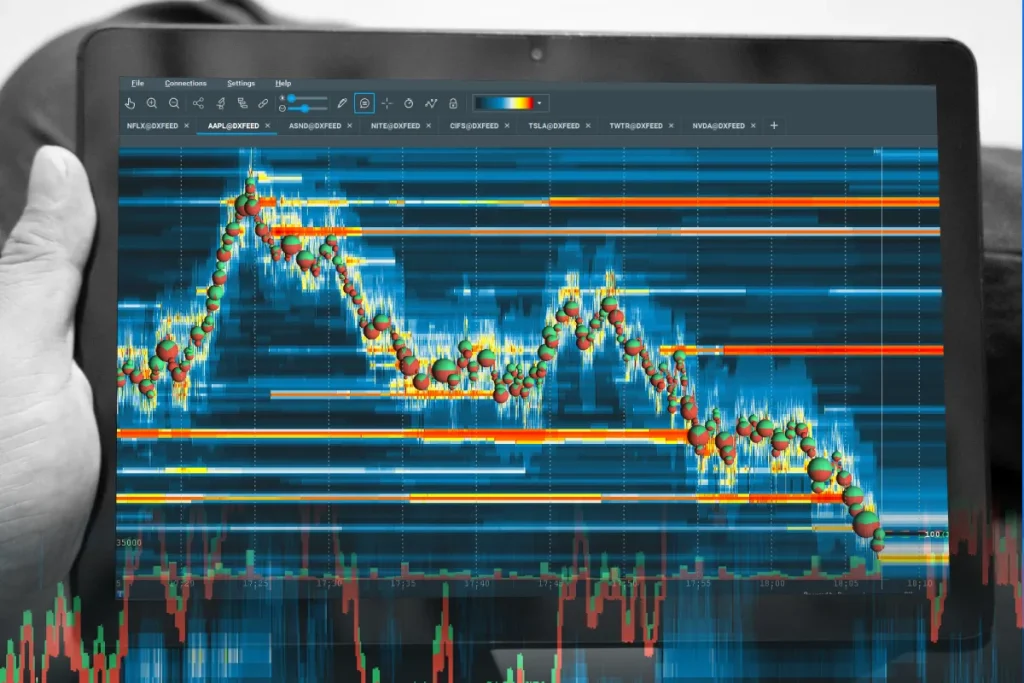
Understanding real-world order book mechanics allows investors to look beneath the simplistic ticker tape and see how financial markets actually match buyers and sellers. Most retail participants view a financial asset as having a single, universal price. They open a brokerage portal, look at a neat number printed in bold green or red digits, and assume that value represents reality. In truth, that displayed figure is merely the historical echo of the last transaction that occurred between two counterparties. It tells you where the market was a millisecond ago, but it reveals nothing about where you can trade right now.
Behind every quote lies an intricate, high-speed matching engine governed by a continuous double auction. This engine is not a philosophical debate; it is an organized queue of capital, raw emotion, and structural risk. Whether you trade equities, sovereign debt, foreign exchange, or commodities, the order book acts as the engine room of modern capitalism. When liquidity appears boundless, trades execute smoothly with negligible friction. Yet, when resting capital vanishes, the mechanics underneath can produce brutal volatility and severe capital destruction for the unprepared participant.
The invisible digital ledger beneath every asset price
At its core, an exchange does not establish prices out of thin air. Instead, it maintains a real-time, electronic ledger organized into two distinct opposing columns known as bids and asks. Bids represent the maximum prices buyers are willing to pay for specified quantities of an asset, while asks, or offers, represent the minimum prices sellers are willing to accept. These two forces stand face-to-face across a structural divide, separated by an intentional buffer zone where no transactions can occur until one side crosses the aisle.
Every order resting inside this ledger represents committed capital. A limit order does not execute automatically upon arrival unless its price overlaps with an existing quote on the opposite side. If a trader enters a buy order below the current lowest ask, that order sits passively on the book, advertising their willingness to provide liquidity to anyone who needs to sell immediately. As documented in a classic Federal Reserve Bank of New York market microstructure study, the speed and volume at which these resting commitments arrive and cancel define the intraday stability of modern financial systems.
How bids and asks construct real time price discovery
At the foundational layer of modern exchanges, order book mechanics operate as a continuous double auction, sorting passive intents into a strict chronological and price priority queue. Price priority guarantees that the highest bid always sits at the very front of the buying queue, while the lowest ask occupies pole position for sellers. When two orders arrive at the exact same price tier, time priority dictates that the trader who committed their capital earliest receives execution preference. This simple rule creates the hyper-competitive speed race that defines modern algorithmic infrastructure.
True price discovery occurs only when an aggressive participant decides they cannot afford to wait. An impatient buyer submits a market order, which signals the matching engine to consume existing resting asks immediately, starting from the lowest available offer and working upward until the entire requested volume is filled. When a market sell order hits the book, it tears downward into resting bids. Consequently, the transaction price fluctuates dynamically as these aggressive sweeps eat through layers of passive supply and demand, proving that market prices do not move on opinions, but on the mechanical exhaustion of resting quotes.
Order book mechanics reveal 4 hidden forces that dictate execution quality
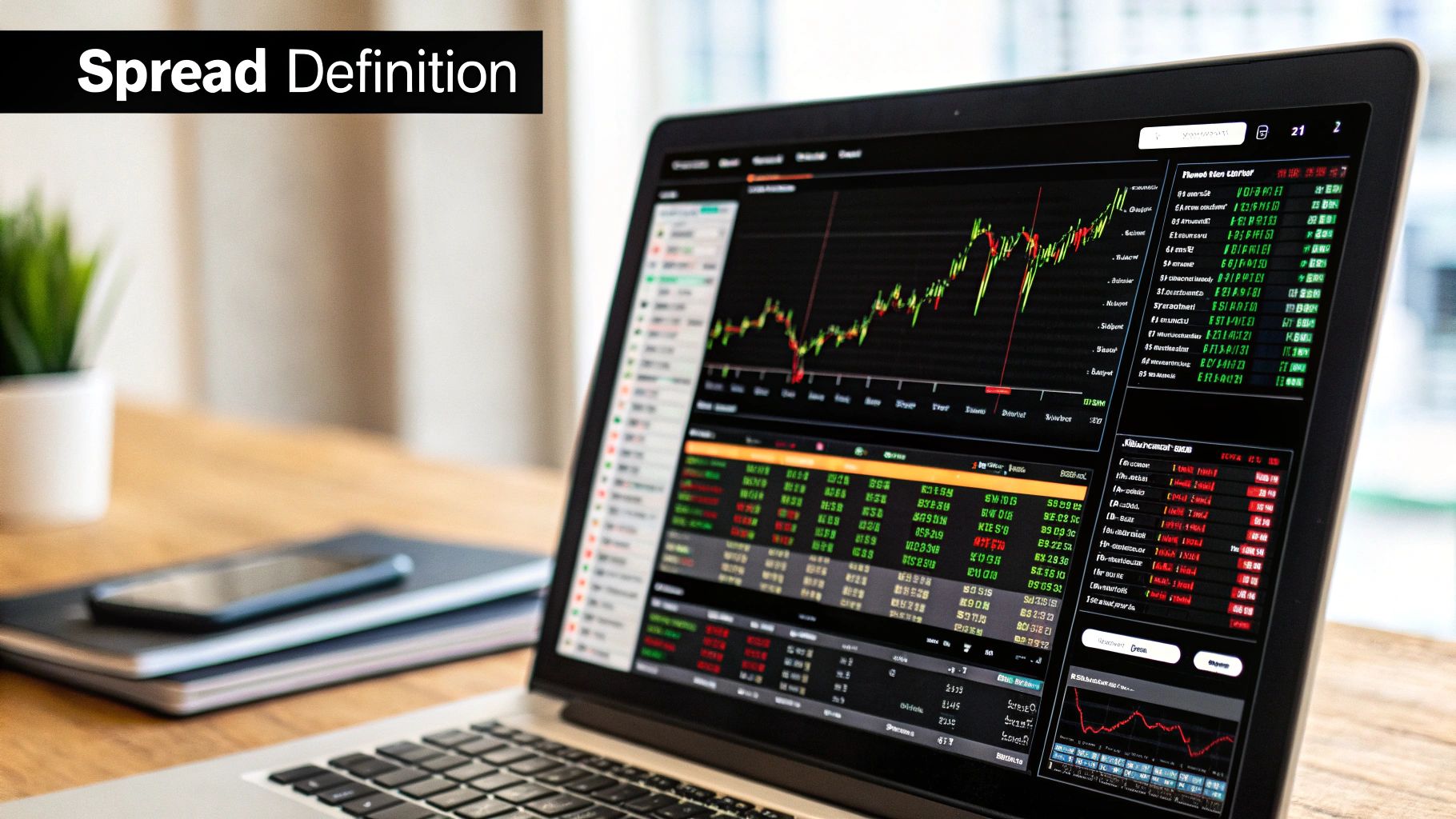
Dissecting standard order book mechanics reveals why simple trades can trigger cascading slippage when secondary liquidity dries up. While casual traders frequently look only at top-of-book prices, professional market makers analyze structural depth across multiple tiers to measure systemic friction. The following four internal dynamics govern every transaction you place, dictating whether your trade executes seamlessly or incurs costly invisible penalties.
Bid ask spreads reflect pure inventory risk
The distance separating the highest buyer from the lowest seller represents the bid-ask spread, the fundamental toll booth of capital markets. This gap is rarely static; it expands and contracts dynamically based on market makers’ perceptions of risk. Market makers earn their living by harvesting this spread, buying at the bid and selling at the ask. However, providing that service requires them to warehouse volatile inventory on their balance sheets.
When volatility surges or economic uncertainty clouds future valuation, market makers widen their quotes to protect against catastrophic adverse selection. If informed participants possess superior predictive models, anyone posting tight passive bids risks getting steamrolled by informed sellers. A broad spread is not an accident or an exchange error; it is an active risk premium charged by liquidity providers to cushion against unexpected structural price shifts.
Market depth absorbs sudden order shocks
Beyond the top of the book lies market depth, the cumulative volume of resting orders staggered across price increments extending away from the current spread. In liquid markets, thousands of shares or contracts rest across every fraction of a tick. This dense wall of resting capital functions as a hydraulic shock absorber. When a large mutual fund or quantitative institution executes a sizable market order, deep books absorb the aggressive volume without allowing the price to dislocate drastically.
Conversely, thin market depth produces fragile conditions where modest volume can clear out entire price levels in a heartbeat. When multiple price rungs contain sparse volume, a standard retail execution can punch through several layers of quotes. This hollow architecture explains why assets can suddenly experience violent air pockets during periods of institutional retreat, turning routine rebalancing into severe drawdowns.
Slippage punishes aggressive volume demand
Slippage represents the tangible monetary loss that occurs between the moment a trader decides to enter a position and the actual executed price delivered by the exchange. This penalty occurs because a market order guarantees execution, not price. If you issue an aggressive market buy order for ten thousand shares, but only two thousand shares exist at the current ask, the matching engine instantly sweeps the remaining eight thousand shares from higher, more expensive price tiers.
Traders who ignore depth of market frequently express outrage when their average fill price is materially worse than the quote displayed on their screens. Slippage is not broker theft; it is the natural mathematical outcome of aggressive volume exhausting shallow passive inventory. The cost of demanding instant liquidity is always paid directly to the patient limit order traders who were willing to wait on the other side of the book.
Hidden iceberg orders disguise institutional flow
Because institutional traders must execute multi-million-dollar positions without causing market panics, modern order book mechanics permit iceberg orders that carve giant block trades into minute, digestible tranches. When an asset manager needs to accumulate hundreds of thousands of shares, displaying that colossal block openly on the public order book would invite predatory algorithmic front-running and drive quotes immediately away from their target price.
To prevent this outcome, an iceberg order displays only a tiny visible tip to the public market, such as five hundred shares, while concealing the vast majority of the order in the exchange matching queue. Each time an aggressive seller fills that visible five hundred shares, the engine instantly and automatically refreshes another visible tranche from the hidden reserve, keeping the same price level anchored until the entire mammoth block is executed. Recognizing the signature footprint of an iceberg order is essential for discerning when heavy institutional footprints are quietly absorbing market supply.
Algorithmic spoofing and the illusion of passive liquidity
The transition from open-outcry trading pits to electronic matching engines introduced unprecedented efficiency, but it also birthed new forms of tactical gamesmanship. Not all liquidity visible on an order book represents an honest intention to trade. Because market participants can cancel resting limit orders in microseconds without financial penalty, predatory quantitative algorithms frequently project phantom depth to manipulate short-term crowd psychology.
When high-frequency trading algorithms interact with vulnerable retail capital, exploiting fragile order book mechanics can artificially paint liquidity before snatching it away at the microsecond level. In deceptive practices like spoofing, manipulative actors place massive non-bona fide buy orders deep in the book to create an illusion of massive institutional demand. Unsuspecting traders react by bidding prices higher, at which point the spoofer abruptly cancels their resting bids and dumps short inventory into the artificial buying frenzy. Discerning genuine structural liquidity from phantom algorithmic noise requires analyzing trade print confirmations rather than relying blindly on resting queues.
The psychological herd effect and how markets aggregate belief
While the mechanics of an exchange are strictly computational, the inputs feeding those algorithms stem from human and machine psychology. Every resting limit order represents an individual calculation of value, fear, and probability. When thousands of traders converge upon a single digital order book, disparate emotional impulses collapse into unified price tiers that establish perceived market consensus.
This collective clustering behavior closely mirrors cultural consensus mechanisms. Just as subjective critical opinions on films combine into powerful public narratives when Rotten Tomatoes drives 5 major screen shockers and record triumphs, market microstructure compresses fragmented opinions into a concrete, binary metric of buyers versus sellers. Just as cultural aggregation sites compress dispersed reviews into a single metric, financial order book mechanics transform thousands of individual emotional decisions into a singular, ruthless equilibrium. When fear dominates, resting bids evaporate as participants pull their capital off the field, proving that liquidity is ultimately a psychological condition rather than a physical guarantee.
Mastering order types for resilient portfolio execution
Navigating financial markets successfully requires moving beyond default market orders and adopting execution tactics tailored to current market conditions. Passive limit orders remain the gold standard for preserving capital, ensuring that you never pay more or receive less than your stated price threshold. However, limit orders introduce non-execution risk, meaning the market may race away before your resting quote ever gets touched by an incoming counterparty.
Developing an intuitive grasp of core order book mechanics transforms execution from an expensive game of chance into a disciplined tactical advantage. Sophisticated participants employ limit orders inside high-liquidity consolidation zones and reserve aggressive market or stop orders solely for moments when price velocity demands guaranteed immediate entry. By honoring the physics of the order book, you protect your capital from unnecessary spread costs, avoid predatory liquidity traps, and navigate financial markets with institutional-grade precision.