Freestyle swimming stroke mechanics reveal 4 proven secrets to build effortless speed
Discover how mastering the subtle biomechanics of the freestyle stroke eliminates underwater drag and unleashes sustainable aquatic speed. Learn the physics behind body rotation, high-elbow catches, and streamlined propulsion.
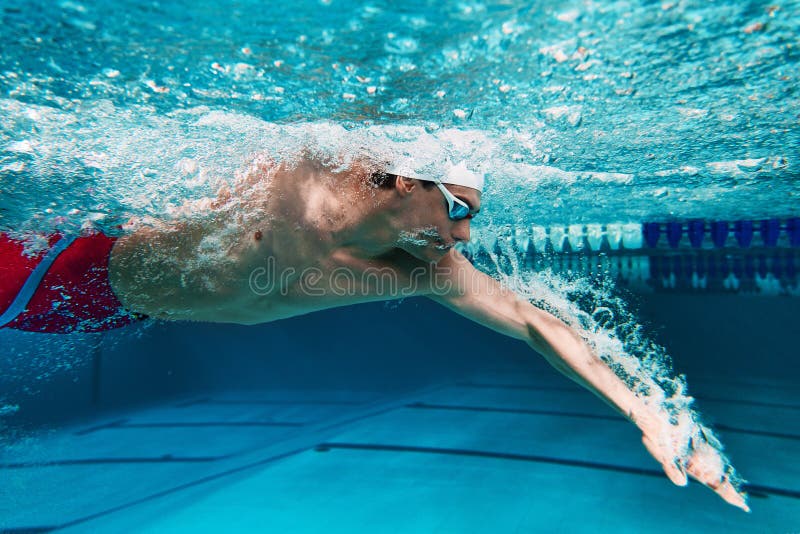
Mastering freestyle swimming stroke mechanics separates frantic water-churners from fluid swimmers who slice through the pool with deceptive, quiet velocity. Step onto any community pool deck or shoreline, and you will witness an immense amount of wasted human energy. Swimmers thrash their arms wildly, kick like possessed outboard motors, churn white water into a frothy boil, and gas out within three lengths. They assume that moving faster through the water demands redlining their cardiovascular engine and pulling violently with their shoulders.
Yet water never rewards raw aggression. Water is an unforgiving fluid medium approximately eight hundred times denser than air. When an athlete attempts to double their swimming velocity, hydrodynamic resistance resisting forward movement quadruples according to the square law of drag. Attempting to overpower such exponential friction with brute muscular force alone is a losing physiological game. The most formidable swimmers look relaxed because their propulsion relies on geometric alignment and fluid cooperation rather than desperate strain.
The Hidden Physics of Hydrodynamic Resistance in Aquatic Propulsion
Moving through a liquid environment requires confronting three distinct forces: skin friction drag, form drag, and wave-making drag. Skin friction represents the micro-level shear forces of water molecules brushing across an athlete’s skin and suit. While specialized technical fabrics reduce skin friction to a degree, it accounts for only a minor fraction of total deceleration at sub-elite speeds.
Form drag is the primary saboteur of athletic momentum. Form drag is dictated by the cross-sectional profile an athlete presents to the oncoming water column. When your hips sink three inches below the surface, or your knees splay outward during an erratic kick, you transform a sharp, hydrodynamic needle into a blunt, plowing barge. The high-pressure boundary layer at the head creates an enormous low-pressure eddy zone behind the trailing legs, dragging the body backward like an anchor.
Wave-making drag enters the equation as an athlete accelerates, displacing water upward and outward into surface turbulence. Every white-water spray radiating outward from the shoulders represents metabolic energy stolen directly from forward progress. True aquatic speed is not fundamentally about applying tremendous force to move forward; it is about relentlessly pruning away every trace of form drag that slows you down. When evaluating how elite athletes move, studying freestyle swimming stroke mechanics demonstrates that speed is achieved primarily by subtracting drag rather than adding raw horsepower.
Why Instinctive Effort Fails Against Massive Water Density
Human locomotion evolved entirely for terrestrial survival. On solid ground, the nervous system relies on Newton’s third law of motion through rigid contact: plant your foot against the earth, and the rigid ground pushes you forward with equal force. Terrestrial athletes thrive by applying forceful, downward pressure against unyielding surfaces.
Plunge a human into water, however, and survival instincts misfire completely. Deprived of a solid foundation, the brain commands the upper extremities to claw frantically at the water while the legs churn in panic to prevent the pelvis from sinking. This instinct produces the classic windmill stroke. Swimmers drop their elbows, push water downward toward the pool bottom, arch their lumbar spine, and crane their necks backward to breathe.
This instinctive panic triggers an exhausting trap. By pushing water downward instead of directly backward, the swimmer expends tremendous energy simply propping their skull above the waterline, which inevitably hinges the hips downward into deep, resistant water. The swimmer burns out delicate shoulder stabilizers, accumulates massive lactic debt, and remains essentially stationary. Technical competence requires overriding these land-based instincts in favor of hydrodynamically coherent movement patterns.
Four Proven Principles That Unlock Fluid Propulsion and Minimal Drag
At its core, perfecting your freestyle swimming stroke mechanics requires mastering four interrelated physical fundamentals. Each element addresses a specific hydrodynamic vulnerability, transforming disjointed muscular contractions into a seamless kinetic chain.
Torsional Body Rotation Along the Longitudinal Axis
Untrained swimmers tend to swim completely flat on their bellies, treating the surface of the pool like a floor. Swimming flat restricts the natural range of motion of the glenohumeral joint, forces rotator cuff tendons to pinch against the acromion process, and limits propulsive leverage to the relatively small muscles of the chest and arms.
Fluid swimming relies on rhythmic longitudinal rotation. The torso should roll along its central axis between thirty-five and forty-five degrees to each side with every stroke cycle. This torsional rotation engages the massive latissimus dorsi, obliques, and pelvic muscles to drive the hand backward. Instead of pulling with the arm alone, the swimmer drives the stroke through core rotation and hip snap. Rolling onto the side presents a significantly narrower cross-sectional profile to the water, cutting form drag and allowing the recovering arm to swing freely forward without disruptive yaw.
The Early Vertical Forearm Catch and Anchor Formation
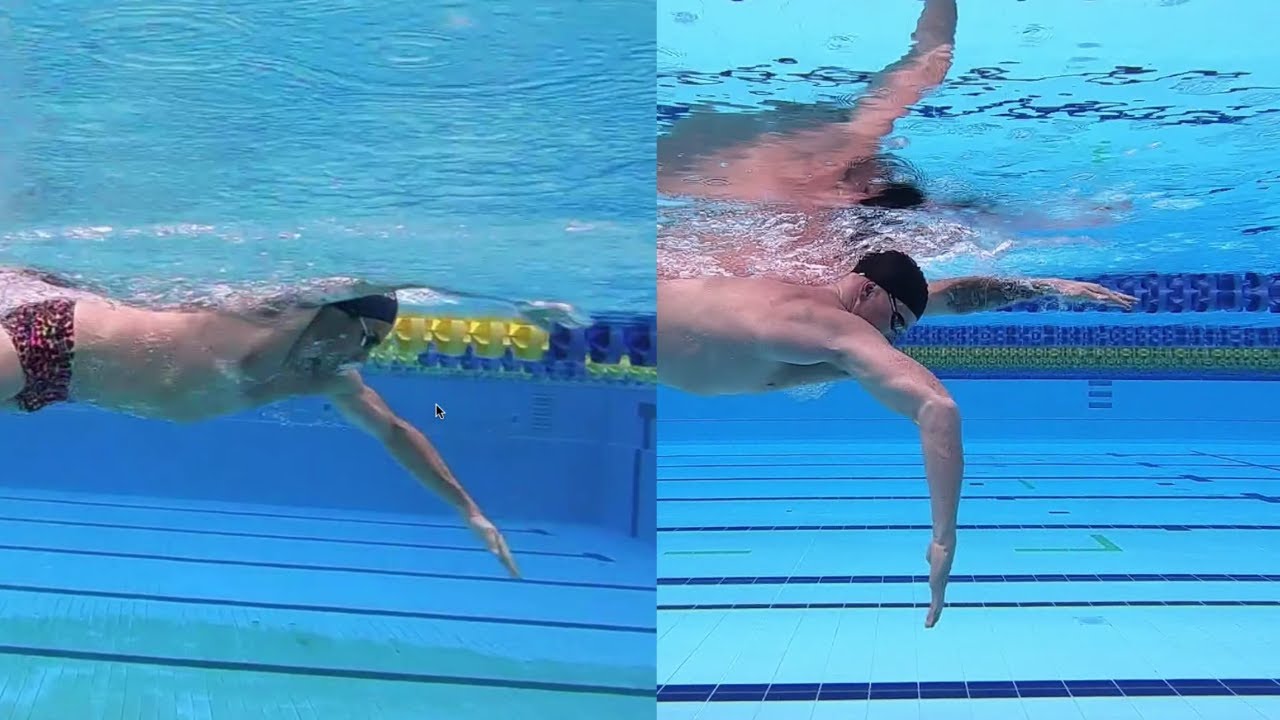
Within the broader study of freestyle swimming stroke mechanics, no technical element alters forward acceleration as dramatically as the early vertical forearm. Many swimmers make the fatal mistake of dropping their elbow during the initiation of the pull. When the elbow drops below the hand, the arm slices through the water at a downward angle, directing pressure toward the bottom of the pool. This yields minimal propulsion while placing dangerous torque on the anterior shoulder capsule.
The early vertical forearm treats the entire hand and forearm as a single, unified paddle. After hand entry and initial glide extension, the athlete initiates the catch by flexing the wrist and internally rotating the humerus while keeping the elbow positioned high near the surface. The forearm hinges downward until it is completely perpendicular to the pool floor. Once this vertical paddle is formed, the swimmer pulls their body past this anchored column of water. You are not sweeping water backward; you are gripping an immovable pocket of dense fluid and vaulting your torso over it.
Front Quadrant Stroke Timing and Gliding Streamline Discipline
Timing dictates whether muscular propulsion produces continuous momentum or jerky, stop-and-start deceleration. Windmill swimming features an opposing cadence where one hand enters the water at the exact moment the opposite hand exits. While this feels intuitive, it produces an extended dead spot where no forward propulsion occurs, allowing drag to stall the body between strokes.
Front quadrant timing requires that one hand remains extended forward in a protective streamline position until the pulling hand enters the active catch phase. The lead arm acts as a hydrodynamic bowsprit, parting the water column and smoothing flow across the neck and shoulders. Just as systematic recalibration prevents compounding friction in financial systems—much like how the detailed breakdown of index fund rebalancing mechanics expose 4 costly traps that erode investor wealth through hidden drag—a swimmer must continually calibrate their stroke rhythm to eliminate underwater dead zones. Maintaining an extended forward posture preserves non-stop kinetic flow.
A Compact Kinetic Kick That Stabilizes Pelvic Alignment
The kick is widely misunderstood by recreational swimmers and triathletes. Observing a sprinter kick with ferocious intensity leads many athletes to assume that continuous foot thrashing is mandatory for propulsion. In reality, the legs contain the largest muscle groups in the human body. Churning them frantically consumes glycogen and oxygen at an unsustainable rate while yielding minimal forward velocity over distance.
For endurance swimming, the flutter kick functions primarily as a stabilizing counterweight and a rotational rudder, not an engine. An effective kick originates from the hips with long, relaxed legs and supple ankles, keeping knees soft rather than bent into a bicycle motion. A compact, rhythmic two-beat kick—one precise down-kick per arm entry—synchronizes with hip rotation to elevate the pelvis into the slipstream of the chest. By keeping the kick tucked neatly inside the dimensional shadow of the torso, you eliminate the massive drag created by splayed legs.
Deliberate Practice Drills That Rewire Neuromuscular Habits
To rewire muscle memory and internalize these freestyle swimming stroke mechanics, isolated drills prove far more effective than grinding mindless aerobic laps. When fatigue sets in during standard swimming, the brain defaults to its primitive, survival-driven movement templates. Deliberate, low-velocity drills strip away complexity and isolate distinct kinetic sensations.
The classic catch-up drill enforces front quadrant discipline. By refusing to begin the pull until the recovering hand gently tags the extended forward hand, you train patience and streamline integrity under water. To develop the early vertical forearm, swimmers benefit immensely from the fist drill, which involves swimming with completely closed hands. Deprived of palm surface area, the nervous system is instantly forced to recruit the forearm as a propulsive paddle.
Biomechanists publishing peer-reviewed research through the National Institutes of Health have demonstrated that neuromuscular feedback mechanisms and stroke kinematic adjustments directly influence active drag coefficients and propulsive efficiency. Integrating short fifty-meter drill repetitions with ample recovery allows the central nervous system to map these spatial relationships cleanly without cardiovascular exhaustion distorting execution.
Cultivating an Instinct for Fluid Pressure and Sustained Speed
Athletes who achieve effortless velocity do not perceive water as a barrier to be hammered into submission; they treat it as a responsive substrate. They possess what veteran aquatic mentors describe as feel for the water, which is simply a heightened sensory awareness of hydrostatic pressure against the palms, forearms, and chest. They notice the exact microsecond their catch slips through aerated eddies versus when it grips dense, undisturbed water.
Developing this intuitive connection requires quieting the body and paying intense attention to acoustic and sensory feedback. Heavy slapping sounds, excessive splashing, and white foaming bubbles around the stroke are unmistakable signs of mechanical leakage. Silent swimming is fast swimming. When the hand enters cleanly through a single entry point, slices forward into streamline, rotates smoothly from the hips, and anchors with a high elbow, forward velocity feels astonishingly light.
Ultimately, refined freestyle swimming stroke mechanics transform your relationship with the aquatic environment from a combative struggle into an aerodynamic partnership. By aligning your body with the unyielding laws of fluid dynamics, you stop fighting the water and start letting it carry you across the surface with grace, power, and enduring speed.