Foley sound design mechanics reveal 4 proven secrets to create breathtaking movie immersion
Behind every shattered bone and whispered fabric lies a hidden world of celery stalks and vintage leather jackets. Discover how bespoke acoustic crafts manipulate psychoacoustics to build unforgettable cinematic worlds.

Mastering foley sound design mechanics requires an intimate understanding of how human perception decodes acoustic texture during a narrative experience. When a character pulls a rusted dagger from a scabbard or trudges across fresh mountain snow, the sound hitting your ears almost never originated on the filming set. Location microphones are engineered with laser precision to isolate clean human dialogue, actively rejecting the subtle murmurs of fabric, shifting boots, and atmospheric friction. Without a secondary layer of hand-crafted kinetic sound, an edited scene feels like an emotional vacuum, detached from physical weight and spatial reality.
Named after early sound pioneer Jack Foley, this discipline remains one of cinema’s most tactile and physically demanding crafts. While modern digital libraries boast millions of pre-recorded audio files, static samples crumble when forced to follow the fluid, erratic movements of a living actor. A mouse click cannot replicate the hesitant shuffle of an exhausted traveler or the aggressive swagger of an arrogant antagonist. Real physical impact demands real physical performance, grounded in room acoustics, kinetic momentum, and an innate sense of theatrical timing.
The invisible artistry behind cinematic reality
Human beings possess an exceptionally tuned evolutionary defense mechanism based on hearing. Our ears do not simply process sound pressure waves; they assess material density, proximity, environmental hazard, and genuine intent. When you watch a close-up of a glass goblet shattering against hardwood, your auditory cortex anticipates a specific balance between the initial percussive crack, the high-frequency scatter of shards, and the hollow ring of the vessel’s base. If that acoustic signature is thin or synthetic, the illusion evaporates instantly.
This perceptual contract is where the foley studio becomes a playground of acoustic deception. Foley artists spend decades training their ears to listen to materials not for what they are, but for what they evoke. A damp head of cabbage dropped onto concrete sounds more like a gruesome impact than an actual physical collision. Twisting an old wooden chair produces a far more agonizing ship-mast groan than pristine maritime wood ever could. The craft relies on psychological resonance rather than literal documentary reproduction, prioritizing tactile sensation over mechanical truth.
Why captured production audio always fails the human ear
Filmmaking sets are notoriously chaotic acoustic environments. Between humming industrial lights, generator rumble, camera cooling fans, and crew movement, the production sound mixer’s sole priority is capturing pristine vocal tracks from boom and lavalier microphones. To eliminate background noise, boom operators employ hypercardioid microphones that aggressively reject off-axis audio. While this isolates speech with surgical clarity, it obliterates the natural acoustic footprint of the scene.
Consequently, investigating the core of foley sound design mechanics reveals why direct recording falls short of narrative cinema needs. If an actor walks across a wooden floor on a treated soundstage, their real footsteps sound dead, flat, and hollow. The acoustic environment of a soundstage possesses none of the natural reverb, floorboard creak, or dampness demanded by a medieval dungeon or a cramped Parisian apartment. Production tracks leave actors floating without weight, moving through scenes like digital apparitions.
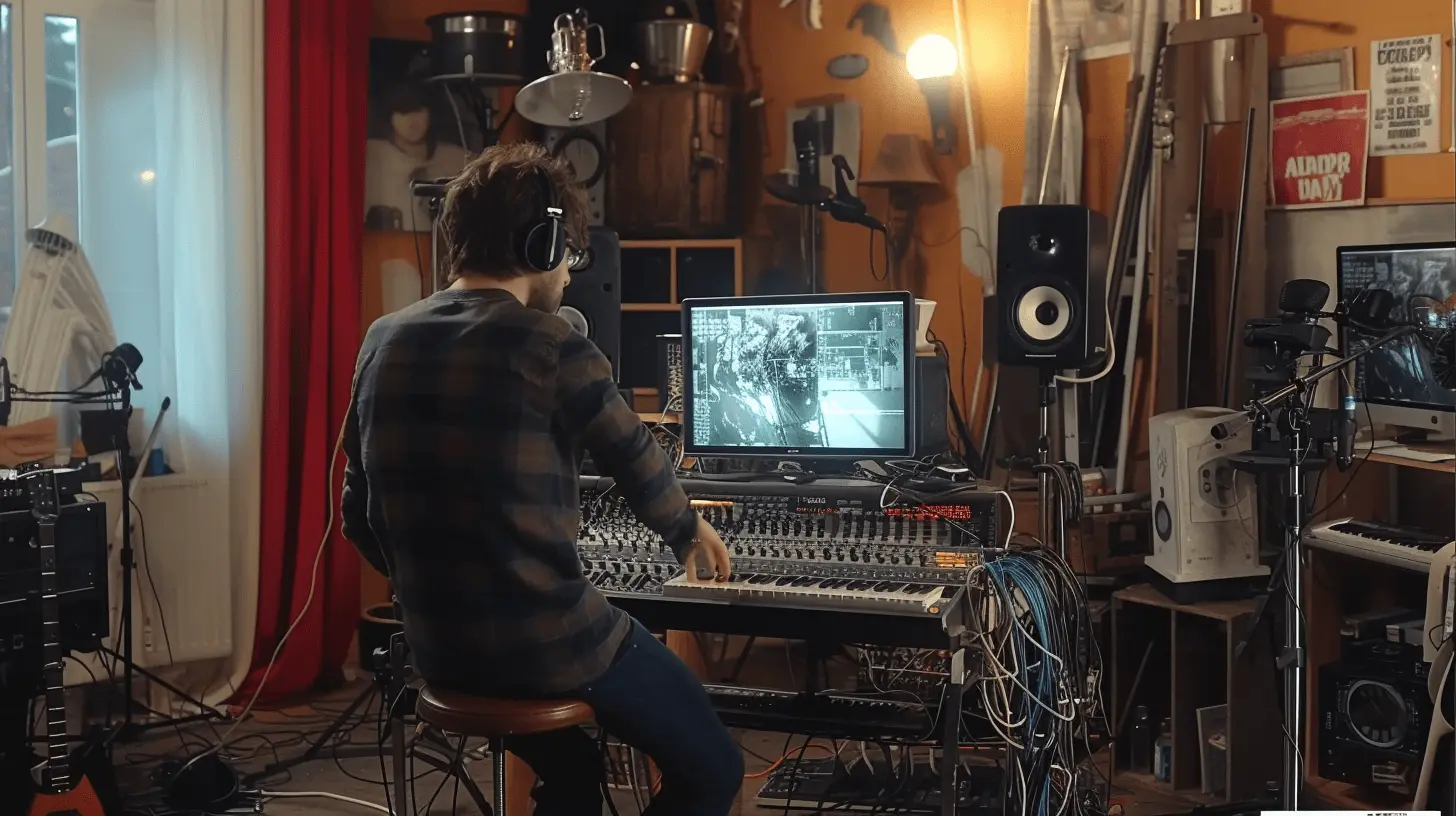
The post-production team must rebuild the entire tactile universe from scratch. Every footstep, every brush against a silk curtain, and every scrape of a chair leg must be physically performed on a specialized stage to re-anchor the characters in their physical world. This comprehensive acoustic reconstruction gives the director absolute authority over narrative focus, ensuring that a subtle clink of a wedding ring can hit an audience with the emotional impact of an explosion.
Four proven acoustic techniques that shape emotional depth
At its core, the study of foley sound design mechanics demonstrates that human belief depends entirely on synchronized tactile cues. Accomplished practitioners rely on four foundational execution methods to bridge the chasm between raw recorded props and profound cinematic immersion.
Decoupling visual expectation from literal acoustic sources
The cardinal error of novice sound creators is assuming that real objects produce the most convincing sounds on camera. When analyzing historic production data, foley sound design mechanics show that literal accuracy is often the enemy of perceptual truth. Real human punches sound like dull, soft thuds because skin and muscle absorb kinetic energy rather than project high-frequency snap. To make an action scene feel genuinely dangerous, artists abandon actual fist impacts in favor of snapping celery wrapped in wet leather, occasionally layered with a raw side of beef slapped against flagstone.
This deliberate decoupling works because the human brain translates sensory input through associative metaphor. We associate bone fractures with dry, fibrous snaps, not the muted squish that occurs in clinical trauma. By manipulating common household materials, foley artists build hyper-real acoustic metaphors that align precisely with what audiences subconsciously feel ought to happen on screen, heightening dramatic intensity beyond baseline reality.
Calibrating tactile friction to mirror character psychology
Every garment carries an acoustic personality. A silk dress whispers with light, fluid, effortless movement, whereas heavy wool overcoats scrape with stubborn, burdensome weight. Foley artists maintain extensive wardrobes of vintage fabrics, broken shoes, and worn belts to perform character movements with emotional nuance. An investigator pacing an interrogation room might wear stiff, heavy-soled oxfords that strike concrete with measured, unforgiving cadence, projecting dominant psychological control.
Contrast this with a character experiencing acute grief or fear. Their steps might drag unevenly along the ball of the foot, scuffing surfaces with hesitant pauses and irregular friction. The cloth track, which records the rubbing of sleeves, collars, and waistbands as the actor moves, serves as an intimate subtextual heartbeat. Much like how Film color grading mechanics reveal 4 proven secrets to master cinematic mood, careful manipulation of cloth pass acoustics provides a subconscious emotional baseline that guides how an audience reads an actor’s unspoken vulnerability.
Sculpting spatial resonance through dynamic microphone distance
Sound exists within physical space, and the human auditory system calculates environmental size based on the ratio between direct sound and reflected reverberation. When recording footsteps and prop handling, the nuances of foley sound design mechanics demand that artists treat the recording room as a secondary instrument. Sticking a microphone two inches from a shoe may yield pristine clarity, but it completely destroys the illusion of distance and perspective.
Experienced foley stages feature adjustable acoustic baffles and pits filled with disparate surfaces, from fractured slate and river gravel to hardwood floorboards suspended over resonant air chambers. Technicians place primary cardioid microphones close to capture transient bite, while positioning matched room microphones several feet back into the live acoustic space. By physically shifting their bodies closer to or further from the microphone array during a take, artists bake natural proximity effects directly into the raw performance, making the sound sit effortlessly within the visual composition without requiring artificial digital reverbs.
Layering micro textures to anchor fantastical world building
Science fiction and period dramas present unique physical challenges because their materials do not exist in daily modern life. How does the motorized exoskeleton of an interstellar soldier sound when walking across foreign planetary soil? How does an ancient mythological beast shift its weight over obsidian rock? Synthesizers can design abstract frequency sweeps, but they lack the micro-variations that signal organic life.
Foley performers solve this dilemma by building complex acoustic composites. For a robotic gait, an artist might simultaneously manipulate a vintage ratcheting wrench, an old camera aperture mechanism, and a heavy industrial boot filled with buckshot. For a fantasy creature, wet pine cones, crushed pine needles, and greasy leather gloves combine to suggest scaled hide flexing over muscular mass. By layering discrete organic micro-textures over a single motion, the artist grounds high-concept visual effects in undeniable physical tangibility.
The psychoacoustic bridge between organic sound and digital mix
In the final post-production pipeline, foley tracks do not live in isolation. They must carve out a precise acoustic niche between sweeping orchestral scores and explosive sound design effects. This requires deep collaboration with re-recording mixers who adhere to established Motion Picture Sound Editors craft standards. If an explosion shatters a storefront, the massive sub-bass impact is handled by specialized sound design libraries, but the immediate emotional aftermath belongs to foley. The fragile clink of glass falling from a window frame or the frantic crunch of boots scrambling across rubble communicates human stakes.
Digital algorithms can generate infinite variations of mechanical white noise, but they cannot reproduce the microscopic timing variations that define living kinematics. When an actor reaches out to touch an antique letter, the slight hesitation before the paper separates from mahogany wood communicates hesitation, anticipation, or dread. In an era where cinema relies heavily on clean synthetic CGI environments, balancing modern synthetic elements with foley sound design mechanics preserves human vulnerability on screen, providing an acoustic lifeline back to the physical world.
Sustaining cinematic authenticity in a hyper digital landscape
The tools of cinematic production continue to evolve toward algorithmic automation, yet the foley pit remains stubbornly analog. You cannot generate the nuanced, breathing friction of human existence through static prompts or mathematical equations. It requires a human performer standing in front of a projection screen, matching the breathing, stride, and erratic gestures of another human being across space and time.
As virtual production walls replace location shooting and synthetic actors enter digital pipelines, the visceral connection between performer and material becomes increasingly vital. The subtle scrape of a rusty latch, the rhythmic squelch of mud beneath an escapee’s boots, and the nervous rustle of cotton sheets transform flickering light into shared human empathy. Embracing a timeless dedication to foley sound design mechanics keeps cinema breathing, sweating, and alive, proving that the simplest physical movements still produce the most profound storytelling wonders.