Dividend growth investing mechanics and 4 proven rules to build unstoppable compounding wealth
Uncover how dividend growth investing mechanics generate unstoppable compounding wealth across decades of market cycles. Master four operational rules to filter yield traps and build durable financial freedom.
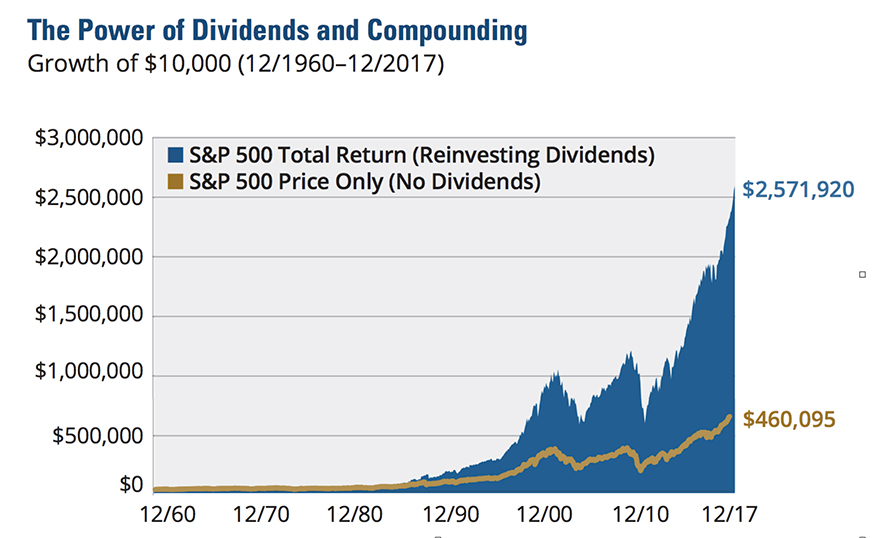
Mastering Dividend growth investing mechanics allows disciplined wealth builders to bypass daily market hysteria and construct reliable income streams that outlast economic turbulence. Most novice market participants fixate entirely on share price trajectories, checking ticker symbols compulsively and sweating every minor tick of market volatility. They treat equity ownership like a casino chip rather than an operational claim on real productive assets. Meanwhile, seasoned capital allocators understand that enduring financial independence rarely comes from timing market peaks and troughs. Instead, it stems from securing ownership stakes in enterprise engines that consistently generate surplus cash and distribute an expanding share of that cash directly into investor accounts year after year.
When you shift your perspective from volatile paper valuations to concrete cash distributions, the entire financial landscape reorganizes itself. Market drawdowns cease to be terrifying existential threats and transform into massive strategic advantages. Rather than praying for the next buyer to pay an inflated price for an unprofitable speculative stock, dividend growth investors ground their fortunes in the cold, hard arithmetic of commercial cash generation. This discipline does not rely on market optimism; it relies on corporate productivity and cash flow discipline.
The Fundamental Machinery of Sustainable Yield Growth
A common trap for inexperienced investors is mistaking high nominal yield for financial strength. When a struggling corporation sees its share price collapse by fifty percent, its trailing dividend yield doubles overnight on paper. Seductive yields of eight, ten, or twelve percent frequently act as siren songs, luring uncritical capital directly onto the rocks of an impending distribution cut. A distribution cut not only eviscerates current income but invariably triggers a catastrophic liquidation wave that annihilates underlying principal.
At its core, robust Dividend growth investing mechanics separates businesses that produce authentic economic surplus from those merely engineering short-term financial optical illusions. A company cannot sustainably raise its payout decade after decade without a durable competitive moat that protects pricing power. When input costs rise due to systemic inflation, an enterprise with pricing power passes those costs seamlessly to customers, preserving operating margins. That margin stability preserves cash flow, which in turn fuels board-approved dividend hikes. The distribution is never an isolated financial metric; it is the visible exhaust fume of an exceptionally well-tuned operating engine.
Furthermore, an expanding payout enforces managerial discipline. When corporate executives know they must return hundreds of millions of dollars in cold cash to shareholders every quarter, they cannot squander capital on bloated vanity projects, dilutive acquisitions, or reckless empire-building. The dividend obligation acts as a corporate governor, forcing leadership to allocate capital strictly toward high-return operational opportunities that can self-fund future distributions.
The Mathematics of Compounding and Yield on Cost
The true magic emerges when long-term compounding intersects with these Dividend growth investing mechanics, transforming ordinary cash distributions into an accelerating flywheel. Consider the foundational metric known as yield on cost. When you purchase shares of a business paying an initial three percent distribution, that return might appear modest compared to fixed-income benchmarks. However, if that business expands its dividend at a compound annual rate of eight percent, your effective yield relative to your original invested capital doubles in roughly nine years. In eighteen years, your yield on cost surpasses twelve percent annually on your original capital base, irrespective of where the share price trades.
This dynamic is turbocharged during broad market contractions. When asset prices plummet during broader cyclical corrections, dividend distributions allow investors to accumulate additional shares at heavily discounted valuations. Reinvesting cash distributions during a bear market lowers the average purchase price and dramatically increases total share count. When market sentiment eventually stabilizes and asset prices recover, the combination of an expanded share base and higher per-share distributions produces an exponential surge in portfolio cash flow that pure capital appreciation strategies struggle to match.
Four Proven Rules to Build an Unstoppable Dividend Engine
Executing effective Dividend growth investing mechanics requires moving beyond passive stock picking and embracing a rigorous operational framework. Without stringent filtration criteria, portfolios inevitably succumb to deteriorating balance sheets, value traps, and stagnant distribution profiles. Furthermore, coordinating your payout schedule with established asset allocation rebalancing mechanics and 4 proven rules to protect portfolio wealth ensures that capital flows organically into underperforming asset classes without triggering unnecessary tax drag.
Prioritize Free Cash Flow Coverage Over Raw Headline Yield
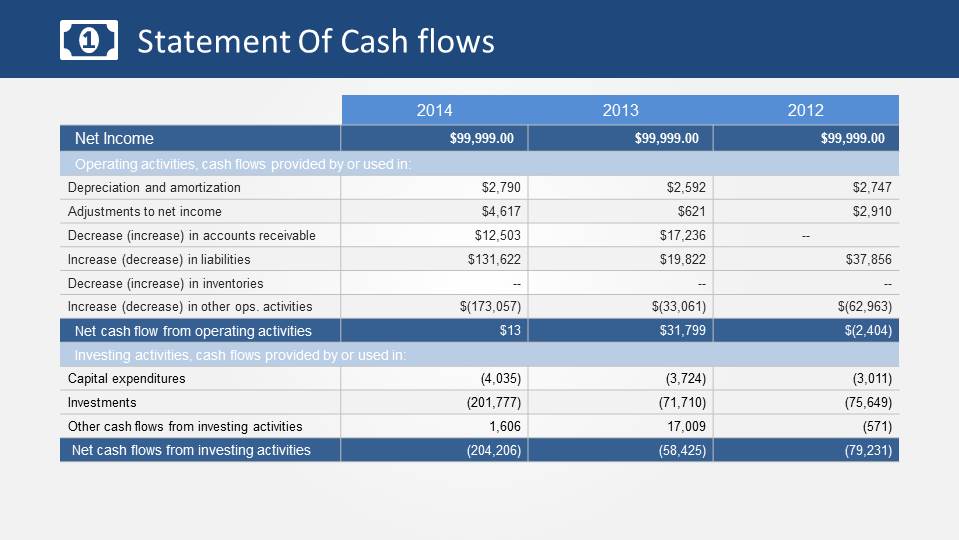
Within disciplined Dividend growth investing mechanics, accounting earnings take a back seat to cold, unvarnished free cash flow. Net income on an income statement is susceptible to aggressive revenue recognition, non-cash adjustments, and subjective depreciation schedules that can easily mask operational decay. Free cash flow represents the actual liquidity remaining after a firm covers operating expenses and necessary capital investments to sustain its physical infrastructure. A resilient enterprise maintains a free cash flow payout ratio comfortably below sixty percent. This buffer guarantees that even during deep economic contractions or sudden supply chain disruptions, the firm possesses ample liquidity to fund ongoing operations, invest in organic expansion, and honor its dividend commitment without resorting to debt markets.
Evaluate Return on Invested Capital and Economic Moats
A business cannot increase its dividend indefinitely simply by expanding its balance sheet. Sustainable growth requires capital efficiency. Return on invested capital measures how effectively executive management converts invested funds into operational profits. When a firm consistently generates returns on capital that significantly exceed its cost of capital, it creates genuine shareholder value. This excess return is typically protected by structural competitive advantages, such as proprietary distribution networks, immense switching costs, network effects, or untouchable patent portfolios. Companies lacking these moats eventually experience return erosion as aggressive competitors duplicate their business model, compressing cash margins and stalling dividend increases.
Demand Conservative Debt Structures and Healthy Interest Coverage
Debt is the ultimate accelerant of corporate distress. During benign economic climates with depressed borrowing rates, debt-heavy balance sheets can artificially inflate return on equity. However, when credit conditions tighten and interest obligations rise, debt service costs supersede shareholder distributions every single time. Creditors hold senior claims on enterprise assets, while common shareholders stand at the absolute back of the line. High-quality dividend compounders maintain modest leverage ratios, with net debt to operating earnings rarely exceeding two to three times. Furthermore, their operational profits cover interest obligations multiple times over, providing an impenetrable financial cushion against unexpected macroeconomic shocks.
Automate Selective Reinvestment Instead of Blind Distribution Dripping
Most brokerage platforms offer automated dividend reinvestment plans that mechanically purchase fractional shares of whichever entity generated the cash payout. While convenient, this indiscriminate approach often allocates precious capital into overvalued assets. A superior allocation discipline pools incoming distributions into a central liquidity hub. Once accumulated, this dry powder is systematically deployed into whichever qualifying dividend compounder in your portfolio currently offers the most compelling margin of safety and highest prospective cash return. This dynamic re-allocation continually lowers your portfolio cost basis across your best holdings while preventing capital from compounding into stretched valuations.
The Behavioral Fortress of Cash Flow Certainty
Beyond the balance sheet, the psychological power of Dividend growth investing mechanics provides an impenetrable behavioral anchor during brutal drawdowns. Academic investigations, such as classic CFA Institute research on dividend compounding and cash flow dynamics, highlight how tangible distribution growth correlates with disciplined capital management and reduced corporate governance agency costs. Yet for individual investors, the primary advantage is behavioral.
During gut-wrenching bear markets, investors relying solely on capital gains must actively liquidate shares at depressed prices to generate spending money, permanently locking in capital losses. This creates acute psychological distress. In contrast, an investor whose portfolio produces rising dividend distributions experiences cash inflows completely independent of quoted market values. When share prices drop forty percent, the distribution checks arrive right on schedule, often increased by board decree. Instead of feeling panic, the investor views market drawdowns as lucrative opportunities to reinvest cash flow at generational yields.
This emotional insulation transforms investor temperament. When your living expenses or reinvestment plans do not depend on the whims of Mr. Market, you are liberated from the chronic fear that forces ordinary retail participants to sell at the absolute bottom. The steady arrival of dividend cash provides tangible psychological reinforcement that your underlying enterprises remain operational, productive, and solvent regardless of red numbers flashing on a trading screen.
Constructing a Lifelong Compounding Machine
Building a generational dividend engine is not a sprint toward overnight riches, nor is it a set-and-forget passive enterprise. It demands uncompromising emotional temperance and unyielding analytical scrutiny. Every corporate holding in your allocation must earn its place every quarter through verifiable operational performance, robust cash conversion, and an unbroken record of capital discipline. You are not buying price charts; you are acquiring productive business partnerships that pay you rent for providing equity capital.
When you commit to mastering sound Dividend growth investing mechanics, market fluctuations cease to be emotional threats and become systematic opportunities to acquire future income at a discount. By tuning out the cacophony of daily market speculation and anchoring your strategy in the physical realities of business cash generation, you transform wealth building from a stressful guessing game into an inevitable mathematical certainty.