Foley sound mechanics and 4 proven ways artists engineer unforgettable cinematic illusions
Modern cinema relies on an invisible army of acoustic craftspeople performing bizarre physical choreography inside darkened studios. By mastering Foley sound mechanics, these tactile artists transform stalks of celery, vintage leather, and rusty hinges into visceral emotional reality.

Mastering Foley sound mechanics reveals why the most gripping cinematic moments are almost entirely built out of bizarre acoustic fabrications. When a heavyweight boxer absorbs a punishing hook on screen, the audience flinches at the sickening wet crunch of cartilage and muscle. In reality, the production microphone on set captured little more than an underwhelming, muffled thud smothered by air conditioning hum and studio reflections. The devastating blow that echoes through the theater was likely manufactured in post-production by a performer smashing a frozen head of lettuce with a wooden mallet while twisting a wet chamois cloth inside a darkened soundstage.
Cinema is an art form rooted in profound acoustic deception. Production audio recorded on set is engineered to achieve one primary objective, which is isolating clean, intelligible dialogue. Everything else captured by boom microphones—footsteps across parquet flooring, the rustle of a trench coat, the delicate clatter of porcelain teacups—is routinely stripped out, filtered, or buried beneath background noise. Without a dedicated recreation of every tactile vibration, a finished film feels eerie, hollow, and detached from physical reality. Sound artists step into this sensory void, utilizing intricate physical choreographies and raw material science to rebuild the world from scratch.
The Psychoacoustic Illusion Behind Cinematic Believability
Human perception does not process sight and sound as isolated sensory feeds. Instead, the brain executes a continuous neurological reconciliation known as synchresis, an involuntary cognitive phenomenon wherein an audience welds an acoustic event to a simultaneous visual action. Because our visual cortex dominates conscious focus during film viewing, the brain willingly accepts preposterous auditory substitutions as absolute truth as long as the temporal alignment between image and sound remains razor-sharp.
This cognitive quirk means the foundational rule of Foley sound mechanics is that literal truth is the enemy of emotional truth. Real life sounds surprisingly thin. A genuine gunshot in an open field sounds like a dry firecracker rather than a thunderous roar that rattles your ribcage. A real fistfight sounds like dull, padded scuffs rather than a symphonic collision of shattered bones and bruised flesh. If sound editors utilized literal recordings of actual events, audiences would reject the scenes as artificial, cheap, and emotionally limp.
To build genuine believability, Foley performers amplify sensory micro-details that real ears take for granted. When a character reaches into a leather satchel, the artist does not merely recreate the zipper; they perform the friction of fabric sliding across denim, the subtle creak of aged cowhide, and the metallic jingle of keys settling at the bottom. These acoustic layers trigger subconscious neurological cues that ground the viewer inside the physical space of the story, transforming flat pixels on a screen into a tangible, breathable environment.
The Architecture of the Modern Foley Studio
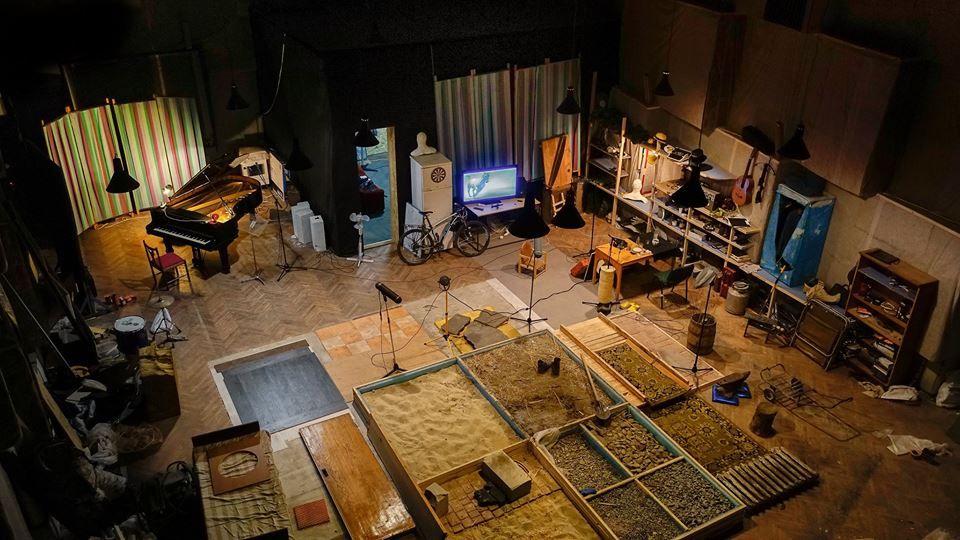
Step onto an elite scoring and audio reconstruction stage, and you will not see sleek digital consoles or futuristic synthesizer racks. You will see what looks like an eccentric junkyard maintained by an obsessive hoarder. Foley stages are engineered acoustic spaces that prioritize deadened, neutral reverberation while housing an astonishing array of physical matter.
The centerpiece of any professional facility is the floor pit system. These are recessed troughs built into the studio floor, each filled with distinct structural materials: pea gravel, coarse mountain shale, weathered pine boardwalks, cracked concrete, red clay dirt, and shallow ceramic bathtubs filled with stagnant water. A veteran Foley walker maintains dozens of pairs of broken-in shoes, each chosen for the specific density of its rubber heel, the flexibility of its leather sole, or the peculiar squeak of its worn-out arch.
When sound artists manipulate Foley sound mechanics inside a live recording stage, the physical environment functions as a musical instrument. The performer stands before a projection screen, eyes locked on the actors’ feet, mirroring their exact stride, weight distribution, and emotional tempo. If an on-screen actor hesitates slightly in loose mud before turning on their heel, the Foley artist must mimic that exact fraction of a second in the dirt pit, transferring their own body weight to produce identical resistance and acoustic displacement.
Four Core Techniques That Define Masterful Tactile Sound
Dissecting modern Foley sound mechanics exposes an intricate blend of athletic synchronization and material science. Great performers are not simply making noise; they are physical actors who interpret subtext through mass, friction, and velocity. Four operational techniques separate amateur sound effects from masterwork cinematic realism.
The Art of Layered Organic Texture
A single visual action rarely equates to a single acoustic sound. In elite audio post-production, every significant physical event is broken down into constituent dynamic layers: the transient impact, the resonant body, and the textural decay. A simple winter walk through deep snow requires three separate passes. First, the artist might step into a wooden trough filled with cornstarch or rock salt wrapped in leather pouches to produce the cold, compressed squeak of sub-zero powder. Next comes a layer of damp peat moss to capture the heavy, soggy mass beneath the drift. Finally, a gentle brushing of dry pine needles provides the high-frequency crunch of hidden twigs.
This composite layering gives the listener an impression of infinite physical depth. When a creature crashes through a wall in a science fiction epic, the sound is not a single recorded explosion. It is a synchronized stack consisting of dry snapping bamboo for breaking bone, shattering terra cotta flowerpots for structural brick, tearing leather for sinew, and tumbling river rocks for falling mortar. The human ear deciphers these distinct physical materials simultaneously, constructing an involuntary mental image of overwhelming destructive force.
Spatial Dynamic Matching Across Visual Depth
An acoustic recording made two inches from a microphone cannot simply be dropped into a wide landscape shot by pulling down the volume fader. Volume represents amplitude, but distance alters the entire frequency spectrum and phase relationship of a sound. As objects move away from an observer, high frequencies roll off rapidly due to air absorption, while the proportion of reflected room sound increases relative to direct sound.
Because of these acoustic realities, practitioners of Foley sound mechanics constantly adjust their physical orientation relative to directional condenser microphones. When tracking a scene where an antagonist approaches from a dark hallway into an extreme close-up, the artist moves dynamically across the studio. They begin twenty feet back, performing footsteps with lighter pressure and angled off-axis from the microphone capsule to capture natural atmospheric dampening. As the character enters the camera’s foreground, the performer strides directly into the sweet spot of a large-diaphragm microphone, leaning hard into the soles to accentuate low-frequency proximity effect and micro-details like scraping gravel.
Just as media consumers rarely grasp the hidden distribution systems explored in our breakdown of wire service mechanics and 4 proven rules to uncover how silent news syndicates shape the world, filmgoers take the invisible infrastructure of custom sound generation entirely for granted. Without this meticulous spatial matching, the audio sits unconvincingly on top of the image like cheap paint rather than breathing within its atmospheric boundaries.
Emotional Pacing and Narrative Weight
Footsteps are not mechanical metronomes; they are raw psychological exposition. A seasoned Foley performer never watches the feet of the actor on screen; they watch the actor’s hips, shoulders, and eyes. Physical movement reveals internal emotional states long before dialogue is spoken. A character fleeing an unseen stalker carries their weight forward on their toes, producing short, erratic, scraping impacts that convey frantic vulnerability. An authoritarian commander stomps flat-footed with deliberate, heavy heel strikes, lingering on the ground to assert absolute physical dominance over the room.
Foley artists calibrate the velocity, hesitation, and drag of everyday objects to communicate these narrative nuances. If an exhausted detective sets a coffee mug down on an interrogation desk, an indifferent drop sounds accidental and sloppy. A deliberate, slow slide followed by a dull, deadened porcelain clatter communicates bone-weary defeat. Every prop handled on a Foley stage—from an unbuttoned brass cufflink to an unsheathed kitchen knife—is manipulated with deliberate dramatic intention.
Hyperreal Transients and Physical Resonance
The visual language of modern cinema frequently relies on hyper-kinetic editing and extreme macro photography. Standard production recording fails completely when tasked with matching the visceral demands of extreme close-up imagery. To satisfy this aesthetic, Foley artists engineer hyperreal transients—the initial high-energy burst of sound that occurs during the first few milliseconds of physical contact.
To make a vintage sword unsheathe with terrifying, razor-sharp clarity, rubbing two real steel blades together produces only a dull, abrasive scrape. Instead, artists slide a heavy masonry trowel against the edge of a rusty lawnmower blade or an acoustic guitar string, capturing the high-frequency metallic singing that our minds associate with razor-sharp edges. By manipulating unconventional physical resonant bodies—like attaching contact microphones directly to resonant iron skillets, hollowed gourds, or stretched cello strings—artists create custom acoustic profiles that deliver overwhelming tactile impact without cluttering the final audio mix.
Preserving Organic Soul in an Era of Digital Synthesis
In an entertainment landscape dominated by procedural software, algorithmic sound synthesizers, and massive multi-terabyte digital sound libraries, one might assume that physical Foley performance would fade into technological obsolescence. It has not. In fact, the demand for human Foley artists is higher today than during the golden age of studio filmmaking.
Digital sample libraries suffer from a fatal flaw: static predictability. If an editor copies and pastes a pre-recorded sound of a leather jacket moving across a dozen scenes, the audience’s subconscious quickly detects the unnatural repetition of identical frequency curves. Natural acoustic friction is inherently chaotic. Every time a human arm brushes against wool, thousands of microscopic fibers collide in an unrepeatable kinetic pattern. According to foundational Audio Engineering Society research on psychoacoustics and auditory localization, the human auditory cortex possesses an extraordinary sensitivity to phase variance and micro-transients, instantly identifying canned repetition as synthetic clutter.
Despite decades of algorithmic advancement, classical Foley sound mechanics remains an irreplaceable human discipline. Synthetic engines can assemble frequencies, but they cannot feel dramatic irony, exhaustion, panic, or love. Only a living human standing in a dark pit with sand on their boots, a microphone suspended overhead, and an eye trained on the screen can breathe authentic, tactile life into the illusions of the silver screen.
The Unseen Choreography Behind Every Cinematic Breath
Next time you find yourself gripping the armrest of a movie theater during a heart-stopping suspense thriller, pay attention to the sounds you are not supposed to hear. Listen past the swelling symphonic brass of the musical score and the pristine clarity of the spoken lines. Listen for the subtle scraping of a fingernail across an unvarnished oak desk, the damp suction of a boot pulling free from river mud, or the metallic rattle of a cold iron key sliding into a rusted padlock.
None of those sounds existed when the director shouted wrap on the filming location. Every single vibration was conceived, tested, and physically performed by an artisan working in absolute synchronization with shadows projected on a wall. Mastering Foley sound mechanics is ultimately an exercise in acoustic empathy. It is the invisible craft of engineering physical weight, spatial intimacy, and visceral truth, reminding us that cinema’s most potent emotional spells are often cast by the quietest, most inventive deceptions.