Bond duration mechanics and 4 proven rules to dodge devastating portfolio losses
Most investors mistakenly treat a bond maturity date as its true timeline of risk. Discover how duration governs real price sensitivity and how to protect your capital across shifting interest rate regimes.
Mastering bond duration mechanics is the single most vital defense against hidden interest rate hazards that catch fixed income investors completely off guard. Most people step into fixed income seeking absolute safety, lured by the promise of steady coupon checks and the return of their original principal at maturity. Yet when macroeconomic winds shift and central banks nudge benchmark rates upward, portfolios thought to be bulletproof suddenly bleed capital. The resulting confusion stems from a fundamental misunderstanding of what a bond actually is: not a stagnant pool of cash, but a sequence of future promises subject to the physics of time and compounding.
Maturity tells you when a contract ends, but it tells you next to nothing about how vulnerable your money is while waiting for that finish line. A thirty-year municipal issue, a ten-year corporate note, and a five-year Treasury note might appear straightforward on a brokerage statement, yet their market valuations oscillate wildly under identical economic pressures. When you peel back the layers of conventional portfolio wisdom, the true culprit behind unexpected fixed income losses is almost never outright credit default. It is the silent, pervasive influence of rate sensitivity working beneath the surface.
Why maturity dates deceive fixed income investors
Looking strictly at a maturity date when gauging fixed income safety is like judging a ship seaworthiness solely by the length of its voyage. A ten-year bond that pays a hefty eight percent annual coupon behaves in an entirely different universe than a ten-year zero-coupon instrument that returns nothing until the final redemption bell. The zero-coupon vehicle locks up every cent of capital until the very end, leaving its holder utterly exposed to prevailing market rates across every single day of that decade. By contrast, the high-coupon bond steadily returns meaningful chunks of principal with every coupon distribution, drastically shortening the holder true wait time.
When you analyze bond duration mechanics, you quickly discover that two debt instruments sharing an identical maturity date can carry radically different profiles of market volatility. If interest rates spike across the broader economy, an investor trapped in a zero-coupon bond has no intermediate cash flow to reinvest at those newly elevated yields. Meanwhile, the investor holding the cash-generative issue scoops up higher returns on every coupon payment as it arrives. Cash flows received early blunt the sting of rate hikes, whereas cash flows pushed far into the horizon amplify every tremor in the debt markets.
The mathematical fulcrum of Macaulay and modified price sensitivity
In 1938, an economist named Frederick Macaulay solved this conceptual dilemma by creating a measurement that calculates the true weighted average time an investor must wait to receive a bond cash flows. Picture a long wooden beam resting on a fulcrum. Along the beam, various weights are placed at specific distances, representing the size and timing of coupon payments, with a massive weight parked at the end signifying the return of face value. Macaulay duration is the precise balance point on that beam where the discounted present values of all future cash flows equal each other on either side.
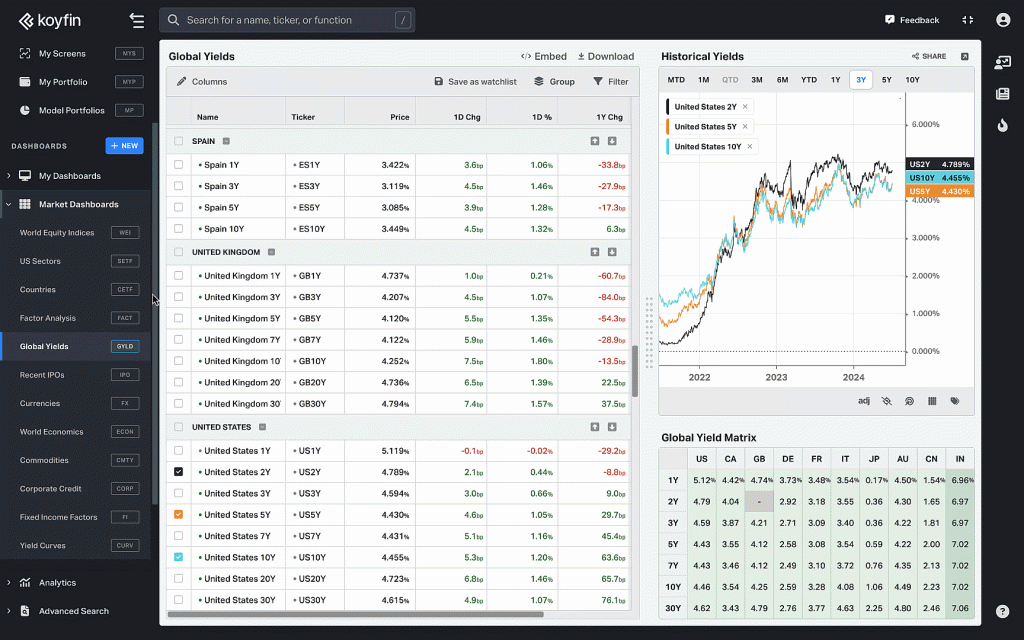
Delving into bond duration mechanics reveals why modified duration serves as the go-to linear proxy for price volatility. By dividing Macaulay duration by one plus the yield per period, analysts arrive at modified duration, a figure expressed as a percentage. This metric provides a simple rule of thumb: for every one percent change in benchmark interest rates, the bond market price will move in the opposite direction by roughly that percentage. If a portfolio has a modified duration of seven years, a single percentage point rise in prevailing interest rates causes an approximate seven percent drop in portfolio value.
However, this relationship is not entirely linear. A simple straight line fails to capture the true curvature of bond valuation. That curvature is known as convexity. When rates drop, bond prices rise faster than modified duration predicts; when rates climb, bond prices decline more slowly than a straight line suggests. Convexity is the investor greatest ally during periods of extreme market turbulence because it functions like a structural buffer, sweetening upside gains and softening downside shocks.
Four proven rules to master fixed income risk
Navigating volatile debt markets demands an intuitive grasp of bond duration mechanics, translated into concrete operating habits. Theoretical formulas alone will not preserve wealth when markets seize up. Implementing a structured framework ensures that capital remains shielded from catastrophic drawdowns while continuing to generate consistent real returns.
Rule 1 Align cash flow horizons directly with real liability dates
The cardinal error in fixed income management is treating duration as an abstract statistical metric rather than an exact operational calendar. If an investor requires five hundred thousand dollars in five years to fund an industrial expansion or purchase a property, buying a portfolio with a ten-year duration simply because the yields appear attractive is reckless speculation. The portfolio must be structured so that its duration closely matches the liability date.
When your duration matches your investment horizon, price risk and reinvestment risk cancel each other out with mathematical perfection. If rates rise, the drop in market price is almost exactly offset by the increased compounding earned on reinvested coupons over that timeline. If rates fall, the capital gain on the bond compensates for the lower interest earned on future cash flows. This deliberate balance, known as classical immunisation, strips the emotional panic out of shifting macroeconomic cycles.
Rule 2 Treat high coupon yields as structural volatility shock absorbers
Investors often look at high coupon payments merely as passive income to spend, ignoring their profound dampening effect on price volatility. Under classical bond duration mechanics, every dollar received earlier pulls the weighted average maturity backward. A portfolio constructed with high-coupon corporate debentures or mortgage-backed paper inherently possesses a shorter effective duration than a portfolio of ultra-low coupon sovereign notes of the same maturity.
In environments where interest rates are unpredictable or structurally rising, coupon density serves as a recurring liquidity injection. This predictable stream provides dry powder to redeploy into cheaper, higher-yielding securities without being forced to sell depressed underlying principal at a loss. Neglecting coupon size when comparing bonds with similar yields to maturity is an expensive shortcut that frequently invites severe drawdown surprises.
Rule 3 Harness positive convexity when yield curves swing violently
Not all bonds with an identical five-year duration carry the same resilience during violent market shocks. The differentiator is convexity, the second derivative of the price-yield curve. A portfolio featuring strong positive convexity will consistently outperform an otherwise identical portfolio with flat or negative convexity whenever market yields experience severe dislocations in either direction.
Mortgage-backed securities and callable corporate bonds often exhibit negative convexity because borrowers refinance or call their debt when rates plunge, cutting off the investor upside. Conversely, non-callable sovereign paper and targeted bullet bonds maintain pure positive convexity. By intentionally paying a modest premium for positive convexity or deliberately avoiding callable structures during turning points in economic policy, you build an asymmetry that defends your capital against unexpected shifts in the yield curve.
Rule 4 Differentiate between perpetual fund duration and individual paper maturity
One of the most destructive misconceptions in personal finance is assuming that an open-ended bond mutual fund behaves like holding an individual bond. When you purchase an individual bond, duration continuously decays as the maturity date approaches. A ten-year bond inevitably becomes an eight-year bond, then a two-year bond, and finally matures at par value, returning your capital regardless of prevailing secondary market sentiment.
A bond mutual fund or exchange traded fund operates under an entirely different operational mandate. The fund manager continuously buys and sells assets to maintain a static target duration, such as seven to ten years. Because the fund never matures, your principal is eternally subjected to the raw forces of market interest rates. If rates enter a sustained secular climb, an investor holding a perpetual duration product can suffer capital impairment that takes decades to recover, unlike the individual bondholder who simply waits for redemption at par.
The hidden peril of holding passive bond exchange traded funds
The passive indexing revolution transformed equity investing by lowering fee hurdles, but importing that exact logic into fixed income introduces unintended systemic vulnerabilities. In an equity index, the largest weightings naturally flow to companies with the highest market capitalization, reflecting business success and profitability. In a market-weighted bond index, the largest weightings flow automatically to the entities carrying the greatest total volume of outstanding debt.
This structural distinction exposes the danger of misapplying bond duration mechanics to open-ended mutual funds. When governments and corporations flood the markets with ultra-cheap long-dated debt during low-interest regimes, the index absorbs those multi-decade obligations. As a direct consequence, the aggregate duration of popular broad-market bond indices automatically lengthens at the exact moment yields hit rock bottom.
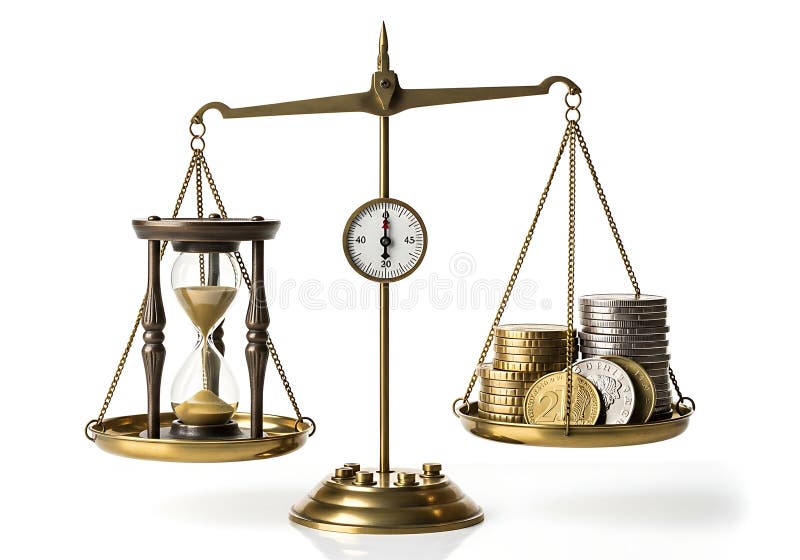
Investors who passively allocate their savings into these vehicles assume they hold balanced, conservative hedges against stock market volatility. Instead, they find themselves unwittingly holding portfolios with historically unprecedented interest rate sensitivity. Just as culinary mastery requires understanding Maillard reaction mechanics and 4 proven rules that create unforgettable savory crusts through precise heat control, fixed income mastery requires balancing yield appetite against time exposure. Understanding the underlying physical and mathematical reactions inside your instruments is the only way to avoid ending up with a burnt portfolio.
Constructing an enduring portfolio for volatile economic climates
Escaping the trap of unexpected fixed income drawdowns does not require psychic abilities to predict the next policy statement from central bankers. It demands an appreciation for mechanical discipline over hopeful market timing. By abandoning the illusion that maturity equals safety, investors can systematically construct fixed income allocations tailored to withstand sudden shifts in inflation, credit spreads, and sovereign yields.
Begin by auditing every fixed income position currently held in your estate or corporate treasury. Strip away the vanity of headline yields to determine the exact modified duration of each asset. Segment your capital into distinct functional buckets: immediate operational reserves kept in negligible-duration paper, medium-term commitments locked into precise immunised structures, and patient long-term assets fortified with deep positive convexity.
Ultimately, respecting bond duration mechanics frees you from the foolish game of trying to predict central bank meetings. When you understand how cash flow timing, discount curves, and balance points dictate the actual value of a debt obligation, volatility ceases to be an existential threat. It transforms instead into a predictable, manageable mechanical process that rewards the prepared investor while punishing the careless spectator.