Kalani Sitake Leads BYU Through 3 Crucial Tests Against Notre Dame
Thirty-two years after first facing Notre Dame as a freshman fullback, BYU head coach Kalani Sitake prepares his program for a defining national showdown. Here is how budget efficiency, institutional memory, and tactical discipline brought the Cougars to this pivotal stage.
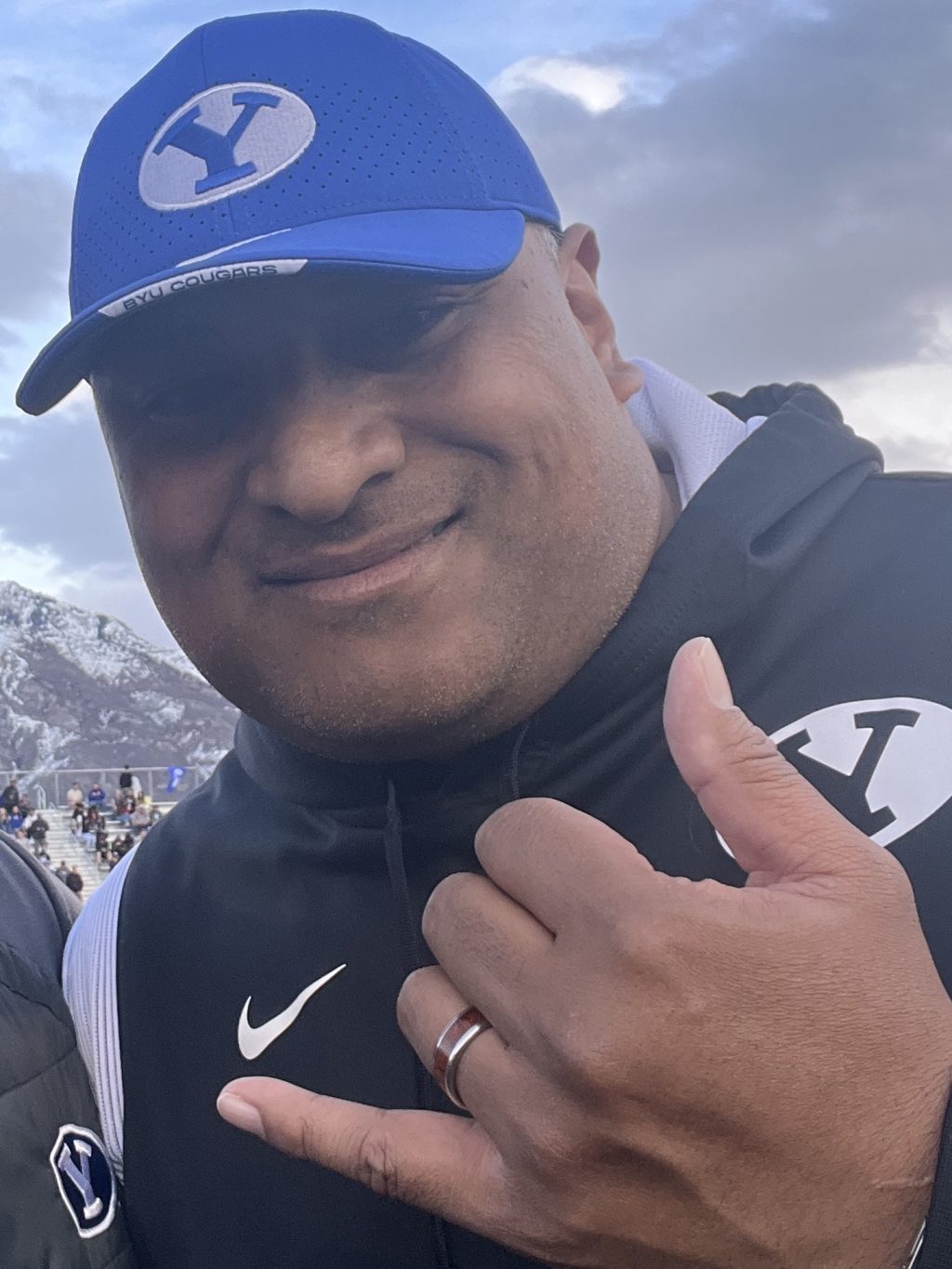
When BYU head coach Kalani Sitake leads his team onto the gridiron this weekend, he carries thirty-two years of personal history against college football royalty. The upcoming clash against the Notre Dame Fighting Irish represents far more than an ordinary non-conference spectacle. For the Cougars, this game is the culmination of years spent navigating shifting athletic landscapes, conference realignment, and economic disparities across the modern collegiate landscape.
As reported by KSL News, Sitake firmly believes BYU is fully prepared for what he characterizes as its biggest test of the campaign. The program finds itself operating at the center of national conversation, drawing intensive scrutiny from ESPN broadcasts, national beat writers, and analytical models alike. What makes this collision particularly compelling is not simply the matchup between two storied programs, but the contrasting trajectories, financial models, and strategic philosophies that define both sidelines.
The Thirty-Two Year History Between Sitake and Notre Dame
To grasp the emotional weight of this weekend, one must trace the timeline back to the autumn of 1994. As detailed by the Deseret News, Kalani Sitake faced Notre Dame thirty-two years ago as a true freshman fullback for BYU. Stepping onto the field against the iconic gold helmets as an eighteen-year-old power runner left an indelible mark on his football philosophy. The sheer physicality, ceremonial prestige, and national weight of the Fighting Irish served as an early masterclass in elite collegiate competition.
That initial collision was merely the opening chapter of a long-standing personal ledger. Decades later, Sitake found himself matching wits against Notre Dame again, serving as a defensive assistant at Utah during the 2010 season. That defensive battle tested his ability to adjust schemes on the fly against premier offensive fronts. The rivalry resumed once more in October 2022, when Sitake, by then entrenched as the Cougars’ head coach, took his squad to Allegiant Stadium in Las Vegas for a high-profile neutral-site showdown against Marcus Freeman’s squad.
These repeated encounters have demystified the mystique of Notre Dame for the coaching staff in Provo. While national commentators frequently fixate on historical pedigree, the Cougars approach the matchup with the calm familiarity of a staff that understands the precise operational tempo required to compete against the independent powerhouse. Sitake has lived every iteration of this matchup, first through the physical shock of collisions in the offensive backfield and later through the high-stakes chess match of the coaching headset.
Inside the Financial Efficiency Driving BYU Past Expectation
While Notre Dame remains one of the wealthiest and most resource-endowed brands in amateur athletics, BYU has carved out an entirely different path to national prominence. An exhaustive financial breakdown by Front Office Sports revealed that BYU is significantly outperforming its operating budget as this Notre Dame showdown arrives. Operating within the resource reality of the Big 12, the athletic department in Provo functions with exceptional capital discipline, producing top-tier competitive results without the astronomical payrolls seen across legacy blue bloods.
This financial overachievement challenges conventional wisdom in modern college football. In an era dominated by sprawling administrative payrolls and exorbitant spending races, the Cougars have prioritized infrastructure, targeted sports science, and cultural retention. Sitake has fostered an environment where continuity and collective player development offset raw financial deficits. BYU maximizes every dollar spent on recruiting, scouting, and physical conditioning, proving that strategic allocation often trumps sheer volume.
Broadcast networks have taken note of this contrast. The game day presentation mirrors the audio-visual intensity of high-end cinematic productions, capturing the visceral collisions and roaring stadium acoustics that make college football unique. In much the same way that mastering Foley sound design mechanics and 4 proven rules that create breathtaking cinematic realism enhances immersive storytelling, the raw physical soundscapes of LaVell Edwards Stadium provide an authentic backdrop to BYU’s disciplined, hard-hitting identity on the field.
3 Strategic Pillars Kalani Sitake Relies on for the Notre Dame Showdown
Executing an upset over a program of Notre Dame’s caliber requires flawless game management and an acute awareness of tactical leverage. Throughout weekly preparations, BYU has focused its game plan around three core foundational elements.
Neutralizing Marcus Freeman and the Irish Rushing Attack
Foremost among the strategic requirements is halting the physical rushing attack engineered by Fighting Irish head coach Marcus Freeman. As highlighted in game previews by A to Z Sports, Notre Dame leans heavily on disciplined trench warfare, imposing its will behind a formidable offensive line designed to wear down opposing defensive interiors over four quarters. Freeman demands an assertive ground attack that establishes manageable downs, allowing the offense to dictate tempo.
To counter this, BYU must maintain gap integrity and avoid over-pursuing misdirection schemes. Sitake has prioritized interior defensive line rotation, ensuring that fresh tacklers are consistently available to absorb double-teams and plug running lanes. Forcing Notre Dame into third-and-long situations is essential to dismantling their game plan, compelling them to pass in hostile road environments where crowd noise can disrupt snap counts.
Maximizing Big 12 Momentum on the National Broadcast Stage
Transitioning into the Big 12 has altered BYU’s week-to-week physical conditioning and competitive endurance. The rigorous conference slate has sharpened the Cougars for intense, sixty-minute struggles against nationally ranked opponents. The program no longer experiences the erratic pacing of independence; instead, they operate with battle-tested weekly rhythm.
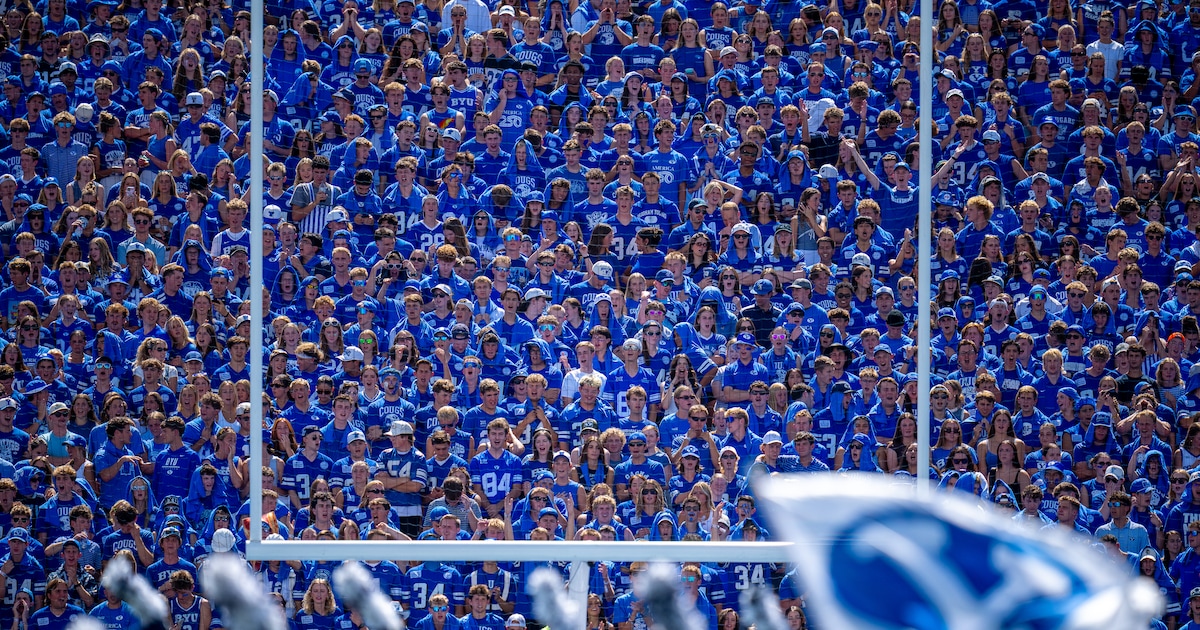
National coverage from ESPN College GameDay analysts has centered on this newfound conference resilience. Commentators note that BYU’s transition into a Power conference framework has elevated player conditioning, allowing them to match the depth and physicality traditionally commanded by Notre Dame. The Cougars intend to utilize this momentum to dictate the emotional tenor of the opening quarter, feeding off the raucous home crowd to generate immediate offensive rhythm.
Drawing Wisdom from Historic Clashes Across Three Decades
Intangibles often decide games of this magnitude, and institutional memory serves as BYU’s silent weapon. The strategic acumen of Kalani Sitake, who has repeatedly outpaced spending power through veteran preparation, ensures that his locker room remains insulated from external media distraction. Having stood on the field against Notre Dame across three distinct decades, Sitake provides a steadying voice for athletes playing in the biggest game of their collegiate careers.
Rather than treating the Fighting Irish as an invincible brand, the coaching staff treats them as a collection of schematic tendencies. Film study has focused on identifying specific leverage weaknesses in the Irish secondary, testing young defensive backs with vertical concepts, and utilizing pre-snap motion to diagnose defensive blitz packages before the play develops.
What National Analysts Expect from the Clash in Provo
The anticipation surrounding this matchup has triggered extensive debate across the national sports media landscape. According to reporting from the Deseret News, ESPN analysts, including Chris “The Bear” Fallica and prominent studio commentators, have spent the week breaking down the mathematical and schematic dynamics of the contest. Statistical models highlight BYU’s home-field advantage at altitude as a meaningful variable, especially in the fourth quarter when visiting teams often battle fatigue.
A to Z Sports compiled expert predictions from across the college football landscape, noting that while oddsmakers frequently favor the Fighting Irish due to recruiting rankings and brand power, analysts evaluating Kalani Sitake praise his ability to galvanize locker rooms when entering games as an underdog. The matchup pits Freeman’s defensive precision against BYU’s balanced offensive versatility, creating a compelling tactical contrast that could hinge on a single turnover or special teams execution.
The media focus also reflects the evolving stature of both institutions in the current national landscape. Notre Dame remains fiercely protective of its independent status, while BYU serves as a prime example of successful conference assimilation. Every play on Saturday will be evaluated through this broader lens, measuring whether traditional independent grandeur can withstand the gritty, economically efficient momentum of a program ascending within modern college football.
A Defining Crucible for the Cougars
When the final whistle sounds, this contest will resonate far beyond the win-loss column of a single season. For BYU, it serves as a definitive progress report on their institutional trajectory. The cultural footprint Kalani Sitake continues to build at BYU is grounded in resilience, authentic community support, and an unwavering belief that identity matters as much as institutional wealth.
Facing Notre Dame provides the ultimate stage to prove that sustainable football success can be achieved through player development and tactical discipline. Thirty-two years after a freshman fullback took his first bruises against the Fighting Irish, the head coach returns to that same rivalry with a completely different vantage point, ready to write a defining chapter for his program.