News embargo mechanics and 4 proven rules that prevent disastrous media breaches
Inside the high-wire world of investigative journalism, timed information releases dictate how major stories break. Discover the hidden mechanics behind media embargos and the strict protocols that keep newsrooms from catastrophic early leaks.

Understanding professional news embargo mechanics separates seasoned journalists from reckless operators who burn critical institutional sources and trigger catastrophic editorial disputes. Behind the polished morning broadcast or the synchronized digital deluge of synchronized headlines lies a fragile, time-calibrated architecture. Every week, government agencies, scientific journals, pharmaceutical giants, and corporate boards furnish reporters with sensitive findings well before public distribution. The documents sit quietly in newsroom queues, waiting for an exact minute when hundreds of publications unleash coverage simultaneously.
This arrangement looks seamless from the outside, yet it operates along a razor-thin boundary of honor, legal tension, and technological coordination. A single junior editor scheduling an article in the wrong time zone or an errant push alert can obliterate months of investigative work, invite immediate blacklisting, and spark bitter recriminations across international bureaus. Grasping how this information pipeline functions reveals the delicate balance between competitive reporting and deliberate editorial restraint.
The Invisible Contract Between Reporters and Sources
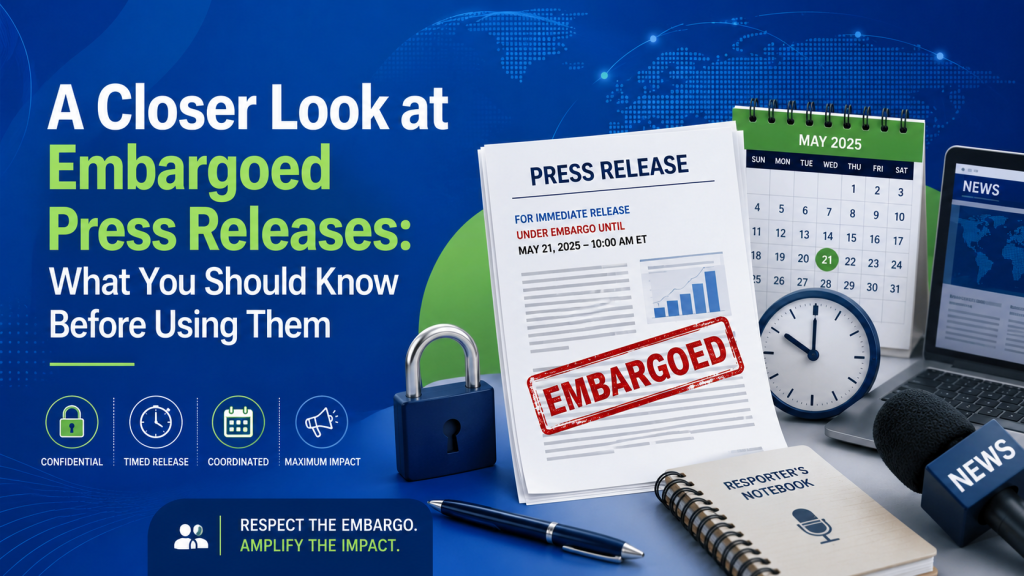
At its foundation, the subtle architecture of news embargo mechanics is neither a statute nor an enforceable legal contract. It functions instead as a bilateral pact built entirely on professional reputation. An institutional source grants advance access to complex materials, such as an upcoming central bank policy shift, an investigative audit, or a peer-reviewed academic trial. In exchange, the receiving news organization pledges not to publish, broadcast, or tweet the underlying information until a designated moment known across the trade as the lift time.
For the press, this temporary delay provides an invaluable asset that 24-hour cycle journalism rarely affords: time. Rather than scrambling to digest a five-hundred-page environmental report in twelve panic-stricken minutes, beat reporters can scrutinize statistical appendices, track down independent specialists, and write deeply contextualized prose. The source, meanwhile, avoids having their milestone announcement reduced to shallow, sensationalist soundbites parsed by reporters racing to post first.
Crucially, this gentlemen’s agreement exists alongside strict boundaries. An embargo applies only to the material supplied directly by the issuing entity. If a savvy reporter uncovers the identical scoop independently through private source work, leaked memoranda, or public records, the embargo does not bind them. Seasoned investigative desks maintain clear separation between negotiated advance access and uninhibited enterprise reporting, preserving their aggressive watchdog mandate without violating explicit verbal commitments.
Why Institutional Sources Rely on Timed Information Silos
Modern communication strategists do not distribute information early out of generosity. They utilize timed releases to manage volatility and level the playing field across competing publications. Consider how top-tier medical journals and medical research societies orchestrate specialized findings: when clinical researchers revealed how the Eden Koo IBS Study ACG Reveals 4 Critical Insights on Digestive Relief, accredited reporters received data dossiers well before the conference lectern presentation. This synchronized window allowed medical science writers to interrogate the methodologies without sacrificing analytical depth to social media velocity.
The American Association for the Advancement of Science maintains strict guidelines through its EurekAlert science news distribution platform, where reporters agree to keep peer-reviewed data under wraps until journal publication. When academic publishers or regulatory agencies examine historical breakdowns in news embargo mechanics, the vulnerability rarely stems from malice. More often, breaches emerge from structural misunderstandings within distributed digital organizations where remote teams operate across multiple production desks.
Furthermore, institutions employ timed silos to prevent market chaos. When economic agencies prepare major employment or consumer price metrics, allowing one financial wire to distribute numbers sixty seconds ahead of another could trigger hundreds of millions of dollars in erratic algorithmic trading. The mechanics of the holding room, whether physical or digital, exist to guarantee that market participants receive market-moving information at the identical microsecond.
Four Proven Rules That Keep Embargoed Reporting Flawless
Executing rigorous news embargo mechanics requires strict operational discipline inside the newsroom. As publication platforms become increasingly automated and syndication feeds push articles across third-party aggregators instantly, preventing premature disclosure demands systemic safeguards. Experienced newsrooms rely on four non-negotiable operational rules to insulate their desks from career-ending errors.
Lock Down the Primary Time Zone Discrepancies
The most mundane detail often causes the most catastrophic publication breach. A global embargo marked for 00:01 GMT will detonate an American newsroom afternoon cycle if a desk editor assumes the time refers to Eastern Standard Time. News organizations operating internationally must translate every lift time into three coordinates: Coordinated Universal Time, the source organization local time, and the newsroom native publishing time.
Editorial production management systems should flag ambiguous time entries automatically. Seasoned copy chiefs never permit a writer to log an embargo note stating simply tomorrow morning or midnight Thursday. The entry must specify the day, calendar date, exact minute, time zone acronym, and daylight savings status. When ambiguity arises, the reporter must demand written confirmation from the source press officer before moving the piece into production queues.
Quarantine Third Party Verification Interviews
Sound journalism requires speaking with external experts who had no role in the research or announcement. Yet approaching an independent source with embargoed information introduces dangerous friction. If a reporter sends an embargoed whitepaper to an outside university professor for critical commentary, that professor is not bound by the newsroom agreement unless explicitly briefed beforehand.
Reporters must establish an advance quarantine protocol. Before transmitting a single sentence of the embargoed finding, the journalist must ask the outside expert in writing whether they agree to review confidential materials under a strict embargo lifting at the designated hour. Only after the expert sends back an affirmative written agreement can the documentation be shared. Omitting this preliminary step leaves the expert free to mention the research on social media or tip off competing colleagues without consequence.
Never Treat Unsolicited Pitches as Binding Agreements
A persistent point of friction between corporate public relations representatives and editorial departments involves the unsolicited cold pitch. Publicists frequently email full press releases accompanied by bold capital letters declaring the contents under embargo until Friday, despite never asking the journalist if they agreed to receive the material under those conditions.
Standard journalistic doctrine is unyielding on this point: an embargo is a bilateral contract requiring affirmative mutual consent. An external publicist cannot unilaterally impose confidentiality on a recipient simply by sending an email. Reporters must actively push back on unsolicited claims, reminding PR shops that unopened pitches do not create obligations. If a reporter was already pursuing that exact lead, accepting a retroactive embargo would neutralize their independent reporting.
Isolate Automated Publishing CMS Triggers
Modern content management systems are built to distribute content aggressively. An editor who writes a story three days early and selects a scheduled publish date risks setting off automated site syndication, mobile notifications, and third-party news app feeds prematurely. Caching servers and social media distribution pipelines frequently sweep scheduled posts into public view long before the frontend website shows the headline.
Mastering practical news embargo mechanics therefore requires treating the content management system as an active security perimeter. High-performing news organizations maintain embargoed stories in disconnected staging environments or mark them with dummy text and embargo hold banners across the headline field. The final piece is pushed live manually by a designated duty editor only after cross-checking the live atomic clock against the source clearinghouse.
The High Stakes of Jumping the Gun
When a newsroom flouts the core tenets of news embargo mechanics, retribution from institutional sources is immediate and punitive. The offending outlet faces immediate revocation of press credentials, removal from advance distribution lists, and public condemnation from trade bodies. For a major financial paper or dedicated technology site, losing early access to industry earnings or regulatory decisions means consistently losing readers to competitors who kept their word.
The reputational damage also extends internally. Inside the newsroom, jumping an embargo triggers intense investigations to determine whether the failure was technological or editorial. Wire services have issued frantic mandatory kill notices to hundreds of downstream newspaper subscribers after inadvertently transmitting an advance financial package onto live feeds. The resulting loss of trust between desk editors and field correspondents can take years to repair.
Beyond formal blacklisting, breaking an embargo poisons relationships with peer institutions. When one publication breaks an embargo early to snatch pageviews, the issuing organization is forced to lift the embargo for everyone immediately. This ruins days of meticulous preparation for every other competing journalist who played by the rules. The offending outlet quickly earns an industry reputation as an unreliable partner, cutting off future collaborative investigations and deep-background access across the broader beat.
Preserving Credibility in a Speed Obsessed Media Landscape
In an era dominated by instantaneous reactions, hot takes, and algorithm-driven discovery, the embargo represents an oasis of deliberative reporting. It acts as a structural defense mechanism against reckless speed, forcing reporters to slow down, interrogate documentation, and present audiences with verified, comprehensive analysis rather than fragmentary gossip.
Honoring timed release agreements does not mean functioning as a stenographer for institutional interests. True journalistic independence is measured by the depth of scrutiny applied to the materials provided, the willingness to include critical counterpoints, and the refusal to let public relations teams dictate the tone of coverage. Ultimately, maintaining disciplined news embargo mechanics protects the public from half-baked panic and ensures that complex truth reaches the audience intact.